By Investigative Desk
1. Summary of the Scandal
In 2022, Malawi’s Affordable Inputs Programme (AIP) was rocked by a procurement scandal in which the Ministry of Agriculture paid approximately K750 million (about US$727,000) to a United Kingdom–based meat processing company, Barkaat Foods Limited, for the supply of fertilizer — a contract that yielded no fertilizer delivery and triggered national outrage.
Government records showed that the Smallholder Farmers Fertiliser Revolving Fund of Malawi (SFFRFM) engaged the UK company as an agent to secure fertilizer with the promise of supplying 25,000 metric tonnes for the AIP. The payment was made in advance through bank channels. Barkaat later informed officials that it had lost its production line and could not fulfill the contract, agreeing only to refund the payment — a refund process that has been slow and protracted.
Critics noted that Barkaat Foods was not a bona fide fertilizer supplier, but primarily a slaughterhouse and meat wholesaler, and that due diligence was lacking prior to engagement.
2. Political and Institutional Fallout
a. Firing of Lobin Lowe
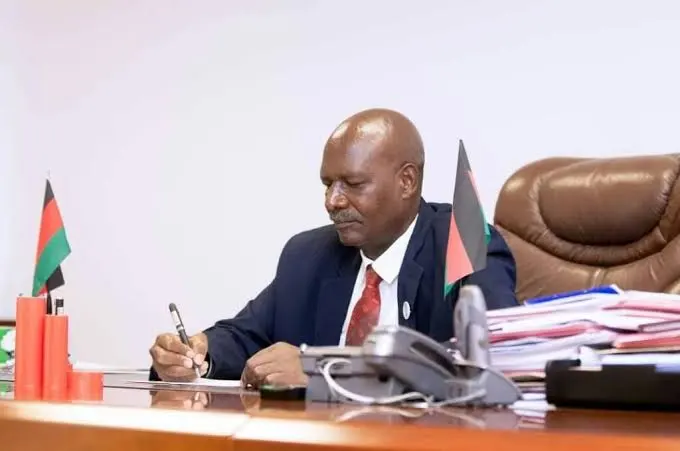
The scandal motivated President Lazarus Chakwera to dismiss Lobin Lowe as Minister of Agriculture (and his deputy Madalitso Kambauwa Wirima) in October 2022. The President cited “gross negligence and incompetence” in managing the AIP and the fertilizer procurement process.
Lowe served from July 2020 until his termination in October 2022.
b. Parliamentary Reaction
Parliamentary committees attempted to investigate the matter, but internal disagreements, procedural disputes and delays hampered substantive hearings. A chairmanship dispute within the Parliamentary Public Accounts Committee was cited as one reason parliamentary inquiry efforts stalled.
c. Civil Society and Oversight Bodies
The Office of the Ombudsman embarked on systemic inquiries into AIP implementation, explicitly calling for criminal investigations and disciplinary actions against officials involved in the Barkaat deal and recommending forensic audits of AIP procedures.
Human rights and governance groups, notably Youth and Society (YAS), publicly questioned the fresh investigation into the K750 million deal, arguing it overlapped with earlier Anti-Corruption Bureau (ACB) findings that had already implicated Lowe and others — and warned that parallel investigations risked undermining accountability.
3. Legal Proceedings — Where the Case Stands
a. Recovery of Funds
The Attorney-General’s Office (AG) initiated legal action in Germany, where part of the payment is held, seeking a confiscation order and recovery of the K750 million (about US$543,750 as of December 2025 reporting) that was paid to Barkaat Foods Limited. A court in Munich is handling the matter; decisions have been delayed because Barkaat reportedly has not responded to legal filings.
Officials indicated that the court ruling is pending and may extend beyond initial expectations into subsequent weeks or months because of procedural timing in German courts.
b. Criminal Charges and Prosecution of Individuals
Despite strong public and oversight calls for prosecution, there is no widely published record as of early 2026 that Lobin Lowe or other senior officials have been formally charged, indicted, or convicted in a Malawian criminal court for acts related to the Barkaat fertilizer deal.
Civil society statements and Ombudsman reports pushed for criminal investigations and prosecutions, but parallel investigations by the Malawi Police Service were criticised as redundant or potentially undermining the core Anti-Corruption Bureau inquiry.
Neither the Ministry of Justice nor the Office of the Director of Public Prosecutions has publicly confirmed formal charges against Lowe, suggesting that the scandal remains primarily in the investigatory and recovery phase, rather than full court prosecution of the former minister himself.
4. Broader Accountability and Governance Issues
The fertilizer scandal — sometimes referred to in the media as a “K30 billion” or K750 million AIP scam — undermined confidence in Malawi’s public procurement systems. Critics highlighted procedural failures, lack of due diligence, and political interference.
Public commentators and opposition figures questioned why basic procurement safeguards (e.g., Public Procurement and Disposal of Assets Authority approval, Anti-Corruption Bureau vetting) were bypassed.
Civil society groups have continued to advocate for transparent forensic audits, disciplinary action, and legal accountability to rebuild trust.
5. Conclusion
As of January 2026:
- Legal action is underway to recover the funds paid to Barkaat Foods via a Munich court process, though recovery and court outcomes are still pending.
- No confirmed criminal convictions or ongoing prosecution against Lobin Lowe or associated senior officials have been publicly documented — the matter remains in an investigatory stage involving multiple state institutions.
- Political and administrative accountability did materialize in the form of Lowe’s dismissal, but broader institutional and legal accountability mechanisms are still evolving.
For a deeper understanding of the continuing legal and public governance implications, tracking updates from the Attorney-General’s office, Malawi Police Service anti-corruption units, and court records in Germany would be essential.