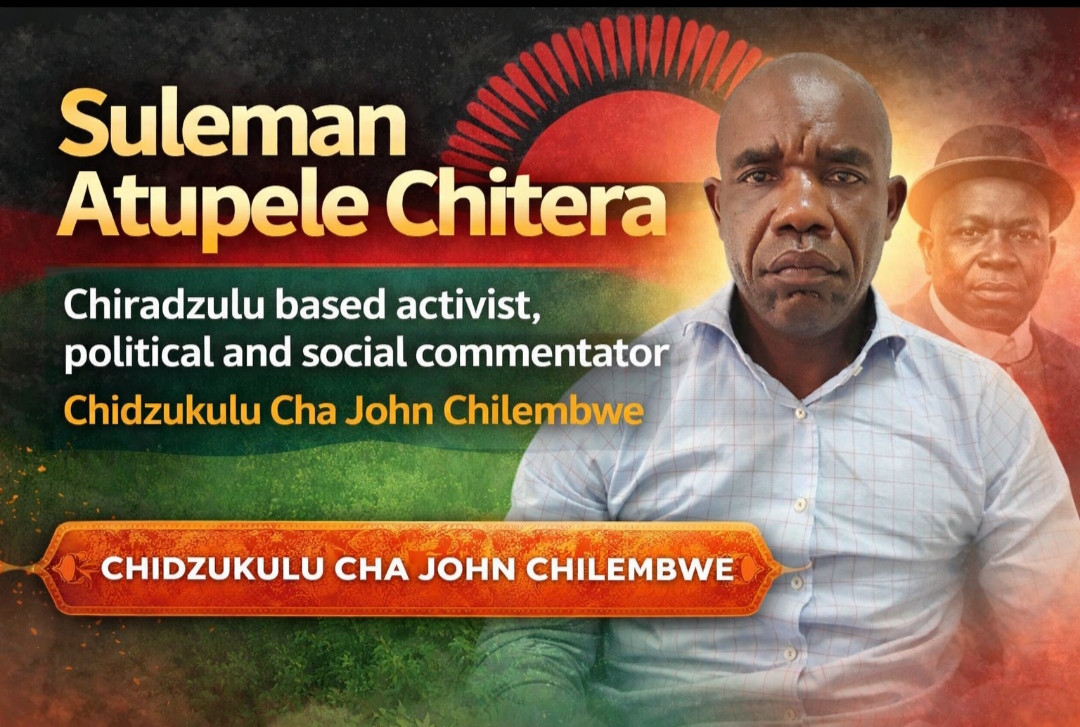
Opinion By Suleman Chitera
In Malawi today, poverty has quietly become a crime—one punished without trial, without mercy, and without apology. From police cells to courtrooms, from government offices to market stalls, the poor carry the heaviest burden of a system that claims neutrality but operates with brutal bias.
Ask a simple question that echoes across townships and villages alike: Kodi munthu osauka analakwa chani? What exactly did the poor person do wrong?
Policing Poverty, Not Crime
On the streets, law enforcement tells a familiar story. Police insist they are “just doing their job.” Yet their job seems to begin and end with the poor. When arrests are made, it is the vendor, the minibus conductor, the unemployed youth who is dragged, beaten, handcuffed, and humiliated in full public view. Excessive force is normalized, brutality justified, and accountability absent.
The well-connected suspect is summoned politely. The poor suspect is hunted, assaulted, and paraded as proof of efficiency. This is not policing crime; it is policing poverty.
Courts That Move Fast Only for the Poor
Inside the courts, the injustice continues—this time dressed in legal robes. Cases involving poor people move with suspicious speed. Bail is denied, legal representation is weak or nonexistent, and verdicts are delivered swiftly. The courts again claim they are “doing their job.”
But when cases involve the powerful, the wealthy, or the politically connected, justice suddenly slows down. Files go missing. Hearings are postponed. Years pass. The law becomes patient, flexible, and forgiving.
For the poor, justice is fast, harsh, and final.
Economic Policies That Punish the Vulnerable
Beyond police and courts, government policies land hardest on those least able to absorb the shock. When fuel prices rise, when taxes increase, when basic commodities become unaffordable, it is not the elite who skip meals or walk long distances—it is the poor.
Each adjustment is announced in technical language, justified by macroeconomic realities. But on the ground, these decisions translate into hunger, school dropouts, untreated illnesses, and deepening despair. Again, the message is clear: survival itself has become a struggle reserved for the poor.
A System That Pretends to Be Blind
The most painful irony is that every institution involved insists it is simply following procedure. Police follow orders. Courts apply the law. Government implements policy. In theory, the system is blind. In reality, it sees poverty clearly—and punishes it relentlessly.
There is no official law criminalizing poverty, yet the lived experience of millions of Malawians suggests otherwise. Poverty determines who is arrested, who is beaten, who is convicted, and who suffers most when the economy tightens.
The Unanswered Question
So we return to the question that refuses to go away: What did the poor person do wrong?
Is it a crime to be born into hardship?
Is it an offence to struggle in a country where opportunity is unevenly distributed?
Is poverty itself now evidence of guilt?
Until Malawi confronts these uncomfortable truths, the justice system will remain unjust, governance will remain hollow, and the poor will remain condemned—not by law, but by neglect, cruelty, and silence.
Poverty is not a crime. But in Malawi today, it is treated as one.