
By Suleman Chitera
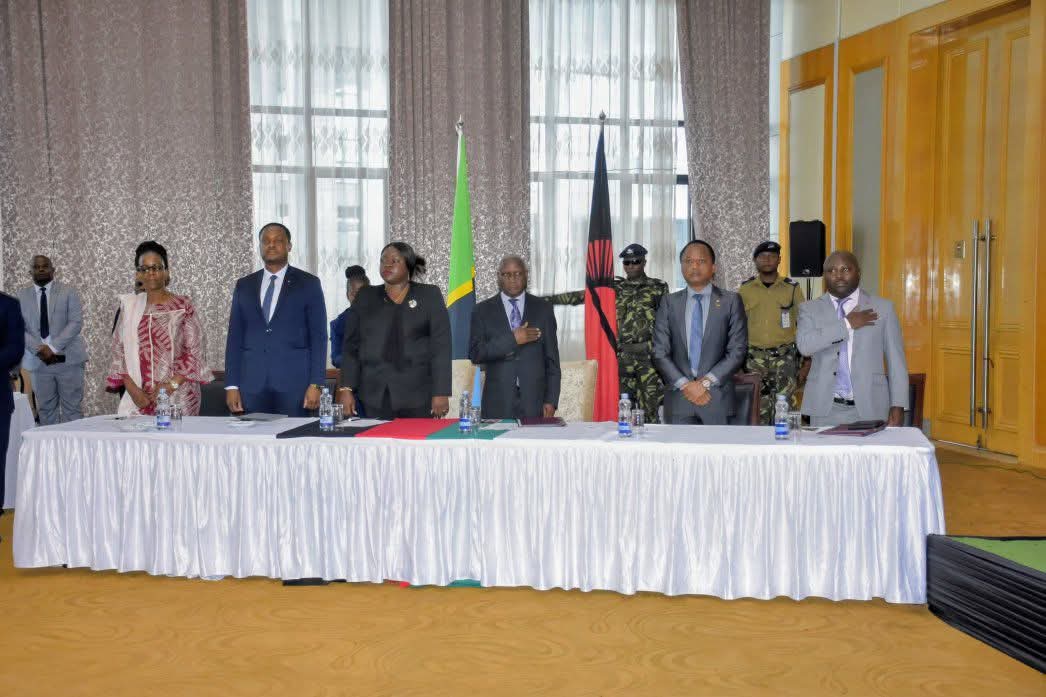
Malawi and Tanzania have formally signed a Simplified Trade Regime (STR) aimed at transforming cross-border trade for small-scale traders by reducing costs, cutting bureaucracy and speeding up clearance procedures.
The agreement allows traders to move a pre-approved list of goods valued at up to US$2,000 per consignment duty free, subject to simplified documentation requirements and expedited border processing. The move is expected to significantly ease the burden on informal and small-scale traders who form the backbone of border economies between the two neighbouring countries.
Turning Borders into Economic Gateways
The STR framework is designed to formalise and streamline small-volume trade that has often been constrained by complex customs procedures, high transaction costs and inconsistent enforcement at border posts.
Under the arrangement:
- Traders will use simplified customs declaration forms.
- Eligible goods will attract zero duty within the approved threshold.
- Border clearance processes will be faster and more predictable.
- A harmonised list of commonly traded goods will guide implementation.
The agreement was developed with technical and financial support from the Alliance for a Green Revolution in Africa (AGRA) and the Foreign, Commonwealth and Development Office (FCDO) of the United Kingdom. The partners have been supporting regional trade facilitation initiatives aimed at strengthening food systems, improving livelihoods and deepening regional economic integration.
Empowering Small Traders
Small-scale cross-border traders—many of them women and youth—frequently move agricultural produce, processed foods and basic consumer goods between Malawi and Tanzania. However, they often face:
- Lengthy inspections,
- High compliance costs,
- Informal charges,
- Confiscation risks due to documentation gaps.
The STR is expected to reduce informality by providing a clear, affordable and legally recognised trading channel. By lowering entry barriers, the regime could increase compliance while boosting revenue transparency and economic inclusion.
Government Commitment
Malawi’s Minister of Industrialization, Business, Trade and Tourism, Simon Itaye, has pledged full implementation of the regime and committed to preventing the emergence of new non-tariff barriers that could undermine the agreement.
He emphasised that the success of the STR will depend on consistent enforcement, coordinated border management and ongoing engagement with traders to ensure that operational bottlenecks are addressed promptly.
Regional Trade Integration
The Malawi–Tanzania STR aligns with broader regional integration efforts under frameworks such as the African Continental Free Trade Area (AfCFTA) and regional economic communities that seek to harmonise trade policies and facilitate intra-African trade.
By formalising small-scale trade flows, the two countries aim to:
- Increase trade volumes,
- Improve food security through smoother agricultural trade,
- Strengthen bilateral economic relations,
- Promote inclusive growth along border communities.
Economic Impact Outlook
Economists note that simplified trade regimes often have a multiplier effect in border regions. Reduced transaction costs improve profit margins for traders, increase product availability in local markets and stabilise supply chains for essential goods.
If effectively implemented, the Malawi–Tanzania STR could serve as a model for similar bilateral arrangements within the region, reinforcing the idea that borders can function not as barriers, but as engines of shared prosperity.
The coming months will test how efficiently border authorities operationalise the framework and whether small traders experience tangible improvements in clearance times, compliance costs and overall trading conditions.