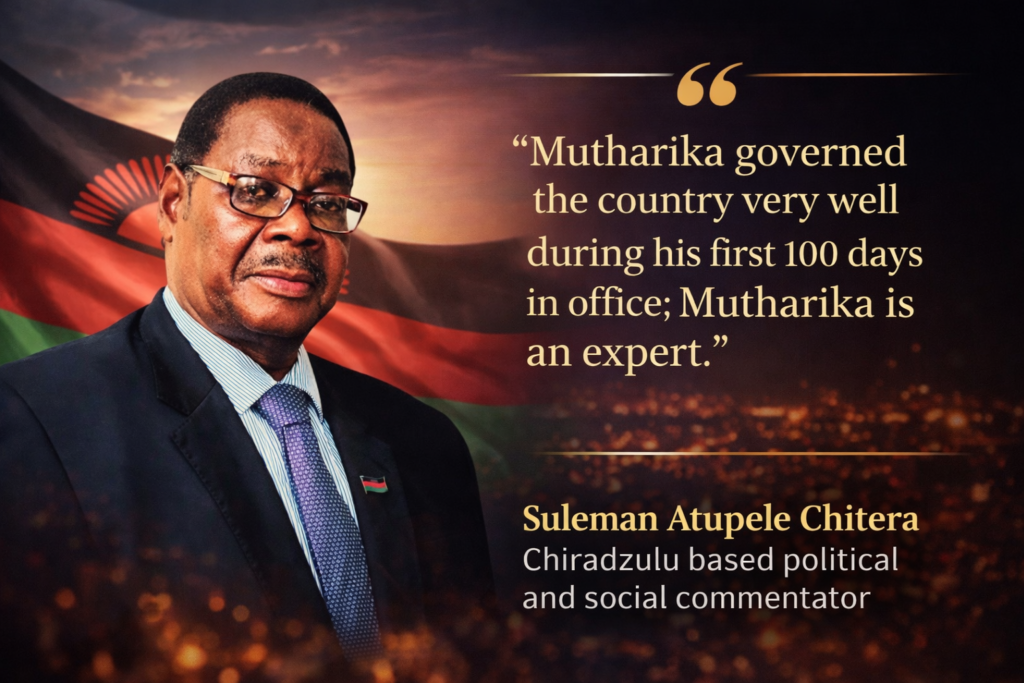
By Suleman Chitera
As President Arthur Peter Mutharika marks one hundred days since his return to State House, one truth is becoming unmistakably clear: experience matters, and Malawi is once again benefiting from it.
For years, critics sought to reduce leadership to age, dismissing APM as politically expired and overwhelmed by time. Yet Malawians saw beyond the propaganda. They chose tested leadership over experimentation, competence over noise. Today, the early results of that decision are visible, measurable, and deeply reassuring.
Within just one hundred days, the economy is showing signs of stabilisation. Fuel shortages that once paralysed productivity have eased. Maize prices have fallen, offering direct relief to households already stretched by years of economic hardship. Cement is now more available and affordable, an early signal of renewed confidence in production, construction, and supply chains.
These are not symbolic gestures. They are practical interventions that touch daily life. They reflect an administration focused on restoring economic normalcy before indulging in political theatre.
Equally commendable is the president’s approach to governance. Thus far, public appointments reflect restraint, professionalism, and national balance. The familiar excesses of nepotism, regional favouritism, and tribal arithmetic are noticeably absent. In a political culture where public office is often treated as reward currency, this discipline marks a clear and refreshing departure.
What is emerging is a presidency informed by experience and shaped by reflection. The APM of today is not driven by entitlement, but by responsibility. This is a leader intent on correcting past missteps, rebuilding trust, and securing a legacy rooted in service rather than survival.
This early phase also sends a clear warning to political opportunists, both within the DPP and across the broader political landscape. The era of automatic access, shadowy dealings, and guaranteed impunity appears to be closing. The signals from State House suggest that discipline, not proximity, will define who serves.
One hundred days do not complete a presidency, but they do reveal direction. And the direction so far points to seriousness, reform, and purposeful leadership. If this resolve is sustained, Malawi stands to gain not just short-term relief, but long-term stability.
As the new year begins, there is renewed hope that governance anchored in experience can still deliver progress. For now, the verdict on APM’s first hundred days is clear: leadership has returned, confidence is rebuilding, and Malawi is back on a steadier path.
Happy and prosperous New Year.