Political Arrests: A Debt of History That Has Come Due
By Mawa Kumaliopa
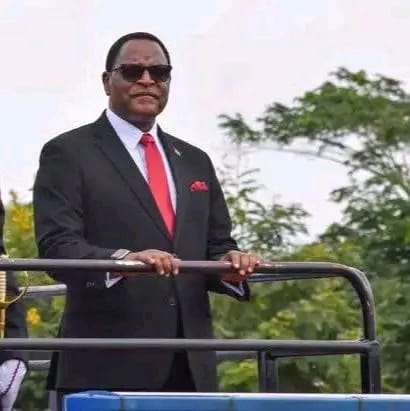
When former president Lazarus Chakwera now raises alarm over what he describes as politically motivated arrests, he presents himself as a victim of a system suddenly turned against him. That narrative, however, omits a crucial and inconvenient truth: the very architecture of political repression he now condemns was constructed, normalized, and weaponized under his own administration.
This is not conjecture. It is a matter of public record.
The Origins of the Crackdown
From the early days of the Tonse Alliance administration, law enforcement and state institutions were repeatedly deployed in ways that blurred—if not outright crossed—the line between justice and political vendetta. Opposition figures, activists, and government critics were arrested, interrogated, and prosecuted under expansive interpretations of the law, often amid heavy media spectacle but with weak prosecutorial outcomes.
Civil society organizations, legal practitioners, and human rights defenders warned—consistently—that Malawi was drifting toward selective justice, where arrests became instruments of political messaging rather than neutral enforcement of the law.
Those warnings were ignored.
Normalizing Weaponized Law Enforcement
Under Chakwera’s presidency, arrests increasingly followed a familiar pattern:
- Public accusations announced before investigations were concluded
- Police press briefings that prejudged suspects
- High-profile detentions followed by delayed or collapsed cases
- A justice system that appeared responsive to political signals rather than constitutional restraint
The Malawi Police Service, constitutionally mandated to act independently, was frequently perceived as operating under executive pressure. Whether through silence from State House or active encouragement, the result was the same: the erosion of public confidence in impartial policing.
Selective Outrage, Convenient Amnesia
Today, Chakwera’s sudden outrage rings hollow to many Malawians who watched allies of the Tonse government walk free while perceived opponents were paraded through the criminal justice system.
The former president did not merely preside over these developments—he defended them. Arrests were justified as “the rule of law taking its course.” Critics were dismissed as corrupt, impatient, or enemies of reform. Due process was invoked selectively, often after reputations had already been damaged beyond repair.
It is therefore disingenuous to feign shock now that the same legal logic is being applied in his direction.
Accountability Is Not Persecution
There is a fundamental difference between political persecution and accountability. If the former president or his associates are being questioned or arrested today, the appropriate response is not public lamentation but legal defense—within the same system he once championed.
The principle is simple: you cannot celebrate arrests when they weaken your opponents and denounce them when they reach your doorstep.
Malawi’s democracy cannot mature if leaders believe power shields them from future scrutiny. The rule of law is not a seasonal garment to be worn in office and discarded in opposition.
The Inevitable Reckoning
What is unfolding now is not an anomaly. It is a reckoning—one rooted in precedents set between 2020 and 2024. By politicizing arrests, by tolerating selective enforcement, and by failing to protect institutional independence, Chakwera helped create a system where power determines vulnerability.
That system does not disappear when administrations change. It simply changes targets.
A Warning to Future Leaders
The lesson is stark and unavoidable: authoritarian tools eventually turn on their creators. Malawi’s leaders—present and future—must understand that weakening institutions for short-term political gain carries long-term consequences.
For Lazarus Chakwera, this moment is not about victimhood. It is about accountability—historical, political, and moral.
And for Malawi, this is only the beginning of a broader conversation about justice, power, and the cost of abusing both.