By Suleman Chitera
The Human Rights Defenders Coalition (HRDC), once Malawi’s most formidable civic force, is now eating itself alive.
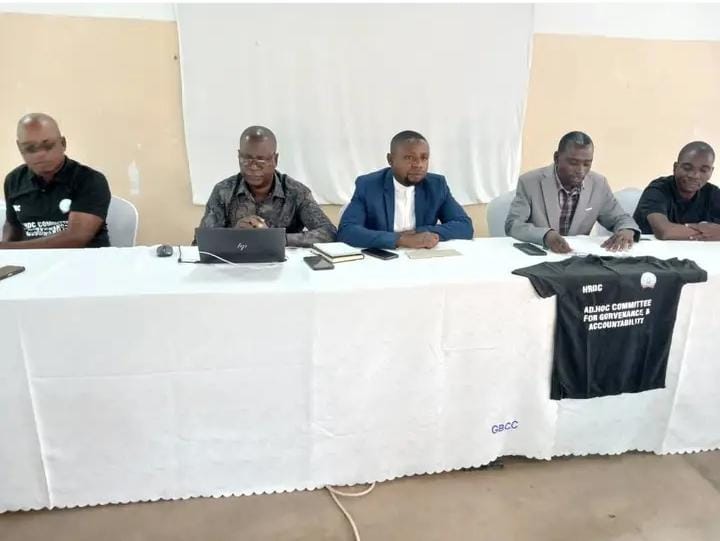
In Blantyre today, a group of individuals identifying themselves as legitimate members of HRDC went public with a blistering indictment of the organisation’s current leadership, demanding an urgent Annual General Meeting (AGM) to elect new office bearers and restore internal democracy.
Led by HRDC Southern Region Chairperson Henderson Mhango, the group said members from all regions of the country—South, East, Centre and North—are stunned that HRDC has failed to hold an AGM since 2019, a basic governance requirement for any credible civil society organisation.
“As legitimate members of HRDC, we publicly denounce and disassociate ourselves from the unlawful operation of provisional leaders due to bad governance, lack of accountability and lack of transparency,” reads part of a statement signed by 12 members.
The group is also demanding full financial disclosure, calling on HRDC leadership to account for all funds received and spent from 2018 to date—a demand that strikes at the heart of an organisation that built its public legitimacy on preaching accountability to those in power.
This is not a small accusation. It is a direct challenge to the moral authority of HRDC itself.
However, the response from the other side was swift—and dismissive.
In a counter-statement signed by HRDC Chairperson Michael Kaiyatsa, the organisation flatly rejected the Blantyre press briefing, stating that the so-called HRDC Regional Ad hoc Committee for Accountability is “not recognized, not mandated, and not affiliated” with HRDC.
Two statements. Two centres of authority. One organisation in open conflict.
What is clear is this: HRDC is now publicly fractured.
An institution that once mobilised thousands to the streets against state abuse now cannot agree on who its legitimate leaders are, when elections should be held, or who controls its finances. The irony is painful.
If HRDC cannot practise internal democracy, transparency and accountability, on what moral ground does it continue to lecture government, Parliament and public institutions?
The questions being raised by the dissenting members are not fringe or trivial. AGMs are not optional. Financial accountability is not a favour. They are foundational principles—especially for an organisation that claims to defend human rights and democratic values.
By dismissing concerned members as illegitimate without addressing the substance of their demands, HRDC risks confirming the very accusations it is trying to deflect.
Malawians are watching. Civil society is watching. Donors are watching.
HRDC must decide—urgently—whether it still stands for accountability, or whether it has become another organisation allergic to the standards it once demanded from others.
Silence, deflection and factional warfare will only accelerate its collapse.