

By Suleman Chitera
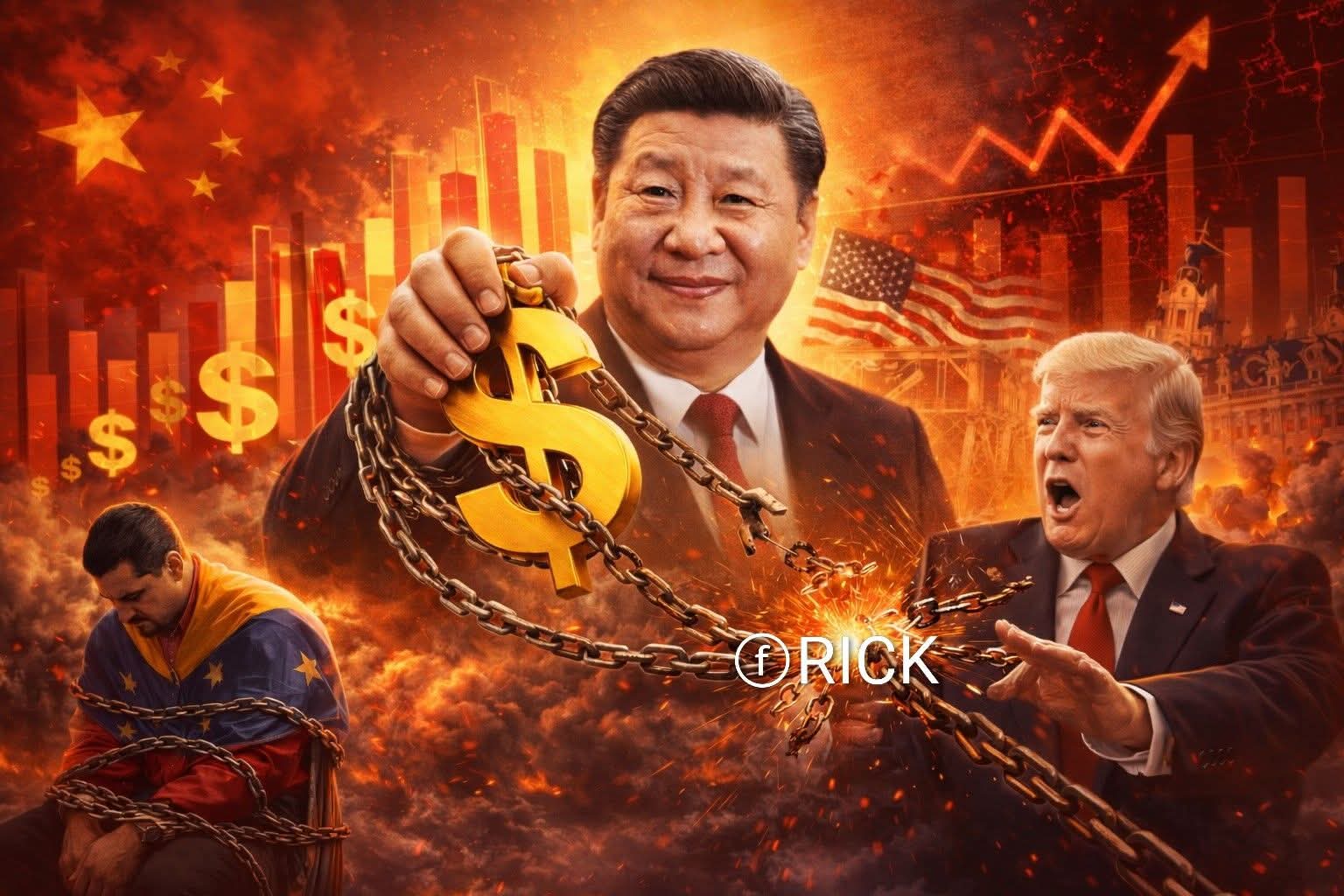
In what analysts are calling the most consequential asymmetric confrontation of the 21st century, the People’s Republic of China has unleashed a suite of economic countermeasures that have struck at the very foundations of U.S. global power—without a single bullet being fired. This is not speculation. Multiple reports from international media outlets portray Beijing’s response to the U.S. capture of Venezuelan President Nicolás Maduro as swift, strategic, and devastating for American interests.
The Catalyst: An Unprecedented Confrontation
According to reports emerging in late January 2026, China views the alleged U.S. abduction of President Maduro as a direct attack on Venezuelan sovereignty and on the emerging multipolar world order. In Beijing’s strategic calculus, the event was not merely a diplomatic affront—it was an attempt by Washington to choke off China’s access to energy and geopolitical influence in Latin America.
Phase One: Financial Freeze on U.S. Military Industrial Giants
On January 4, within hours of the Maduro operation, the People’s Bank of China is reported to have quietly suspended all U.S. dollar transactions involving major U.S. defense‑sector corporations, including Boeing, Lockheed Martin, Raytheon and other key contractors. Executives and financial officers allegedly woke up to find transaction channels frozen without prior notice, a move that underscores China’s willingness to weaponize financial flows against U.S. defense interests.
This maneuver effectively cut off Chinese dollar‑based commercial activity with these firms, a stunning demonstration of Beijing’s readiness to use economic statecraft as a tool of geopolitical warfare. U.S. defense manufacturers—long beneficiaries of global supply chains and dollar liquidity—are suddenly exposed to Beijing’s financial leverage.
Phase Two: Energy Leverage
China is also reported to have reorganized global oil supply routes, canceling upwards of $47 billion in annual delivery contracts to U.S. refineries and instead redirecting those supplies to countries like India, Brazil and South Africa. That realignment sent oil prices jumping by double digits in a single trading session, highlighting China’s ability to exert immediate pressure on U.S. energy security without deploying military force.
For decades, Washington has deployed sanctions and diplomatic pressure to restrict rival powers’ access to energy and markets. Now, the United States is experiencing that same medicine at a fundamental level.
Phase Three: Logistics and Supply Chain Disruption
The economic backlash did not stop with finance and energy. China Ocean Shipping Company, which controls a significant share of global container shipping capacity, reportedly began rerouting operations away from U.S. ports almost overnight. Major American gateways such as Long Beach, Los Angeles, New York and Miami saw container throughput shrink dramatically as shipping lines shifted priorities to markets outside U.S. jurisdiction.
Retail giants heavily dependent on Chinese supply chains were plunged into logistical turmoil, exposing the structural vulnerabilities of the U.S. economy—an economy long reliant on Chinese manufacturing and logistics networks for everything from electronics to consumer goods.
Phase Four: Building a Post‑Dollar Ecosystem
Perhaps most strategic of all, according to the same reports, China rapidly expanded its cross‑border interbank payment system to support transactions bypassing the U.S.‑dominated SWIFT financial network. In just 48 hours, tens of billions of dollars in transactions flowed through this alternative system, with central banks from dozens of countries opening accounts. This movement accelerated efforts to decouple from the U.S. dollar as the global reserve currency.
The implications are profound: the United States has long leveraged its centrality in the global financial system to enforce sanctions and shape world politics. Now, that system is under threat from an emerging multipolar alternative—emblematic of a world in which U.S. economic dominance is no longer guaranteed.
Retaliation as Reality: The United States Tastes Its Own Medicine
For decades, Washington has relied on sanctions as a core instrument of foreign policy—from Latin America to the Middle East to Eastern Europe. Now, China is demonstrating how those same tools can be turned against the United States with precision, patience and geopolitical ambition.
Whether one agrees with China’s worldview or not, the reported sequence of economic countermeasures represents a seismic shift in how global power is exercised. This is not a minor trade dispute between economic rivals; it is a systemic challenge to U.S. economic leverage and global hegemony.
Washington’s traditional instruments—military alliances, dollar‑denominated finance, global trade dependencies—are now being reshaped by Beijing’s bold strategy. In this emerging geopolitical landscape, economic force has replaced kinetic force, and China has shown it can project power with far greater subtlety and impact than bullets or bombs ever could.
MALAWI
FREEDOM
NETWORK
United for Freedom, Justice and a Better Malawi
Airtel Money
0994095804
Mpamba
0881428759
FDH Bank
Acc No:
1400000670385NBS Bank
Acc No:
10118988Thank you for your support!