
 Suleman Chitera
By Comrade Jumbe
A renewed call has been made for the government to adopt a fair and economically sound approach in purchasing maize from local farmers, amid growing concern that current prices do not reflect the true cost of production.
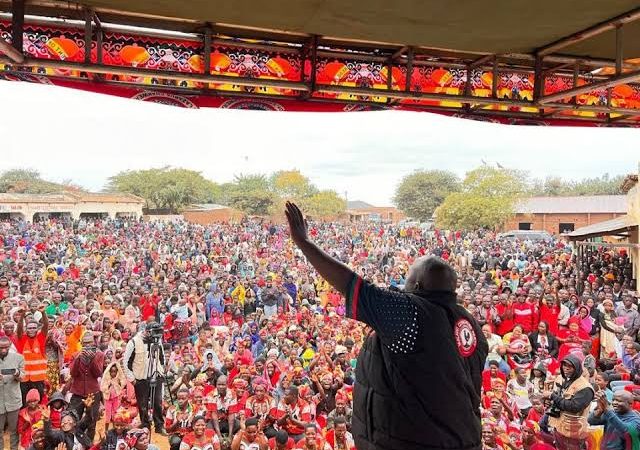
Addressing fellow citizens and supporters of the Democratic Progressive Party (DPP), Comrade Jumbe said political victory must be accompanied by moral responsibility and economic justice.
“We did not support this government merely to celebrate power,” he said. “We supported it to see fairness, prudence and national interest prevail.”
Government as the Strategic Buyer
Jumbe clarified that the appeal is not about interfering with private traders or manipulating market dynamics. Instead, he emphasized the role of government as the country’s largest and most strategic institutional buyer of maize.
He argued that government intervention through fair purchasing prices would stabilize the agricultural sector without distorting the open market.
“The issue is simple economic logic,” he said. “When the state steps in as a strategic buyer at a fair price, it safeguards food security and protects the productive base of the economy.”
High Input Costs, Low Output Returns
Farmers across Malawi have faced soaring production costs. Fertilizer prices reportedly reached around MK190,000 per 50kg bag during the last farming season. On top of that, farmers incurred additional expenses for seeds, land preparation, labour, transport and storage.
Agriculture, Jumbe noted, is capital-intensive and largely undertaken by small-scale farmers who bear significant risks tied to rainfall patterns and market uncertainty.
Against this backdrop, an offer of MK42,000 per 50kg bag of maize is widely viewed by farmers as insufficient.
“When input costs are extremely high and output prices remain low, the consequences are predictable,” Jumbe said. “Farmers become discouraged, production declines, and national food security becomes fragile.”
He warned that reduced planting in the next season would not be an act of defiance but a survival response.
Economic and National Stability Concerns
Malawi’s economy remains heavily dependent on agriculture, both for food security and rural livelihoods. Jumbe cautioned that weakening farmers today risks destabilizing the country tomorrow.
“You do not test the depth of a river with both feet,” he said, urging authorities not to gamble with the agricultural sector.
He further warned that if local production declines, the country will be forced to increase imports, putting additional pressure on foreign exchange reserves and affecting the broader economy.
“Supporting farmers through fair government purchasing is not just an agricultural issue. It is an economic stabilization strategy,” he added.
Call for Respectful Engagement
Jumbe stressed that the appeal is made in good faith and with respect for leadership, expressing confidence that authorities will listen to the concerns raised.
He also rejected suggestions that farmers should be penalized over allegations of hoarding, arguing that such claims cannot justify pricing decisions that undermine producers.
“We cannot throw our own farmers to the sea while supporting foreign producers,” he said. “For decades, these same farmers have fed the nation through droughts, economic hardship and political transitions. They have never abandoned Malawi.”
A Firm but Respectful Appeal
In conclusion, Jumbe urged the DPP government to act decisively by reviewing the maize purchasing price and ensuring it reflects the real cost of production.
“Protecting farmers is protecting Malawi,” he said. “A nation that neglects its producers risks becoming dependent on others.”
The appeal adds to ongoing national discussions about agricultural policy, food security, and the role of government in balancing market forces with social and economic stability.