

By Suleman Chitera
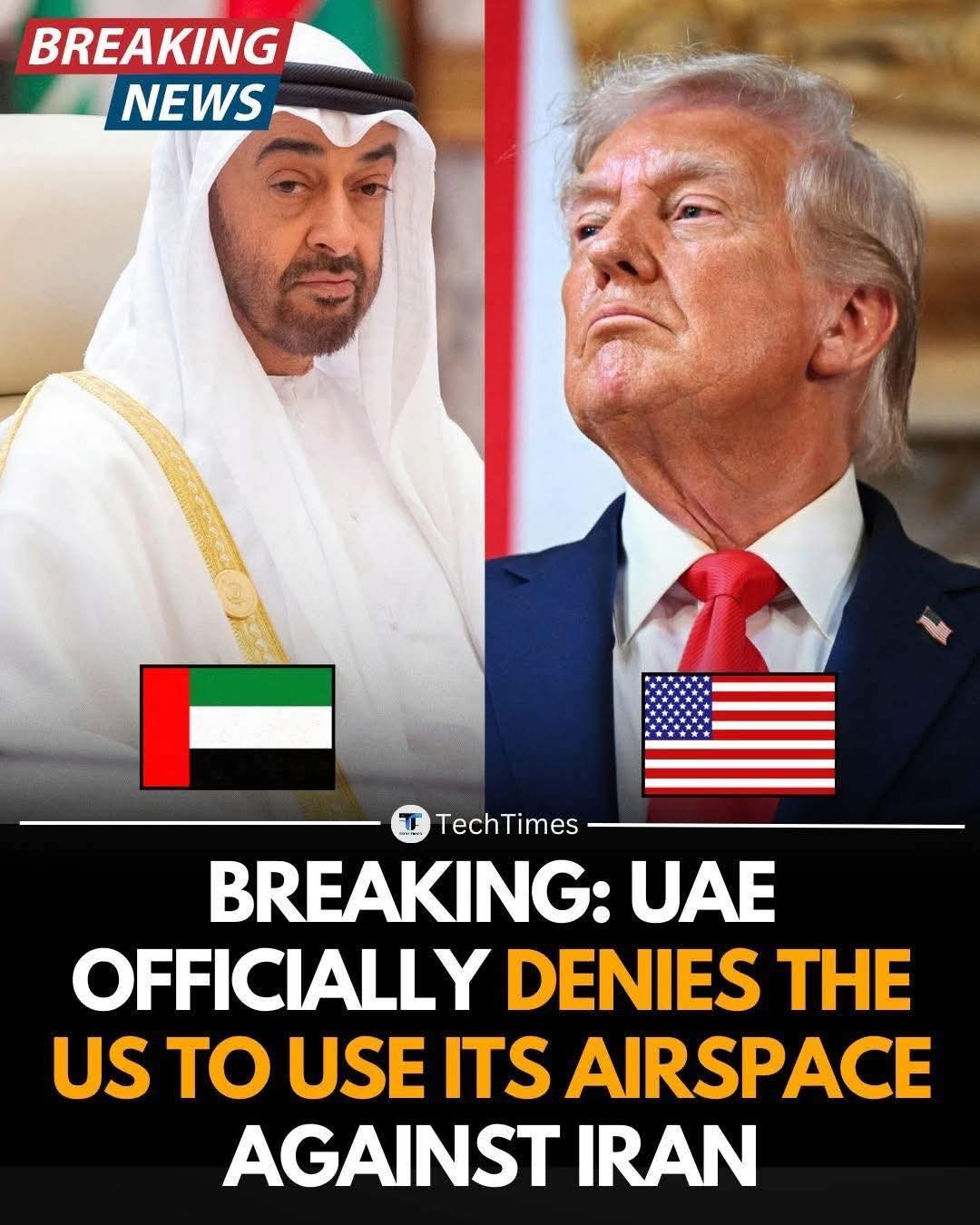
The United Arab Emirates has formally prohibited the United States from using its sovereign airspace for any military operations targeting Iran, a move that signals Abu Dhabi’s determination to avoid being pulled directly into a rapidly escalating regional conflict.
Officials in Abu Dhabi say the decision reflects the country’s priority to safeguard national security, economic stability, and critical infrastructure at a time when tensions between Washington and Tehran are intensifying. By denying access to its skies for offensive missions, the UAE is positioning itself as neutral and distancing itself from the U.S.-led military campaign known as Operation Epic Fury.
Strategic Shift in Gulf Policy
The reported restriction comes as American military activity in the region has increased sharply since late February, with multiple aerial strikes being launched against targets linked to Iranian forces. Limiting access to UAE airspace creates a new logistical challenge for United States Central Command, which has traditionally relied on Gulf-based facilities and regional air corridors to conduct operations quickly across the Middle East.
Military analysts say losing access to UAE airspace could complicate flight routes for American aircraft operating from bases or aircraft carriers in the region. Longer flight paths may require additional refueling and could reduce operational efficiency for strike missions.
Gulf States Reassessing Security Cooperation
The UAE’s decision also comes amid reports that other Gulf states are reassessing their level of military cooperation with Washington. Governments in Saudi Arabia and Kuwait are said to be reviewing their security arrangements with the United States in order to reduce the risk of retaliation on their own territories.
Iranian leaders have repeatedly warned that any country assisting attacks on Iranian territory could be treated as a legitimate military target. Those warnings have heightened concerns among Gulf monarchies that allowing their airspace or bases to be used for strikes could make them immediate targets in a wider conflict.
Balancing Alliances and Economic Interests
The UAE has historically maintained a delicate balance between its strong defense partnership with Washington and its economic ties with Tehran. While the country hosts U.S. military personnel and cooperates closely with American forces on regional security, it also maintains significant trade links with Iran, particularly through Dubai’s commercial sector.
Analysts say Abu Dhabi’s latest move reflects a broader diplomatic trend among Gulf states seeking to avoid escalation while protecting their economic interests and internal stability.
“This is about risk management,” said one regional security analyst. “The Gulf states are trying to prevent their territories from becoming battlefields if tensions between the United States and Iran spiral into open war.”
Impact on U.S. Military Operations
The restriction could affect the operational planning of American naval forces deployed in the Persian Gulf, including aircraft carrier strike groups responsible for conducting air operations across the region.
Without access to certain regional airspaces, U.S. forces may need to adjust flight corridors or rely more heavily on maritime-based aviation assets. This could slow response times and increase the complexity of ongoing missions.
Growing Fears of a Wider Conflict
The move comes as the confrontation between Washington and Tehran—sometimes described by analysts as the “Second Iran War”—continues to intensify through proxy clashes, airstrikes, and heightened military deployments across the Middle East.
Diplomats say the UAE’s stance may encourage other regional states to adopt similar policies designed to keep their countries out of direct confrontation.
For now, the decision underscores a growing reality in the Gulf: while many states remain allied with the United States, they are increasingly cautious about becoming front-line participants in a conflict that could destabilize the entire region.
As tensions continue to mount, the international community is watching closely to see whether the UAE’s move signals the beginning of a broader shift in regional security dynamics.
MALAWI
FREEDOM
NETWORK
United for Freedom, Justice and a Better Malawi
Airtel Money
0994095804
Mpamba
0881428759
FDH Bank
Acc No:
1400000670385NBS Bank
Acc No:
10118988Thank you for your support!