By Staff Reporter
A growing wave of criticism is being directed at the Human Rights Defenders Coalition (HRDC), with allegations that the civil society grouping has shifted from its watchdog role into what some describe as a politically motivated campaign against President Peter Mutharika.
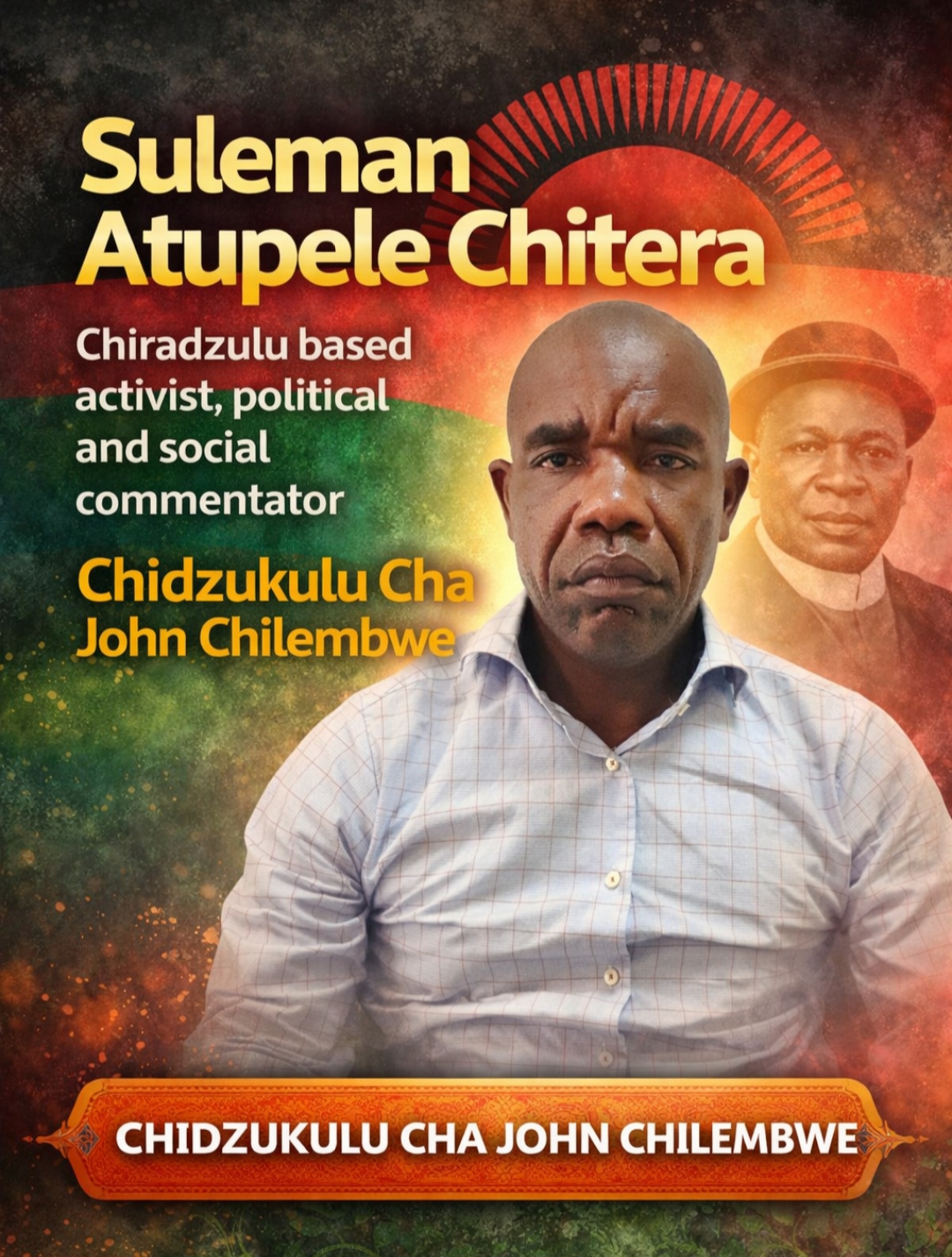
Activist Suleman Chitera has added his voice to the debate, asserting that HRDC’s actions increasingly suggest a deliberate effort to destabilize Mutharika rather than uphold neutral democratic principles. According to Chitera, the coalition’s pattern of engagement raises serious concerns about its credibility and independence.
“HRDC is no longer acting as a neutral defender of human rights. Its focus appears disproportionately aimed at Mutharika, creating the impression of a targeted political agenda,” Chitera argues.
The remarks come amid broader public discourse questioning HRDC’s consistency. During Mutharika’s administration, HRDC gained national prominence through mass mobilizations and sustained pressure on government over governance and electoral concerns. However, critics now argue that the same intensity has not been applied uniformly across the political landscape.
This perceived imbalance has led to accusations that HRDC may be selectively choosing its battles—raising its voice loudly when confronting certain figures, while remaining comparatively restrained in other instances. Such claims, whether proven or not, have fueled suspicion about possible political alignment and have intensified calls for greater transparency within the organization.
Political analysts warn that the stakes are high. In Malawi’s democratic framework, civil society organizations like HRDC play a critical role in maintaining checks and balances. Any perception of bias risks weakening public confidence not only in the organization itself but also in the broader accountability ecosystem.
“Consistency is the backbone of credibility,” one governance expert noted. “If civil society is seen to act selectively, it undermines its authority to hold power accountable.”
Despite the criticism, HRDC has previously defended its actions as being rooted in constitutional advocacy and public interest. The organization maintains that it responds to issues based on their urgency and impact, not political affiliation.
Yet for critics like Chitera, the current trajectory raises difficult questions that cannot be ignored. Is HRDC maintaining its independence, or is it drifting into the realm of partisan influence?
As debate intensifies, one point remains clear: the credibility of civil society depends on its ability to apply equal scrutiny across the board. Whether HRDC can reaffirm that principle in the face of mounting criticism will likely shape its role in Malawi’s democratic space going forward.