
 Suleman Chitera
By Suleman Chitera
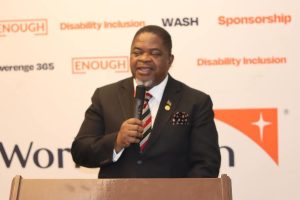
Minister of Education, Science and Technology, Bright Msaka SC, has announced that the government will intensify community engagement efforts in Mangochi District following concerns about high numbers of school-age children who may be dropping out of school before reaching upper primary levels.
Msaka made the remarks on Friday after monitoring the administration of the recently concluded Primary School Leaving Certificate of Education (PSLCE) examinations at Mphungu Primary School in Lilongwe.Bright Msaka Donates Relief Items To 800 Families Affected By Cyclone Freddy
The minister said findings from the monitoring exercise have revealed worrying trends, particularly in Mangochi, where evidence suggests that many children, especially girls, may not be progressing through the education system as expected.
“What we have observed is not merely a newspaper story but a serious issue that requires immediate attention and action. We will be going to Mangochi to engage local communities and stakeholders to better understand the challenges and work together on solutions,” said Msaka.
According to the minister, the situation goes beyond examination statistics and points to deeper social and economic barriers affecting children’s access to education.
He noted that while girls appear to be the most affected, there are also indications that some boys are dropping out before completing their primary education.Bright Msaka Represents Mutharika and DPP at Chilima Memorial in Nsipe
“The findings highlight the urgent need for community-level interventions. We need to understand why some learners are failing to remain in school and identify practical measures that can help them continue their education,” he said.
Education experts have long identified factors such as early marriages, teenage pregnancies, poverty, child labour, long distances to schools, and inadequate learning facilities as major contributors to school dropout rates in several districts across Malawi.DPP Vice President Bright Msaka SC Graces Mulhakho wa Alhomwe Festival
Msaka emphasized that the ministry’s responsibility extends beyond supervising examinations, saying monitoring exercises are also intended to identify weaknesses within the education system and inform policy responses.
“Our role is not only to ensure examinations are conducted smoothly. We must also identify gaps in learner participation and progression. Whenever signs of educational failure emerge, it becomes our duty to engage stakeholders and seek lasting solutions,” he explained.
The minister further cited observations made in Dedza District, where monitoring teams found significantly larger enrolment figures in lower classes compared to upper classes. He said this trend raises concerns about learner retention and progression through the education cycle.
Education stakeholders say the pattern reflects a national challenge in which many learners enrol in early grades but fail to reach examination classes due to various social and economic pressures.Msaka Urges LAMAU Graduates to Embrace Professionalism and Technology for Career Success
Msaka stressed that addressing dropout rates will require collective action involving parents, traditional leaders, teachers, religious institutions, civil society organisations and development partners.
He expressed confidence that community engagement initiatives in Mangochi and other affected districts will help identify practical interventions to keep children in school and improve completion rates.
The minister concluded by commending schools and examination officials for the generally smooth administration of the PSLCE examinations nationwide. However, he cautioned that the issues uncovered during the monitoring exercise should serve as a wake-up call for all stakeholders committed to improving educational outcomes in Malawi.Msaka Is The Solution To All Malawians Come 2025
As the government prepares targeted interventions, education advocates are hopeful that increased community participation and stronger support systems will help ensure that every child has an equal opportunity to complete their education and contribute meaningfully to national development.