
My Point of View: by Donald Malanga
The Author works with the University of Livingstonia and writes in his personal capacity
:A Step towards Attaining Malawi Vision 2063
Malawi Vision 2063 (MW2063) aims for a nation that is inclusive, self-sufficient, and industrialised, built on key pillars: Agricultural Productivity and Commercialisation, Industrialisation, and Urbanisation. Enablers such as effective governance systems, institutions, and a change in mindset support these. Yet, corruption remains the most significant barrier to realising this vision. It undermines public trust, misallocates development resources, and sustains poverty. Therefore, implementing life imprisonment for corruption is both justified and necessary to secure Malawi’s future.
Corruption in Malawi is deeply rooted and systemic. From procurement scandals to the misappropriation of public funds, the vice has impaired service delivery and hampered economic growth. According to Transparency International’s 2024 Corruption Perceptions Index, Malawi scored 34 out of 100, ranking 107th out of 180 countries. A significant 72% of Malawians believe that corruption has increased in the country, reflecting a profound loss of public trust in public institutions. This situation implies that without radical measures
MW2063 risks becoming merely an aspirational document rather than a transformative blueprint.
Corruption does not occur without victims. Every Malawi kwacha embezzled results in fewer hospitals, inadequate schools, forex scarcity, high inflation, and poor infrastructure. It deprives citizens of opportunities and increases inequality. When leaders and officials divert resources, they breach the social contract and impede national development.
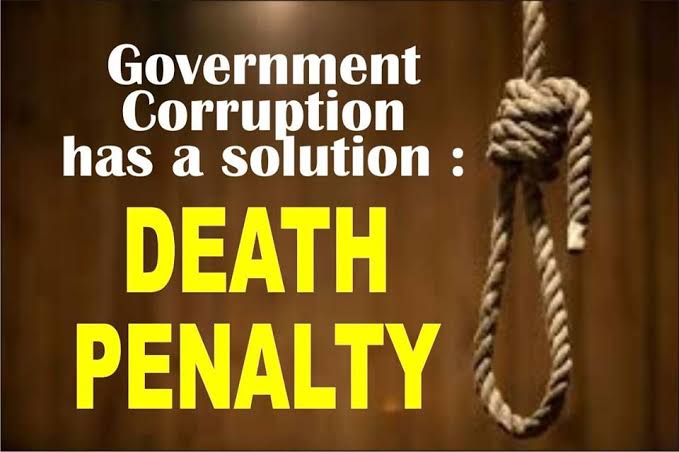
Therefore, punishment should be proportional to the harm caused Critics may argue that life imprisonment is severe, but the gravity of corruption warrants equally strict penalties. Current sanctions, such as fines or short-term imprisonment, are insufficient to deter offenders. For many, corruption remains a low-risk, high-reward activity. Life imprisonment would alter this dynamic, making corruption a high-risk, zero-reward crime.
Furthermore,
life imprisonment sends a powerful message: corruption is a threat to national security. Just as treason warrants severe penalties for endangering sovereignty, corruption should face similar punishment for undermining development. By implementing life sentences, Malawi would show zero tolerance and align governance with MW2063’s focus on strong governance systems and institutions.
Several countries have adopted strict anti-corruption measures with notable success. For instance, China enforces harsh penalties, including life imprisonment and capital punishment, for large-scale corruption.
Malawi does not need to go to such extremes, but implementing life imprisonment for major corruption cases could position it as a serious player in governance reforms.
This approach would also align with international commitments, such as the African Union Convention on Preventing and Combating Corruption (AUCPCC), which calls on countries to “prevent, detect, punish, and eradicate corruption through strong legal measures.” Similarly, the United Nations Convention against Corruption (UNCAC) emphasises criminalisation, law enforcement, and deterrent penalties as essential tools in fighting corruption globally.
Proponents may also raise concerns about judicial fairness and potential misuse of strict laws.
These are valid points, but they highlight the need for additional reforms. Strengthening judicial independence, improving investigative ability, and ensuring transparent trials are crucial safeguards. Life imprisonment should be reserved for cases involving serious public harm, such as large-scale embezzlement or abuse of office, not for minor infractions. Furthermore, punitive measures must be complemented by preventative strategies: strong auditing systems, protections for whistleblowers, and civic education. Life imprisonment is not a cure-all, but it remains a vital part of a comprehensive anti-corruption strategy.
MW2063 aims for a prosperous, resilient, and inclusive nation. Achieving this requires mobilising resources for development, boosting investor confidence, and ensuring fair service delivery. Corruption undermines all these objectives. By implementing life imprisonment for bribery, Malawi would take a bold step towards restoring public trust, protecting national wealth, and accelerating progress towards its vision.
In conclusion, imposing life imprisonment for corruption goes beyond punishment. it serves as a transformative action. It marks a decisive shift away from a culture of impunity and aligns governance with the aspirations of MW2063 and international anti-corruption standards. The cost of inaction is too high, and immediate, decisive steps are necessary. In addition, Malawi’s current anti-corruption efforts are insufficient to address the scale of the problem.
To secure the survival of the nation and fulfil MW2063, a powerful, unequivocal stance is required. Enacting life imprisonment for senior corruption offences might clearly signal that impunity is ending and that Malawi’s future will not be compromised. Though complex, this crucial move is vital to reclaim the country’s destiny and turn the promises of MW2063 into reality for all Malawians.