By Jones Gadama
In the annals of Malawi’s political history, few episodes evoke as much reflection and debate as the years under former President Dr. Lazarus Chakwera’s leadership, particularly regarding the treatment of Professor Arthur Peter Mutharika.
It is crucial for Malawians not to forget the trials and tribulations that Mutharika endured during this period.
While some may be tempted to overlook the past, former President Bakili Muluzi’s poignant reminder that Malawians “easily forget what happened in the past though it was bad” serves as a sober call to remember and learn.
The persecution, oppression, and deliberate attempts to make Professor Mutharika’s life miserable under Chakwera’s administration must not be erased from collective memory.
Mutharika’s ordeal was unmistakably marked by a series of punitive actions that went beyond political rivalry, veering into an aggressive campaign to undermine his stature and dignity. One of the gravest measures taken against him was the freezing of his bank accounts.
The Anti-Corruption Bureau (ACB) froze two accounts linked to Mutharika—one solely his, and another shared with his wife, Gertrude—citing allegations related to the K5 billion cement scandal.
This move effectively cut off his access to personal funds, creating a financial stranglehold that not only threatened his comfort but also his ability to support his family and meet retirement obligations.
The freezing of these accounts was not a mere administrative action; it was a clear tool of political persecution, aimed at destabilizing a former president who had dedicated years to national service.
But the persecution did not stop at financial restrictions. Mutharika faced personal liability for executive decisions made in his capacity as president.
He, alongside former Secretary to Government Lloyd Muhara, was ordered to pay a staggering K69 million for the forced retirement of Chief Justice Andrew Nyirenda.
This ruling was, by all accounts, a miscarriage of justice, as it failed to recognize that these decisions were taken in his official role as Head of State, not as an individual acting outside the bounds of his office. The financial burden imposed was heavy enough, yet it came at a time when his accounts were frozen, forcing him to rely on the generosity of well-wishers.
This episode underscored the extent to which Mutharika was targeted: he was penalized financially for actions taken in the line of duty, an unprecedented and harsh form of retribution.
While enduring these pressures, Mutharika lived in an unfinished residence in Mangochi, a situation reflecting the personal sacrifices he made during this tumultuous period.
Although there is limited public information regarding his occupation of this residence, it symbolically represented the stripped-down reality he faced—far removed from the trappings of power and luxury. It was a stark contrast to the life many might have expected for a former head of state, yet Mutharika bore it with dignity.
The government’s actions extended beyond the tangible into the psychological realm.
Chakwera’s regime employed George Kasakula on Malawi Broadcasting Corporation (MBC) to launch relentless psychological attacks against Mutharika, aiming to erode his public image and mental fortitude. Yet, despite these orchestrated efforts, Mutharika’s resilience shone through.
His courage to remain in Malawi, the country of his origin and leadership, rather than seeking refuge in America—where he grew up and spent much of his life—speaks volumes about his patriotism and commitment to his people.
In an era where many might flee political persecution, Mutharika stood firm, embodying the true spirit of a statesman undeterred by adversity.
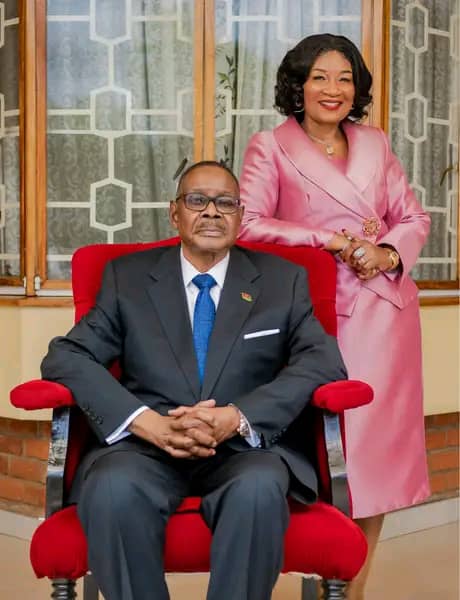
A significant pillar of strength throughout this ordeal was his wife, Gertrude Mutharika.
In a society where many spouses might abandon their partners amid hardship, especially when accustomed to affluent and luxurious lifestyles, Gertrude’s steadfast loyalty was exceptional.
She stood by her husband every hour and every day, providing comfort and support when it was most needed. Her unwavering presence through these dark times deserves commendation and recognition.
In many ways, her strength fortified Mutharika’s resolve, making their partnership a beacon of endurance and hope for Malawians.
Despite these formidable challenges, the Chakwera administration failed to effectively govern Malawi.
Instead of progress, the country saw increased suffering among its people, a reality that fueled public discontent. This dissatisfaction culminated in the September 16 elections, where the electorate decisively expressed their rejection of Chakwera’s leadership.
The outcome was a clear message that persecution and mismanagement do not go unnoticed by the people, who ultimately hold the power to determine their leaders.
As we stand on the cusp of 2026, it is fitting to recognize Professor Arthur Peter Mutharika as a man of the twentieth century—a leader whose resilience, maturity, and patriotism were tested and proven under the harshest conditions. His journey through persecution has not only shaped his legacy but also provided a powerful example of enduring leadership.
Equally deserving of honor is Gertrude Mutharika, the woman of the twentieth century, whose support and fortitude exemplify the strength behind every great leader.
In remembering these years, Malawians are called upon not to forget the persecution inflicted upon Mutharika by Chakwera and his party, the Malawi Congress Party (MCP). Forgetting such history risks repeating the cycle of oppression and division.
Instead, this chapter should strengthen our resolve to uphold justice, fairness, and respect for all leaders, regardless of political differences.

The resilience shown by Professor Arthur Peter Mutharika and Gertrude Mutharika is a testament to the enduring spirit of Malawi itself—undaunted, unbowed, and unwavering in pursuit of a better future.
- Trump Suggests Iran Conflict Could Be Resolved, Calls for Strait of Hormuz Protection by User Nations
- HRDC Accused of Targeting Mutharika in Politically Charged Campaign — Chitera Speaks Out
- Kamphangala accuses Parliament of politicizing Chilima’s inquiry
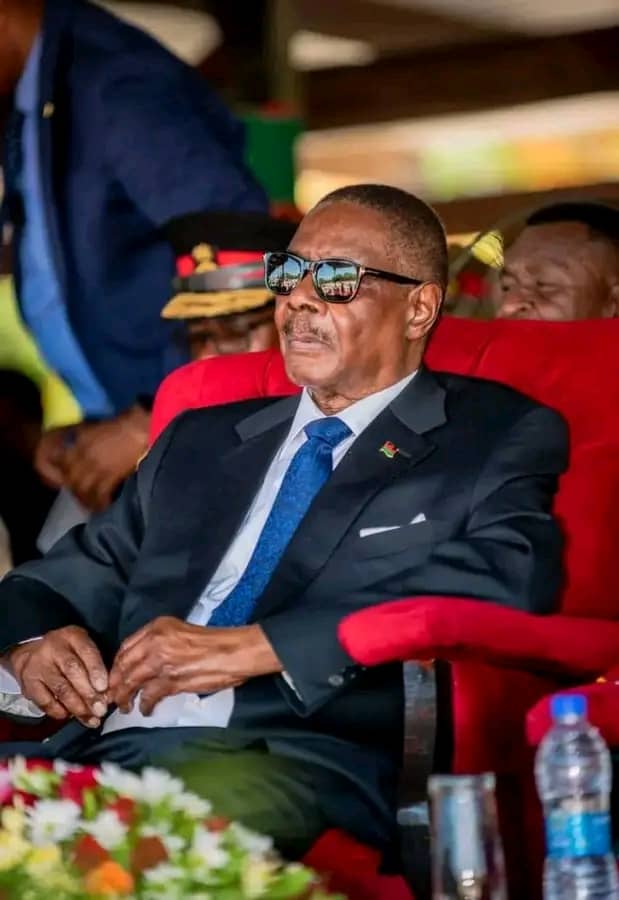
- Ntanyiwa thanks Mutharika for promising to tune in to Limpopo FM
- Malawi turns A corner: Mwanamvekha’s economic leadership delivers real relief