By Suleman Chitera
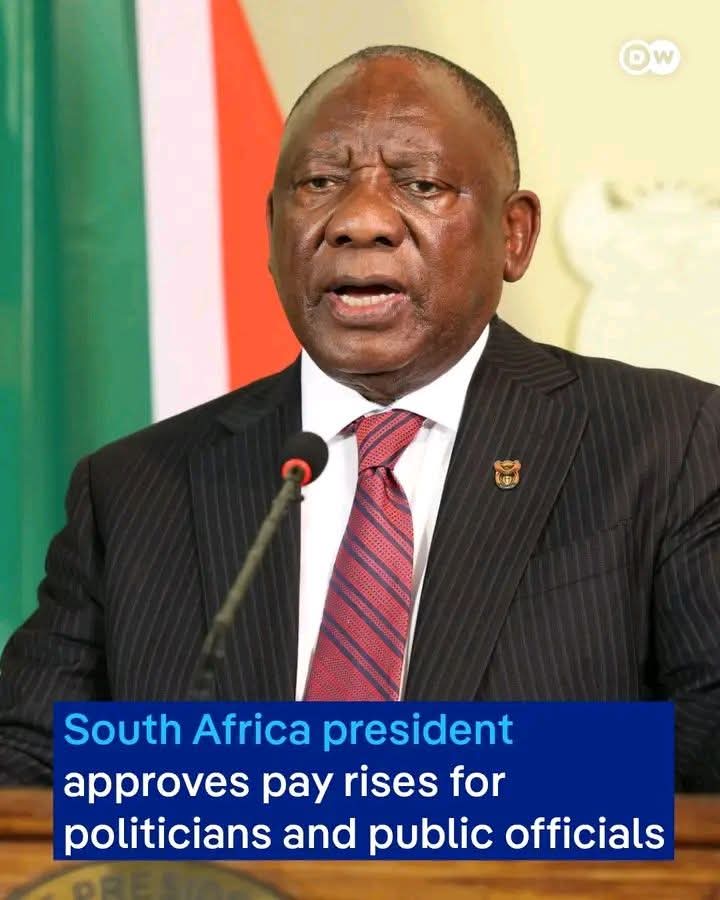
South African President Cyril Ramaphosa has approved salary increases for politicians and other public office-bearers, a move that has triggered mixed reactions across the country.
The adjustments will take effect from April 1 and apply across the executive and legislative branches. Under the revised pay structure, the deputy president will earn approximately US$177,000 per year, cabinet ministers about US$151,000, deputy ministers roughly US$124,000, while Members of Parliament will take home around US$71,000 annually.
According to the Presidency, the salary review was informed by inflationary trends, the state of government finances, and the overall public sector wage bill. Officials argue the increases are measured and necessary to maintain the integrity and functionality of public office.
However, the decision has not gone unchallenged. Labour unions and some political groups have criticised the timing, saying pay rises for elected leaders are difficult to justify as many South Africans grapple with rising living costs, unemployment, and economic uncertainty.
The debate highlights a recurring tension in South Africa’s political economy: balancing fiscal responsibility and fair compensation for public officials against widespread socio-economic pressures faced by ordinary citizens.
- CDEDI Blasts Chakwera Era as “Malawi’s Worst Mistake,” Says Mutharika Comparison an “Insult”
 By Suleman Chitera The Centre for Democracy and Economic Development Initiatives (CDEDI) has delivered a scathing assessment of the administration…
 - CCYCDO Strengthens Community Ties Through Visit to Disabled Individuals in Chiradzulu

- Gulf in Flames: Iran’s Retaliatory Blitz Shakes U.S.–Israel Alliance and Redraws the Balance of Power

- Msonda claims corruption cannot happen in government without him being aware

- Kamphangala plead with Kenyatta to revoke panga wielding thugs bail