By Suleman Chitera
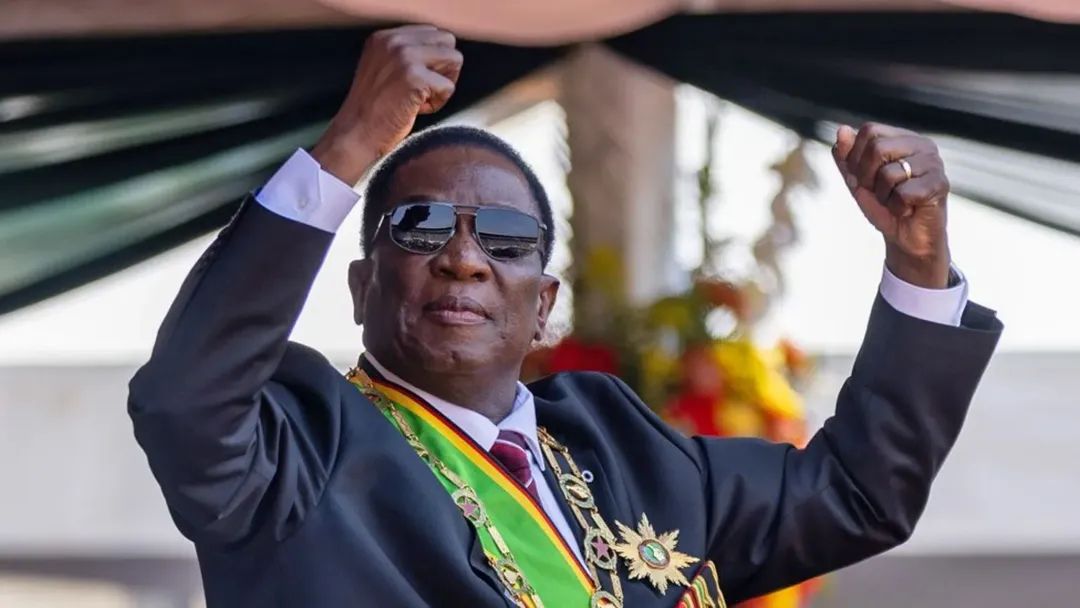
Zimbabwe’s government has taken a decisive and controversial step that could fundamentally reshape the country’s democratic architecture. Cabinet has approved draft constitutional amendments that would alter how presidents are elected and potentially extend President Emmerson Mnangagwa’s stay in office to at least 2030.
At the centre of the proposed reforms are two major changes: shifting presidential elections from a direct popular vote to an indirect vote by Parliament, and extending the presidential term from five years to seven, while retaining a two-term limit.
If enacted in a manner that applies to the incumbent, the changes would significantly prolong Mnangagwa’s political tenure, intensifying concerns over democratic backsliding in a country still grappling with a legacy of entrenched executive power.
From Ballot Box to Parliamentary Vote
Currently, Zimbabwe’s president is elected through a nationwide popular vote. The draft legislation would transfer that power to Members of Parliament, effectively allowing lawmakers to choose the head of state.
Given that the ruling Zanu-PF party controls a majority in both the National Assembly and the Senate, critics argue that such a system would consolidate power within the ruling elite and weaken direct democratic accountability.
Opposition parties and civil society groups fear the move would transform presidential elections into an internal parliamentary exercise dominated by party loyalty rather than public mandate. Analysts warn this would reduce citizens’ direct influence over executive leadership and could undermine electoral competitiveness.
Extending the Presidential Term
The proposal to increase presidential terms from five to seven years, while maintaining a maximum of two terms, also carries significant implications.
On paper, a two-term limit appears intact. However, constitutional law experts point out that if the changes are structured to reset or reinterpret term calculations, they could effectively grant Mnangagwa additional time in office beyond the current constitutional framework.
Zimbabwe’s 2013 Constitution, adopted after a national referendum, introduced stricter term limits aimed at preventing prolonged rule reminiscent of Robert Mugabe’s 37-year presidency. Legal scholars argue that altering these safeguards—particularly in ways that could benefit a sitting president—risks eroding constitutionalism.
Legal and Constitutional Questions
Justice Minister Ziyambi Ziyambi has stated that the government will conduct public consultations before tabling the bill in Parliament. However, constitutional experts contend that any amendment affecting presidential term limits requires approval through a national referendum, not merely a parliamentary vote.
They further argue that, as a principle of constitutional democracy, term-limit changes should not apply to a sitting president. Applying such amendments retroactively, they say, would violate the spirit of the law and undermine the legitimacy of the reforms.
“This is not just a technical amendment,” said one Harare-based constitutional analyst. “It goes to the heart of executive power and democratic choice. You cannot rewrite the rules mid-game.”
A Familiar Pattern?
Mnangagwa, 83, assumed office in November 2017 following a military intervention that forced long-time leader Robert Mugabe to resign. At the time, many Zimbabweans hoped the transition marked the beginning of a new democratic chapter.
However, critics argue that the proposed reforms mirror tactics seen in other jurisdictions where constitutional amendments have been used to extend incumbents’ time in office under the guise of legal reform.
The move is likely to draw scrutiny from regional bodies such as the Southern African Development Community (SADC) and the African Union, both of which espouse democratic governance and constitutional adherence among member states.
Political Calculations
With Zanu-PF holding a parliamentary majority, the legislative path may not be procedurally difficult. The more complex terrain lies in public perception and potential legal challenges.
If the reforms proceed without a referendum where constitutionally required, court battles could follow. Civil society organisations are already signalling readiness to challenge any process they deem unconstitutional.
For many Zimbabweans, the issue transcends Mnangagwa personally. It touches on a broader question: whether constitutional frameworks are enduring social contracts or flexible instruments in the hands of those who command parliamentary numbers.
As the government prepares for consultations, the stakes are clear. The debate will not simply be about electoral mechanics or term lengths. It will be about the direction of Zimbabwe’s democracy—and whether the hard-won constitutional safeguards of 2013 remain intact or become subject to political recalibration.
In a nation with a long history of concentrated executive authority, the proposed amendments are being viewed not as routine reforms, but as a pivotal test of constitutional integrity.