
By Staff Reporter
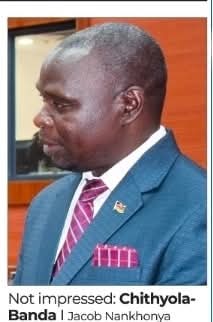
Leader of Opposition Simplex Chithyola has delivered a blistering critique of the 2026/2027 National Budget, arguing that the financial plan presented by Finance Minister Joseph Mwanamveka is not an economic recovery strategy but a tax-heavy survival framework imposed on already struggling Malawians.
Presenting his response in Parliament, Chithyola dismissed the Budget as “a beautifully written document attempting to convince struggling Malawians that hardship is progress,” insisting that citizens cannot survive on rhetoric while grappling with rising living costs, shrinking incomes, foreign exchange shortages, and quiet business closures.
Revenue Growth “From Citizens’ Pockets”
The Opposition Leader questioned the government’s projection that domestic revenue will rise to over K7 trillion, demanding clarity on the true drivers of that growth.
“Where is this money coming from?” he asked. “Not from factories. Not from exports. Not from industrial expansion.”
According to Chithyola, the projected revenue increase will largely be financed through expanded taxation and levies targeting ordinary citizens. He accused the administration of resorting to what he termed the “easiest economic policy in the world — when you fail to grow the economy, tax the citizens harder.”
Growth and Inflation Targets Questioned
The Minister projected inflation to fall to 15.1 percent and economic growth to rise to 4.1 percent. However, Chithyola challenged the credibility of those forecasts, arguing that no clear industrial expansion plan or export growth strategy has been outlined to support such projections.
“Hope is not an economic indicator and optimism is not fiscal policy,” he said, adding that statistical promises in parliamentary speeches do not alter the realities facing households and businesses on the ground.
Recruitment Freeze Sparks Youth Concerns
A key area of contention is government’s decision to freeze public sector recruitment. Chithyola described the move as contradictory in a country with a predominantly young population and already strained public services.
“You cannot freeze recruitment and claim economic recovery at the same time,” he argued. “That is not fiscal discipline — it is austerity imposed on the future generation.”
He warned that the freeze risks deepening unemployment among educated youth while weakening essential services such as healthcare, education, and policing.
Duty-Free Bibles Versus Cost of Living
While government announced removal of import duty on Bibles and religious materials, Chithyola described the move as symbolic rather than practical.
“Malawians cannot eat duty-free scriptures,” he said, emphasizing that citizens are demanding affordable fertilizer, stable prices, jobs, and functioning hospitals — not symbolic fiscal gestures.
Digital Taxation Draws Fire
The Budget also introduces taxation on digital platforms such as Netflix, YouTube, and Facebook.
Chithyola argued that these platforms are no longer luxuries but essential tools for commerce, education, marketing, and income generation. He said thousands of young Malawians rely on digital platforms for entrepreneurship and survival.
“At a time when jobs are frozen, government has decided to tax the very platforms young people are using to survive,” he said, describing the move as policy contradiction.
Cosmetics Classified as Luxury Goods
The introduction of excise taxes on perfumes and cosmetic products also came under scrutiny. Government has categorized them as luxury goods, but Chithyola contended that such classification ignores everyday realities.
“Perfumes and cosmetics are not luxuries for most citizens,” he said. “They are part of personal dignity and professional survival, especially for working women and young entrepreneurs.”
Salary Adjustment Uncertainty
Perhaps most concerning, according to the Opposition Leader, is the lack of clarity on public sector salary adjustments. While indications suggest increases between 12 and 15 percent, the Minister did not provide specific figures.
“National salaries cannot be governed by rumours,” Chithyola said. “Civil servants do not budget using hints.”
He stressed that teachers, nurses, police officers, and junior civil servants need clear, concrete figures to plan their lives amid rising costs.
“Livelihoods, Not Symbolic Comfort”
Chithyola concluded that economic policy must prioritize livelihoods over symbolism. He maintained that without tangible improvements in job creation, industrial growth, export expansion, and service delivery, the Budget risks deepening hardship rather than alleviating it.
As debate continues in Parliament, the central question remains whether the fiscal plan will stabilize the economy — or, as the Opposition argues, further burden ordinary Malawians in the name of recovery.