
By Suleman Chitera
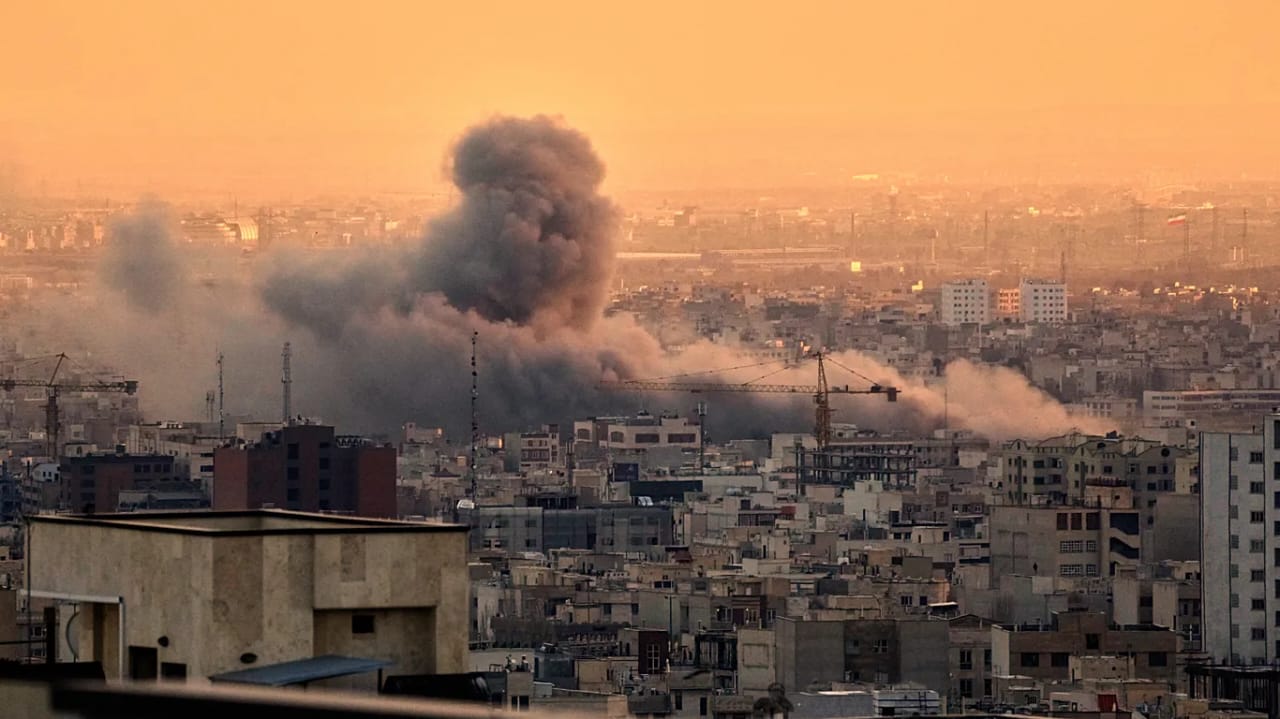
A dramatic escalation in tensions between the United States, Israel and Iran has triggered one of the most volatile security crises the Middle East has faced in decades. Claims circulating from regional sources describe a large-scale aerial confrontation followed by coordinated Iranian strikes targeting American military installations across the Gulf — developments that, if verified, would mark a profound shift in deterrence dynamics.
According to reports, American and Israeli forces launched a massive air operation involving hundreds of aircraft aimed at crippling Iranian military infrastructure. However, Iranian defenses were reportedly prepared for the assault, relying on layered air defense systems and electronic warfare capabilities that forced attacking aircraft to operate from outside Iranian airspace.
Shortly after repelling the alleged assault, Iran is said to have responded with coordinated missile strikes targeting U.S. military facilities across the region — including bases in Jordan, Iraq, Qatar, the UAE, Bahrain, Saudi Arabia and Kuwait. The scale and simultaneity of the strikes reportedly stunned defense planners, raising questions about the sophistication of Tehran’s targeting and surveillance systems.
One of the central claims involves the destruction of a high-value U.S. early-warning radar system in Qatar — described as a long-range ballistic missile tracking installation. While independent verification remains limited, such a strike would represent a significant degradation of regional missile defense architecture. U.S. missile shield systems, including THAAD and Patriot batteries positioned to protect Israel and Gulf states, were reportedly tested under intense pressure during the exchange.
The alleged failure of multiple air defense systems to fully intercept incoming missiles has fueled narratives that electronic warfare and precision strike capabilities are rapidly evolving in the region. Iranian officials have long emphasized the development of liquid-fueled, heavy-payload ballistic missiles designed for high accuracy and strategic deterrence.
Strategically, analysts suggest Iran’s core objective in targeting American bases would be to blind or degrade radar coverage across the Gulf and northern Israel — disrupting early warning networks and creating operational ambiguity. In modern warfare, control of the electromagnetic spectrum and real-time intelligence is often as decisive as firepower itself.
The broader geopolitical consequences could be far-reaching. Energy markets remain on edge as tensions heighten near the Strait of Hormuz — a maritime chokepoint through which a significant share of global oil supply passes. Any sustained conflict could ripple through financial markets, insurance sectors, and real estate hubs such as Dubai and Abu Dhabi, traditionally viewed as safe havens for global capital.
The crisis also carries implications beyond the Middle East. Observers point to the strategic interests of Russia and China, both of whom closely monitor U.S. military deployments. While direct involvement remains unproven, intelligence-sharing dynamics and shifting alliances could further complicate the global balance of power.
In Washington, policymakers face mounting pressure to recalibrate strategy without triggering full-scale regional war. In Jerusalem, security officials assess the resilience of missile defense systems under saturation attack. In Tehran, leaders frame the confrontation as a demonstration of deterrence capability rather than an invitation to escalation.
What is clear is that modern conflict is no longer measured solely by fleet size or bomb payloads. It hinges on cyber capability, electronic warfare dominance, precision targeting, and intelligence superiority. If the reported events prove accurate, this confrontation may signal not just another Middle East flare-up — but a turning point in the architecture of global deterrence.
As diplomatic channels strain and military postures harden, the region stands at a crossroads: escalation toward open war, or recalibration through uneasy deterrence. The coming days will determine which path prevails.