
 Suleman Chitera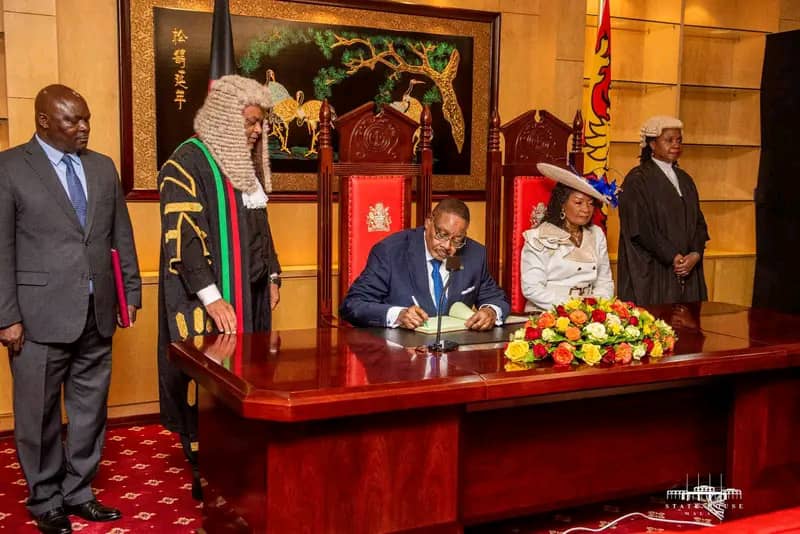
By Burnett Munthali
President Arthur Peter Mutharika on Friday delivered a sweeping and assertive State of the Nation Address, outlining what was described as a decisive path toward economic recovery and people-centered development for Malawi.
The address was presented during the State Opening of the Second Meeting of the 52nd Session of Parliament and the 2026/2027 Budget Meeting in Lilongwe.
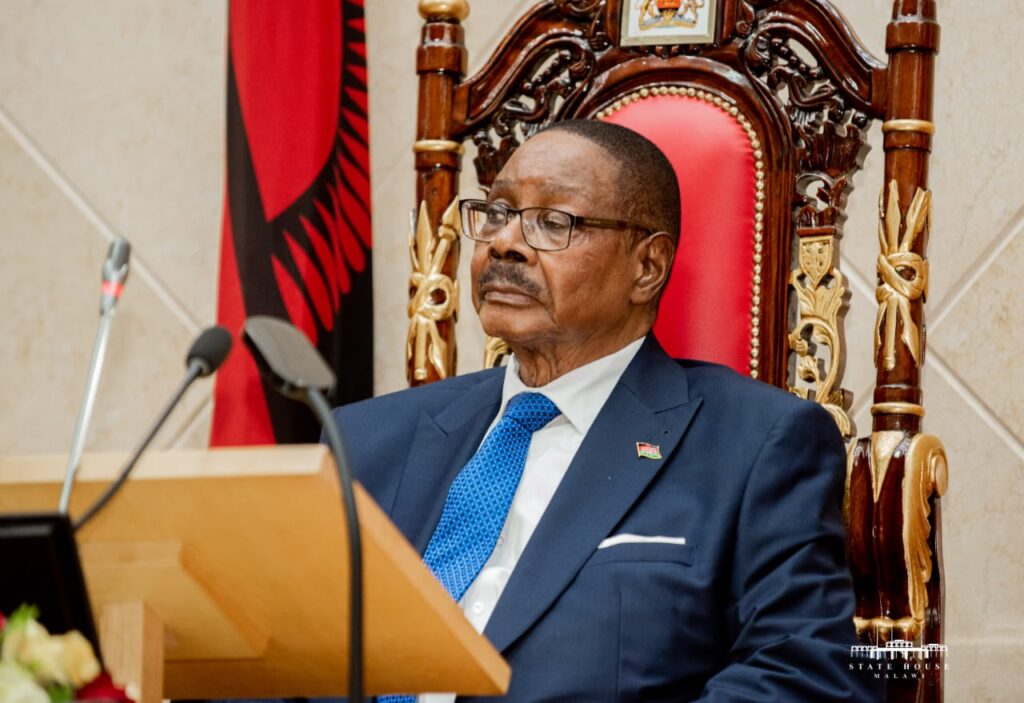
In the speech, the President declared the session historic, marking the presentation of the first full budget since the Democratic Progressive Party returned to power.
Parliament was reminded that upon inauguration, the country was in what was described as a man-made economic crisis.
According to the address, millions of Malawians were facing hunger and the nation could not produce enough food to feed its own people.
Foreign exchange reserves were said to be depleted, making it impossible to import essential commodities such as fuel.
The situation was characterized by business closures, daily price increases, and worsening living conditions for ordinary citizens.
Hospitals reportedly lacked even basic painkillers while public resources were being looted as the economy deteriorated.
Upon assuming office, an agenda was immediately set to reverse the crisis and rebuild the economy.
The administration began by restoring order in public sector management, which had been described as chaotic.
Measures implemented included stopping fraudulent contracts and reducing reckless travel and non-essential expenditure.
Personnel systems were audited to remove ghost workers, and merit-based appointments were prioritized.
On immediate economic interventions, government purchased maize to address the hunger crisis and stabilize prices.
Maize prices were reported to have dropped significantly from around MK100,000 per 50-kilogram bag to between MK38,000 and MK55,000.
Affordable fertilizer was procured and distributed to 65 percent of the 1.1 million targeted beneficiaries, an improvement from the previous year’s 45 percent.
Plans were announced to facilitate local fertilizer production to ensure long-term sustainability.
Regarding tobacco, 3.5 million kilograms of unsold tobacco found on auction floors were cleared, earning US$8.6 million.
The mega farm programme was described as a “total mess,” prompting directives for its review and redesign.
On macroeconomic performance, inflation, which stood at 28.7 percent in September 2025, is projected to decline to below 21 percent in 2026.
Economic growth is projected to rise from 2.7 percent to 3.8 percent in 2026 and 4.9 percent in 2027.
While foreign exchange reserves remain below the desired three-month import cover, measures are underway to boost forex generation, including gold monetization and regulatory reforms.
Austerity measures were introduced, including reduced fuel entitlements for ministers and restricted local and foreign travel.
In decentralization, a dramatic increase in the Constituency Development Fund was unveiled, rising from MK220 million to MK5 billion per constituency per year.
A digital dashboard will be introduced to ensure transparency and accountability in CDF utilization.
A firm warning was issued that anyone found mismanaging these resources would face the law.
In agriculture and food security, government interventions were credited with stabilizing maize prices and improving fertilizer access.
A broader commitment was reaffirmed to transform Malawi from a consuming nation into a producing and exporting economy.
Development of Special Economic Zones including Magwero, Chigumula, Matindi, and Dunduzu industrial parks will continue.
Support for cooperatives and small and medium enterprises will be strengthened to enhance value addition and import substitution.
In tourism, the Tourism Authority has been operationalized, with progress reported on the Salima Integrated Tourism Resort and Likoma Activity Center.
Within the energy sector, 31 megawatts were restored at Tedzani Hydro, 10 megawatts commissioned at Raiply Biomass in Mzimba, and another 10 megawatts installed at the Nanjoka-Egenco Solar Plant in Salima.
A target has been set to increase national generation capacity from 551 megawatts to over 1,000 megawatts by 2030.
Plans were also announced to double national fuel storage capacity from 60 million to 120 million litres through new facilities in Blantyre, Lilongwe, and Mzuzu.
In mining, suspension of new licenses, auditing of the license registry, and a ban on exporting raw minerals were declared pending legal reforms.
An advanced stage has been reached in establishing a Sovereign Wealth Fund to ensure mining proceeds benefit Malawians.
On transport infrastructure, road maintenance has resumed nationwide following criticism of its suspension in 2022.
Tollgate revenues collected along the M1 Road have been directed to be ringfenced for maintenance of that road.
Multiple road rehabilitation and upgrading projects were outlined, alongside plans to construct Thuchila Bridge.
In aviation, plans are underway to expand Malawi Airlines’ fleet from three to ten aircraft within five years in partnership with Ethiopian Airlines.
International destinations are expected to increase from seven to twenty-seven.
Rail transport reforms include rehabilitation of the Marka-Bangula line and advancement of the Nacala Rail Corridor agreement.
Completion of Likoma Port and upgrading of Chipoka Port were also announced under marine transport reforms.
On education, implementation of free secondary education in public schools, excluding boarding, was confirmed.
More than 1,800 students who had dropped out due to financial constraints have already returned to school.
Higher education investment will include funding for Mombera University and expansion of student loan beneficiaries from 32,480 to 38,000.
In health, improved drug supplies were reported following increased budget allocations of MK17 billion and an additional MK5 billion for vaccines.
Mzuzu Central Hospital will begin offering dialysis services in the coming financial year.
A five-year USD744 million grant from the United States Government has been secured to support health service delivery.
For youth empowerment, MK100 million in annual soft loans will be allocated to youth in every constituency starting 2026/27.
A similar commitment was made for women’s economic empowerment, alongside MK250 million in grants for persons with disabilities.
In disaster management, four million Malawians required emergency food relief valued at MK209 billion, with MK138 billion already mobilized.
Recent floods have affected 39,200 households and caused 43 deaths, prompting a renewed appeal for support.
All ministries were directed to embrace digital technology and strengthen online service delivery.
A zero-tolerance stance on corruption was declared, emphasizing that no individual, regardless of position, would be shielded from prosecution.
The address concluded with an appeal to the Executive, Legislature, and Judiciary to act patriotically and prioritize national interests.
The 2026 State of the Nation Address therefore laid out an ambitious roadmap centered on economic stabilization, structural reforms, infrastructure expansion, and social protection, setting the tone for what was described as a decisive era of recovery and national transformation.