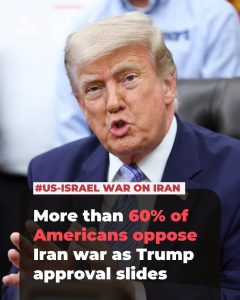
Senegal’s Prime Minister Ousmane Sonko has launched a scathing attack on U.S. President Donald Trump, accusing him of destabilizing the global order and pushing the world toward dangerous uncertainty through the ongoing conflict with Iran.
Speaking at a high-level international conference on sovereignty in Dakar, Sonko did not mince his words. He argued that instead of delivering peace and security, Trump’s leadership has “plunged the world into chaos,” raising serious concerns about the direction of global governance under Washington’s influence.
War Without Results
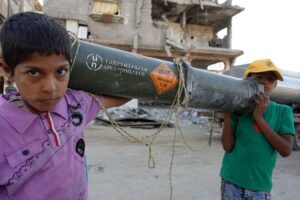
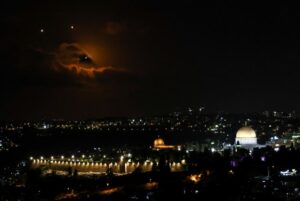
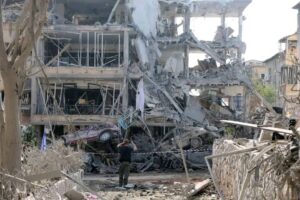
Sonko’s criticism centers on the controversial U.S.-Israel military campaign against Iran, which began more than a month ago. The campaign, backed by Israel, was framed as a decisive effort to cripple Iran’s military capabilities—particularly its ballistic missile systems—and to force Tehran to abandon its nuclear ambitions.
However, according to Sonko, those objectives have largely failed.
“None of the stated goals have been achieved,” he said, pointing instead to escalating instability across multiple regions.
Rather than weakening Iran, the conflict has intensified geopolitical tensions, disrupted global trade, and heightened fears of a wider regional war.
Strait of Hormuz Crisis
At the center of the turmoil is the strategic Strait of Hormuz, a critical maritime route for global oil shipments. The waterway became a flashpoint after Iran imposed restrictions in response to the attacks, triggering panic in international energy markets.
In a dramatic escalation, Trump reportedly warned that “a whole civilization will die tonight” if Iran did not reopen the strait—remarks that drew sharp criticism globally for their severity.
This week, however, a fragile breakthrough emerged. The United States and Iran agreed to a conditional two-week ceasefire, temporarily easing tensions and allowing shipping traffic to resume through the Strait of Hormuz.
A More Dangerous World?
Despite the ceasefire, Sonko questioned whether the world is now safer under Trump’s leadership.
He argued that the conflict has:
Increased global insecurity
Undermined international diplomacy
Set a dangerous precedent for unilateral military action
For Sonko, the issue goes beyond the Middle East. He framed the crisis as part of a broader erosion of international norms and respect for sovereignty—principles he emphasized as critical for global stability, especially for developing nations.
Global Reaction and Implications
Sonko’s remarks reflect growing unease among global leaders, particularly in Africa and the Global South, about the ripple effects of great-power conflicts. Rising fuel prices, disrupted supply chains, and heightened geopolitical risk are already being felt far beyond the battlefield.
While the ceasefire offers a brief window for diplomacy, analysts warn that it remains fragile. Any collapse could reignite hostilities and push the region—and potentially the world—closer to a broader confrontation.
Conclusion
As tensions simmer beneath the surface, Sonko’s blunt assessment underscores a widening divide in how global leadership is perceived. Whether the ceasefire leads to lasting peace or merely delays further escalation remains uncertain.
What is clear, however, is that the stakes are no longer confined to one region—they are global, and the consequences are unfolding in real time.