
 Suleman Chitera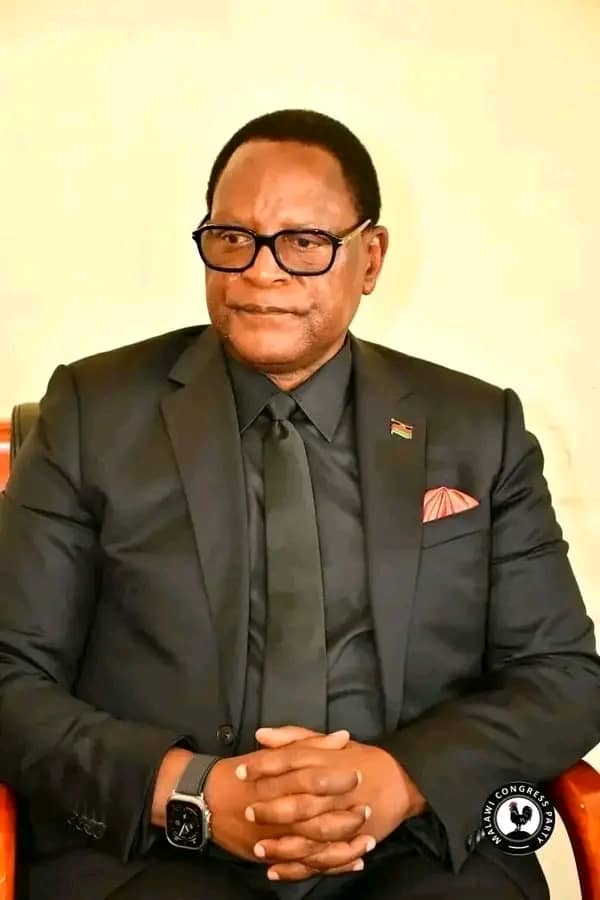
By Suleman Chitera
The ongoing inquiry into the controversial acquisition of Amaryllis Hotel has taken a dramatic turn, with growing public concern over the absence of former President Lazarus Chakwera from the proceedings. As scrutiny intensifies, analysts and governance advocates argue that any final report produced without his testimony risks being fundamentally incomplete.
A Critical Missing Piece
The Amaryllis Hotel deal—already under heavy investigation due to allegations of inflated valuation, questionable financial flows, and possible abuse of public funds—occurred within a governance framework that ultimately fell under the authority of the presidency.
Kamphangala faults Chakwera wrong for politicizing the funeral Service
As Head of State at the time, Chakwera’s role may not have been operational, but it was undeniably supervisory. In high-level transactions involving institutions like the Public Service Pension Trust Fund (PSPTF), the expectation is that the presidency provides overarching accountability.
His absence from the inquiry raises key questions:
- Was he formally invited to testify?
- Did he decline, or was he deliberately excluded?
- What level of knowledge did he have regarding the transaction?
Without answers to these questions, the inquiry risks leaving a significant accountability gap.
Why Malawians Did Not Vote for Dr. Lazarus Chakwera in the Recent General Elections
Governance and Accountability at Stake
In democratic systems, public inquiries are designed to establish truth, assign responsibility, and restore public trust. When a central figure such as a sitting or former president is not part of the process, it undermines the credibility of the entire exercise.
Question to the Head of State, President Dr. Lazarus Chakwera:
Legal and political commentators argue that Chakwera’s testimony could clarify:
- Whether executive oversight mechanisms were followed
- If there were any warnings or red flags raised at State House level
- The extent of communication between government and PSPTF officials
Without such insights, the inquiry may only scratch the surface.
Political Implications
The exclusion—or absence—of Chakwera is already fueling political narratives. Critics claim it suggests selective accountability, while supporters argue there may be procedural or legal justifications.
However, perception matters. In high-stakes investigations involving billions in public funds, transparency must not only be done—it must be seen to be done.
Public Trust on the Line
Malawians are increasingly demanding full disclosure on the Amaryllis Hotel saga. The issue is no longer just about a property transaction; it has evolved into a broader test of institutional integrity and political will.
An inquiry that omits a key figure risks being viewed as incomplete, regardless of its findings.
Conclusion
For the Amaryllis Hotel inquiry to carry weight, legitimacy, and public confidence, it must be comprehensive. The absence of Lazarus Chakwera leaves a critical gap—one that could ultimately weaken the report’s authority.
Why Lazarus Chakwera Failed as President of Malawi
Until that gap is addressed, questions will persist, and the pursuit of accountability will remain unfinished.