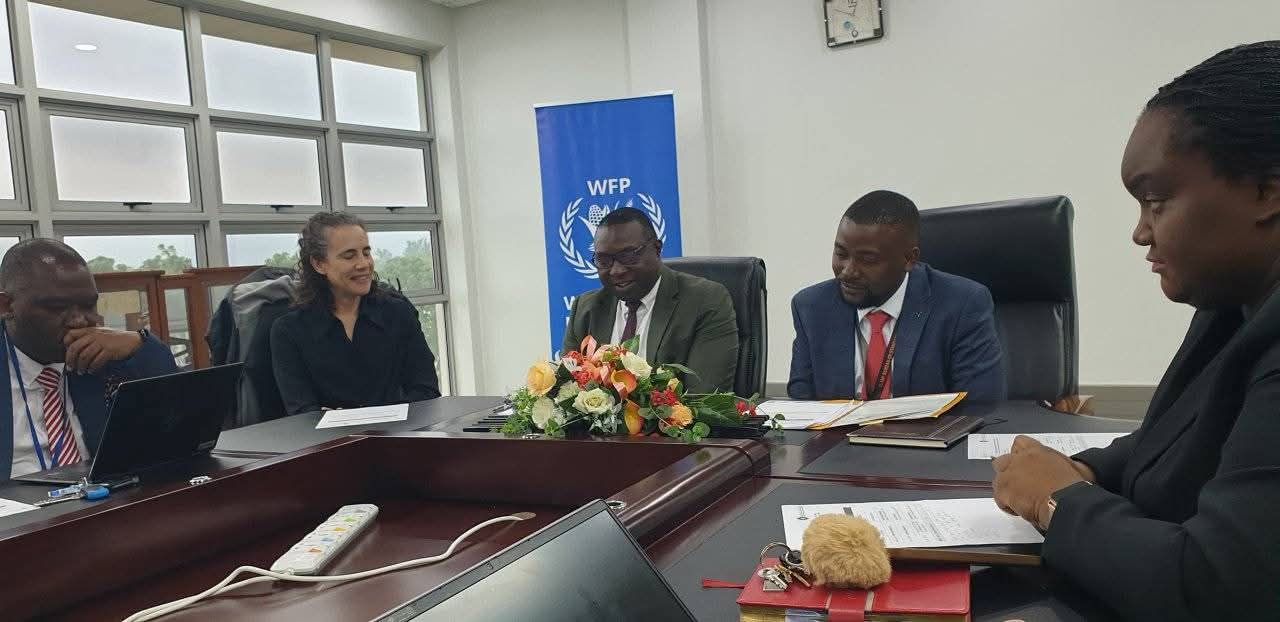
The Malawi Bureau of Standards (MBS), in collaboration with the World Food Programme (WFP), is conducting a training programme this week in Blantyre aimed at enhancing food testing capabilities to support sesame exports.
The initiative is focused on strengthening local laboratories through improved testing methods, with the ultimate goal of helping Malawi’s sesame meet international quality standards.
The training sessions are being led by experts from the National Metrology Institute of South Africa (NMISA), a regional authority in scientific measurement and laboratory accreditation.
Key areas of focus include accurate food testing techniques, procurement of appropriate laboratory equipment, and procedures for gaining international lab accreditation.
Speaking during the training, MBS Deputy Director General Thom Senganimalunje emphasized the importance of the initiative in strengthening Malawi’s food safety infrastructure.
Senganimalunje said the training reflects MBS’s broader commitment to building strong food quality systems that can elevate Malawi’s competitiveness in global agricultural markets.
“This training is part of our commitment to build strong food quality systems that can help Malawian products compete in international markets,” Senganimalunje stated.
WFP Deputy Country Director, Simon Denhere, echoed these sentiments, highlighting the critical role of reliable testing in boosting international confidence in Malawian sesame.
Denhere noted that Malawi’s sesame crop has significant commercial potential, but stressed that rigorous and consistent quality control is essential for tapping into export markets.
He added that enhancing the accuracy of local testing systems will not only help secure trade opportunities, but also improve food safety for domestic consumers.
The training forms part of a wider strategy to align Malawi’s food safety standards with international benchmarks, a move that could open new doors for local farmers and exporters.
As global demand for sesame continues to grow, stakeholders believe that capacity-building initiatives like this one are vital for ensuring Malawi remains competitive in the global marketplace.