By Suleman Chitera
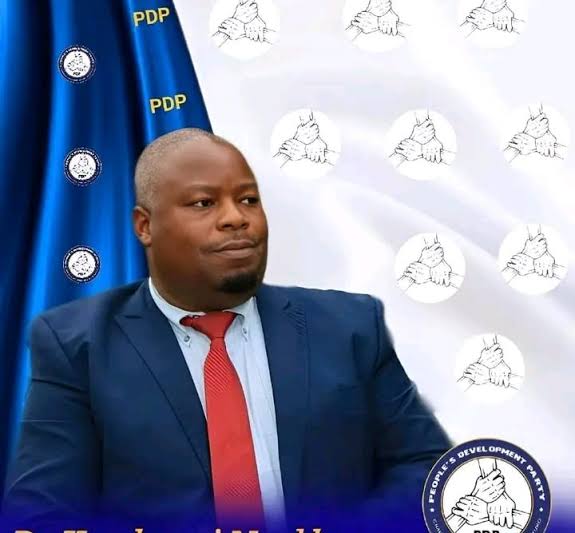
END OF YEAR MESSAGE FROM RIGHT HONOURABLE DR KONDWANI NANKHUMWA, MP, PRESIDENT OF THE PEOPLE’S DEVELOPMENT PARTY
As the year 2025 draws to a close, it is a fitting moment for reflection as Malawians, as a nation, and as individuals. Reflection is necessary not merely to look back, but to recalibrate our national conscience and recommit ourselves to unity, development, and a shared vision of progress. It is only through honest introspection that we can move forward together toward a more just, prosperous, and cohesive Malawi.
ON SPECULATION AND LEADERSHIP RESPONSIBILITY
I wish, at the outset, to express my deep concern and abhorrence of the growing culture of negative speculation, particularly when it intrudes into matters of private life. The recent speculation surrounding the private visit of His Excellency President Peter Mutharika to the Republic of South Africa is a case in point.
Malawians must resist the temptation to take pride in negativity, especially when it concerns personal matters — whether of the President or of any ordinary citizen. President Mutharika, notwithstanding the high office he holds, remains a human being entitled to privacy, dignity, and respect. Whether a trip is undertaken for medical or personal reasons, it should not automatically become fodder for conjecture, insults, or malicious narratives.
It must also be acknowledged, honestly and humanely, that President Mutharika is a man of advanced age. Like any other person at that stage of life, he may from time to time, require medical attention. There is nothing unusual, shameful, or alarming about this reality, and it should never be weaponized for political gain or social media sensationalism.
Equally important is the question of culture and decency. In Malawian culture, we do not insult, ridicule, or engage in name-calling against an elder — let alone a sitting Head of State — simply because it is alleged that he sought medical attention. Such conduct is not only unbecoming; it is profoundly un-Malawian. Leadership may be contested, policies may be criticised, but personal dignity must never be abandoned.
The same standard of respect must extend to the country’s First Lady, Madame Professor Gertrude Mutharika. She is not a political combatant, and she must not be dragged into the mud of speculation and abuse. Our culture teaches us to respect women, to protect their dignity, and to speak of them with restraint and honour — regardless of political differences. To attack or demean the First Lady is to offend not only her as an individual, but the values we claim to uphold as a nation.
That said, government transparency remains critically important. The President is a public office holder, and his movements — particularly when they involve public resources or have implications for governance — are of legitimate public interest. A clearer, firmer, and more proactive communication from the Malawi Government would have significantly reduced speculation. In many democracies across the world, governments routinely provide basic, measured updates regarding the health or travel of their leaders. Silence, unfortunately, creates a vacuum, and speculation inevitably rushes in to fill it.
In this regard, the Minister of Information, who is the government’s Spokesperson, ought to have played a more decisive role in managing the narrative. An uncontrolled narrative quickly degenerates into misinformation, as we have witnessed on social media.
The problem has been further worsened by posts emanating from DPP-affiliated social media platforms. These posts, often framed as promotional teasers announcing that APM would return on specific dates — only for such claims to later prove false — are irresponsible and counterproductive. Rather than reassuring the public, they only fan the flames of negative speculation.
Such misinformation unintentionally reinforces the narrative that the President is unwell or seriously incapacitated. At the same time, it fuels factionalism within the DPP, which is reportedly already in full swing. This environment breeds anxiety, as party members and supporters become preoccupied with aligning themselves with perceived power centres in anticipation of a sudden or eventual post-APM era. The result is a dangerous loss of focus on the party’s mandate and the very reasons it was entrusted with power by Malawians.
For these reasons, the Minister of Information should have been firm, consistent, and authoritative in communicating about the President’s private visit to South Africa. Clear communication would have safeguarded the dignity of the President, protected the respect due to the First Lady, reassured the nation, neutralized misinformation, and allowed the government and party structures alike to remain focused on governance rather than speculation.
ON MAIZE IMPORTS AND FOOD SECURITY
As the year draws to a close, I must speak plainly and without equivocation. The Malawi Government must urgently remove the bottlenecks delaying the importation of maize from Zambia. To date, the maize that was publicly announced has still not reached Malawi — despite Zambia being our immediate neighbour and despite the unmistakable urgency of the hunger crisis unfolding across the country. This delay is unacceptable and demands a clear, honest explanation.
At this point, it is reasonable — indeed unavoidable — to question whether the government was truthful about the existence and readiness of this maize. If maize was genuinely secured from Zambia, it would have arrived by now. The unavoidable question therefore is: why did the government mislead Malawians on such a sensitive and life-and-death issue? Was it desperation, poor planning, or a reckless attempt to manage public anger with empty assurances? Whatever the explanation, it is simply wrong to lie about food availability when millions of citizens are staring hunger in the face.
While officials continue to issue reassurances, many Malawians are going for days without food. Hunger is no longer a looming threat; it is a present, lived reality in households across the country — rural and urban alike. The situation is dire and, unless urgent corrective action is taken, it is likely to worsen in the coming months.
This crisis is being compounded by the slow, uneven, and deeply inadequate rollout of subsidised fertilizer that the government promised farmers. In some areas, entire villages are being forced to share just a handful of bags of fertilizer. The tragic killing of a village headman at Mayaka in Zomba, during a dispute over fertilizer distribution, is a stark and painful reminder of how desperate the situation has become. That incident is not an isolated tragedy — it is a microcosm of the anger, tension, and despair now gripping communities across Malawi.
The government must not retreat from its commitments. Ending hunger was not a side promise — it was central to the DPP’s campaign message and a key reason why an overwhelming number of Malawians placed their trust in the party on 16 September. That electoral mandate carries responsibility. Promises of this magnitude require planning, competence, and execution — not wishful thinking and public relations statements.
Malawians are tired of vague timelines, shifting explanations, and wishy-washy promises. At this early stage of its tenure, the DPP must desist from these avoidable mistakes. Food security is not an area for experimentation or political spin. It demands seriousness, honesty, and decisive action.
The government must urgently restore public confidence by ensuring immediate maize supplies, accelerating fertilizer distribution, and communicating truthfully with the nation. Hunger cannot be managed with statements; it must be confronted with action. Malawians voted for food security, dignity, and stability — and they deserve nothing less.
CALL TO FAITH AND HOPE
Finally, I call upon all Malawians to remain steadfast in hope. Amid the many challenges we face as a nation, our ultimate refuge must be in Jesus Christ — especially during this Christmas season. He remains our anchor, our source of renewal, and our moral compass, both as individuals and as a people.
At this sacred time, we are reminded that faith without love is hollow. Christ did not love selectively; He loved unconditionally, sacrificially, and without boundaries. That same love must now become the blood that unites us as Malawians and as human beings — transcending tribe, region, creed, and political affiliation. In a moment of hardship and uncertainty, we are called not to turn against one another, but to hold each other closer, guided by compassion, empathy, and shared humanity.
As Scripture reminds us: “The people walking in darkness have seen a great light; on those living in the land of deep darkness a light has dawned.” — Isaiah 9:2
And again, we are instructed by our Lord Himself: “A new command I give you: Love one another. As I have loved you, so you must love one another.” — John 13:34
It is this love — active, practical, and selfless — that must shape our national response to suffering, hunger, and injustice. It is through love that we will heal wounds, restore trust, and rebuild a Malawi that works for all its people.
I therefore wish you all a Merry Christmas and a Prosperous New Year, filled with hope, compassion, and a renewed commitment to building a better Malawi for all — regardless of tribe, region, creed, or political affiliation.
May God bless you, and may God bless Malawi.
Right Honourable Dr. Kondwani Nankhumwa, MP
PRESIDENT OF THE PEOPLE’S DEVELOPMENT PARTY