By Mawa Kumaliwopa
In Malawi, a disturbing pattern has hardened into political culture: those in power rarely jail one of their own. Arrests come swiftly for the powerless, but slow—or never—for the politically connected. The question haunting the nation is simple but explosive: Is justice blind, or does it see party colours first?
At the centre of mounting public anger is the former administration of President Lazarus Chakwera, led by the Malawi Congress Party (MCP). From corruption scandals and alleged abuse of public resources to economic collapse, Malawians watched inquiry after inquiry announced with fanfare—only for them to dissolve into silence
Files piled up.
Suspects remained free.
Prisons stayed full of the poor.
A JUSTICE SYSTEM FOR THE WEAK
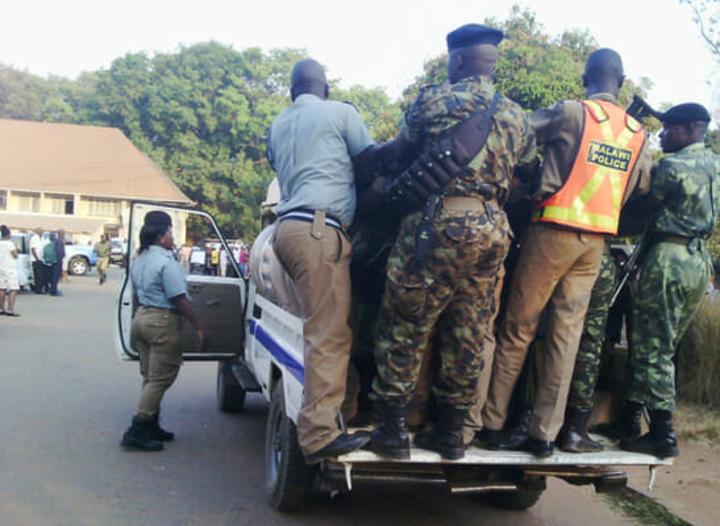
Malawi’s prisons are overcrowded—not because the country lacks criminals, but because petty offenders fill the cells while alleged high-level looters walk free.
Young men accused of stealing goats rot on remand for years.
Mothers jailed for minor offences lose precious time with their children.
Meanwhile, politically exposed individuals named in audit reports attend rallies, travel freely, and issue public statements.
This is not coincidence.
It is selective justice.
THE UNTOUCHABLE POLITICAL CLASS
During MCP’s time in power, accusations of economic vandalism, theft of public funds, procurement fraud, and state capture dominated headlines. The damage to the economy was severe and visible to every Malawian.
Yet one question refuses to go away:
How many senior MCP officials have been arrested?
How many have been convicted?
How many have spent even one night behind bars?
The answer fuels public outrage: almost none.
Investigations were announced.
Committees were formed.
Press conferences were held.
But arrests? Prosecutions? Convictions?
Rare to nonexistent.
Malawians are left asking the unthinkable:
Are politicians effectively immune from the law once they wear party colours?
A CONTROVERSIAL CALL: CLEAR THE CELLS, ARREST THE BIG FISH
The Malawi Freedom Network has ignited fierce national debate with a dramatic proposal.
The organisation argues that President Arthur Peter Mutharika should consider pardoning prisoners convicted of petty offences—not to excuse crime, but to create space in prisons for what they call the real criminals: politically connected looters, violent party enforcers, and corrupt elites accused of stealing from taxpayers.
It is a radical idea, born out of desperation.
When prisons punish poverty and protect power, something is fundamentally broken.
FEAR, SILENCE, AND POLITICAL PROTECTION
Sources within law-enforcement agencies speak quietly of political pressure, stalled dockets, and warnings from above.
Investigators are transferred.
Prosecutors hesitate.
Files “go missing.”
The message is unmistakable: touch the wrong name and your career is finished.
This is how impunity survives—not through law, but through fear.
THE COST TO THE NATION
While politicians protect each other, Malawi bleeds:
Public money vanishes while hospitals lack drugs
Youth unemployment rises as contracts circulate among the connected
Trust in institutions collapses as citizens conclude the law is a weapon, not a shield
A country cannot survive when crime wears a suit and justice wears rags.
THE HARD TRUTH
Malawians do not need more speeches, slogans, or task forces.
They need handcuffs that work, courts that are fearless, and a justice system that punishes crime—not poverty.
The former MCP administration under President Lazarus Chakwera presided over the most serious economic damage in recent history, yet no major arrests followed. For many Malawians, this is the ultimate insult.
They want accountability.
They want prosecutions.
They want those who stole taxpayers’ money sent to jail to face the full force of the law.
Until politicians start arresting politicians—regardless of party—Malawi’s anti-corruption fight will remain:
Noise without justice.
Power without accountability.
Prisons full of the poor—while the powerful walk free.
This is not just a failure of leadership.
It is a betrayal of the republic.