By Suleman Chitera
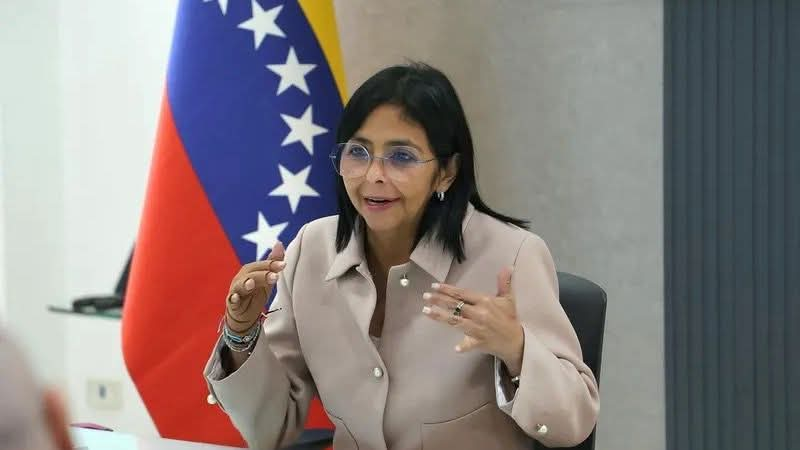
Venezuela is once again teetering on the edge of political chaos following a dramatic and defiant television appearance by the country’s Vice President, a move that has deepened uncertainty and exposed the fragility of state institutions.
In a pre-recorded video broadcast on national television early today, the Vice President rejected any suggestion of surrender or external control, striking a combative tone and vowing to fight for the sovereignty of Venezuela. Framed as a message of resistance, the address was clearly designed to project strength. Yet its very nature—a recorded message rather than a live appearance—has raised more questions than it answered.
At the center of the controversy is the Vice President’s unexplained absence from the country. While a Venezuelan court has issued an order directing him to present himself and assume presidential authority in line with constitutional provisions, he has failed to do so. Instead, multiple sources suggest that he remains abroad, possibly in Russia, claims that Moscow has officially denied.
This contradiction underscores a deeper crisis: a state where legal authority, political legitimacy, and physical presence are no longer aligned. Courts can issue orders, broadcasters can air defiant speeches, but the machinery of governance appears paralysed by secrecy, speculation, and power plays behind closed doors.
For ordinary Venezuelans, this is a familiar and bitter pattern. Political elites trade accusations of foreign interference while citizens endure economic hardship, insecurity, and institutional collapse. The rhetoric of “defending the nation from outsiders” rings hollow to many who have seen sovereignty invoked repeatedly to justify repression, avoid accountability, and consolidate power.
Equally troubling is the precedent being set. A senior official addressing the nation from an undisclosed location, defying judicial directives, and relying on recorded messages rather than transparent engagement sends a dangerous signal: that authority no longer flows from the constitution, but from force, fear, and control of the airwaves.
The international community, meanwhile, watches cautiously. Any miscalculation—real or perceived—could escalate tensions, invite further sanctions, or harden foreign involvement, precisely the outcome the Vice President claims to oppose.
Venezuela now stands at a crossroads. The choice is stark: a return to constitutional order, transparency, and the rule of law, or a deeper slide into personalised power, institutional decay, and prolonged instability. Defiant speeches may stir emotions, but they do not govern nations. Only legitimacy, accountability, and lawful leadership can pull Venezuela back from the brink.