By Suleman Chitera
The latest military strikes ordered by Donald Trump in Syria have once again exposed a brutal and familiar reality of modern warfare: it is never the powerful who suffer most, but ordinary civilians with no voice in the decision-making process.
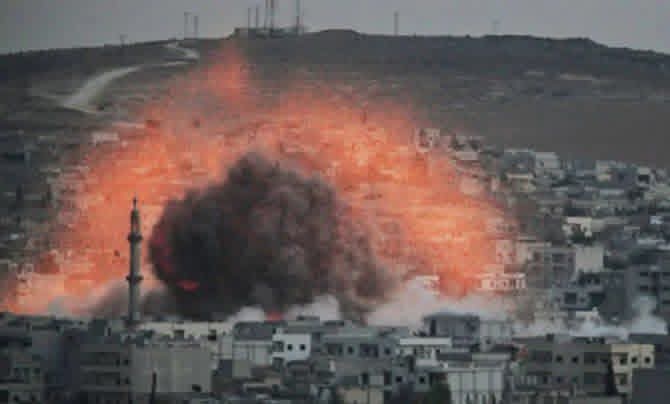
The White House claims the bombings targeted hideouts of Islamic State (ISIS), allegedly in retaliation for the killing of a United States soldier in an ambush last week. That justification may satisfy military briefings and political talking points in Washington, but on the ground in Syria it translates into death, injury, displacement, and shattered communities.
Homes have collapsed. Families have been buried under rubble. Children have been orphaned. Hospitals, already stretched beyond capacity after years of war and sanctions, are now forced to treat yet another wave of wounded civilians. These are not abstract “collateral damages”; they are human beings whose only crime is living in a country that has become a chessboard for global power struggles.
Time and again, U.S. administrations—under the banner of fighting terrorism—have launched airstrikes that promise precision but deliver devastation. The narrative is always the same: terrorists are the target, security is the goal, and justice is the motive. Yet history shows that such actions rarely eliminate extremism. Instead, they deepen resentment, fuel radicalization, and condemn innocent populations to endless cycles of violence.
If the objective truly were to defeat ISIS, then accountability, intelligence-led operations, and international cooperation would take precedence over blanket bombardment. Bombs do not distinguish between a militant and a mother cooking for her children. Missiles do not ask whether a collapsing house shelters a fighter or a family asleep at night.
What is happening in Syria today is not merely a counterterrorism operation; it is collective punishment. It is the normalization of civilian suffering as an acceptable cost of foreign policy. And it raises an uncomfortable question the world too often avoids: whose lives matter when superpowers decide to “send a message”?
The pain Syrians are enduring will not appear in victory speeches or military statistics. But it will linger in mass graves, refugee camps, and traumatized generations long after the bombs stop falling. If global leaders are serious about peace and security, they must start by recognizing a simple truth—terror cannot be defeated by terror, and justice cannot be built on the ruins of innocent lives.