By Contributor
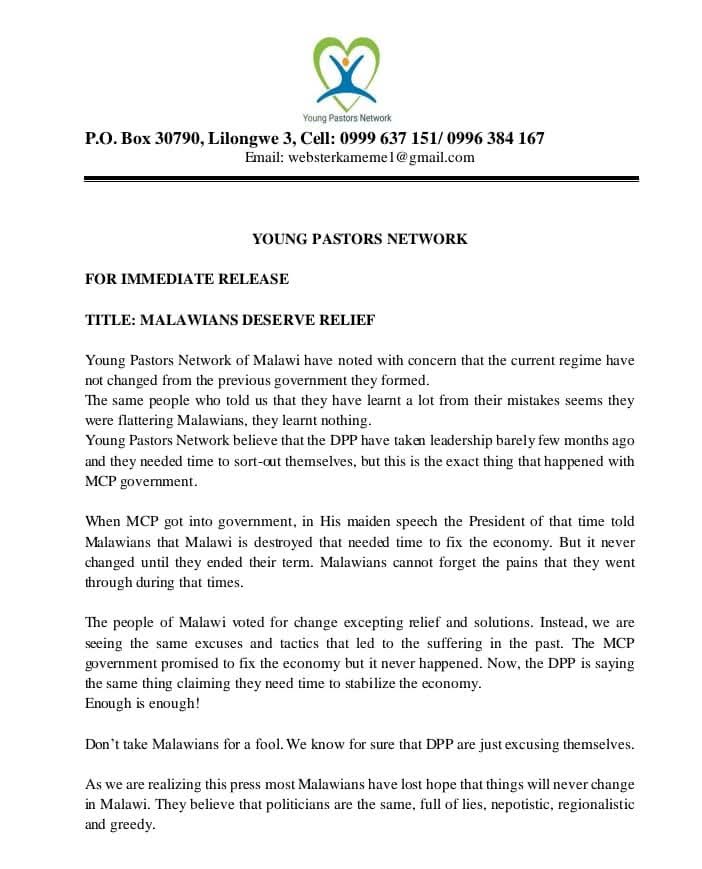
A grouping calling itself the Young Pastors’ Network of Malawi has launched a blistering attack on the ruling Democratic Progressive Party (DPP), accusing it of failing to learn from past mistakes that led to its removal from power in 2020.
In a strongly worded statement, the network’s president, Webster Kameme, claims the DPP is showing clear signs of being “unrepentant” and disconnected from the economic hardships facing ordinary Malawians. Kameme argues that the party, barely months after returning to government, has already reneged on its campaign promises to ease the cost of living and stabilise the economy.
“The same patterns that angered Malawians before are resurfacing,” Kameme said, adding that rising fuel prices have worsened the economic strain on households and businesses. He warned that continued policy decisions that burden citizens are rapidly eroding public trust in political leaders.
According to Kameme, Malawians are increasingly losing faith in politicians due to what he describes as empty rhetoric that collapses once elections are over. He said the situation is particularly painful for vulnerable communities who were promised relief but are instead grappling with escalating prices of basic goods and services.
However, the government has brushed aside the criticism. Information Minister and government spokesperson Shadric Namalomba dismissed the pastors’ claims, questioning the legitimacy of the group and refusing to engage with its concerns.
“I don’t believe these people are legit, and therefore I will not respond to their issues,” Namalomba said. “If they want to join politics, let them join politics because it looks like they are not happy with any politician.”
The sharp exchange underscores growing tension between the DPP-led government and sections of civil society, including faith-based groups, at a time when economic pressure continues to bite. As fuel prices rise and living costs soar, critics argue that dismissing public concerns risks deepening frustration and reinforcing perceptions that those in power are out of touch with the realities on the ground.