By Suleman Chitera
The debate over the newly constructed Lilongwe Bridge has reignited the familiar political tug-of-war between the Democratic Progressive Party (DPP) and the Malawi Congress Party (MCP).
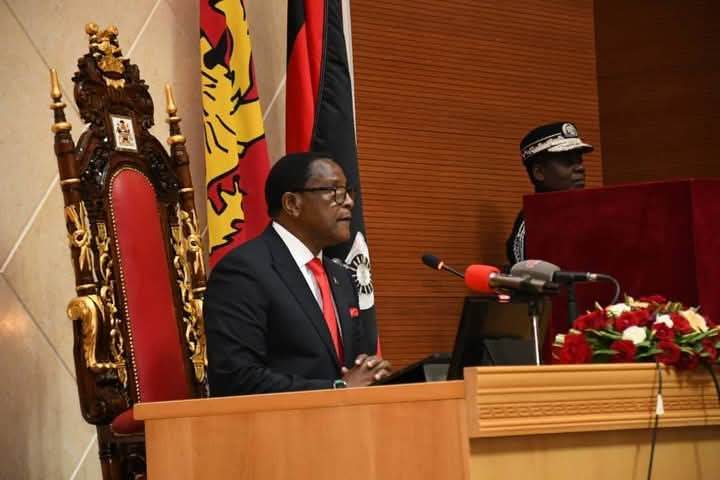
Supporters of the DPP argue that it was during the tenure of president Arthur Peter Mutharika (APM) in 2017 that the concept and groundwork for the bridge were initiated. On the other hand, the MCP points out that former President Lazarus Chakwera officially laid the foundation stone on January 31, 2024, marking a significant milestone in the project’s implementation.
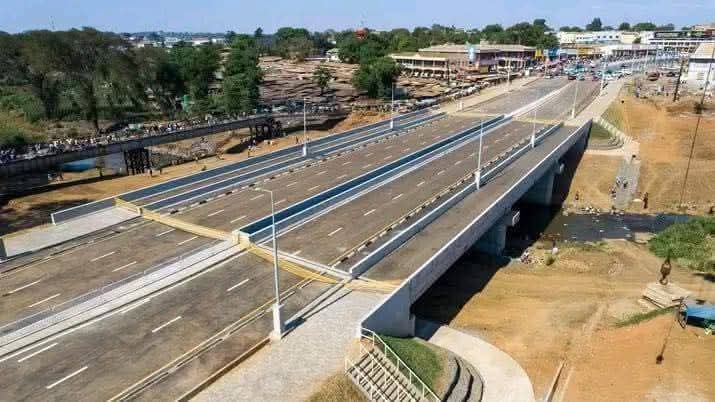
However, beyond the partisan claims lies a fundamental truth: the Lilongwe Bridge was fully funded by the Government of Japan at a cost of approximately MK37 billion. The financing underscores the strength of Malawi’s development cooperation with Japan and highlights the importance of international partnerships in delivering large-scale infrastructure projects.
For ordinary Malawians, the bridge represents more than a political trophy. It stands as a vital infrastructure asset designed to ease traffic congestion, improve connectivity, enhance trade flows, and stimulate economic activity within the capital city. In a rapidly growing urban centre like Lilongwe, such infrastructure is not a luxury — it is a necessity.
Development, by its nature, is often a continuum. Projects may be conceptualized under one administration, negotiated and financed during another phase, and completed under yet another. Infrastructure planning typically transcends electoral cycles. What matters most is not which political figure claims ownership, but whether the project delivers tangible socio-economic benefits to citizens.
Both Former President Chakwera and President Mutharika have presided over notable development initiatives during their respective tenures. Progress in any nation is cumulative; it builds upon foundations laid by previous administrations. Attempting to monopolize credit risks overshadowing the broader objective — national advancement.
Malawians did not directly contribute a cent toward the bridge’s construction cost. It was funded through bilateral support. What citizens rightfully expect is accountability, efficiency, and continued development — not political rivalry over ribbon-cutting ceremonies.
The Lilongwe Bridge should therefore be viewed not as a partisan victory, but as a national asset — a symbol of cooperation, continuity, and shared responsibility in advancing Malawi’s infrastructure agenda.
At the end of the day, bridges are meant to connect people — not divide them.