
By Suleman Chitera
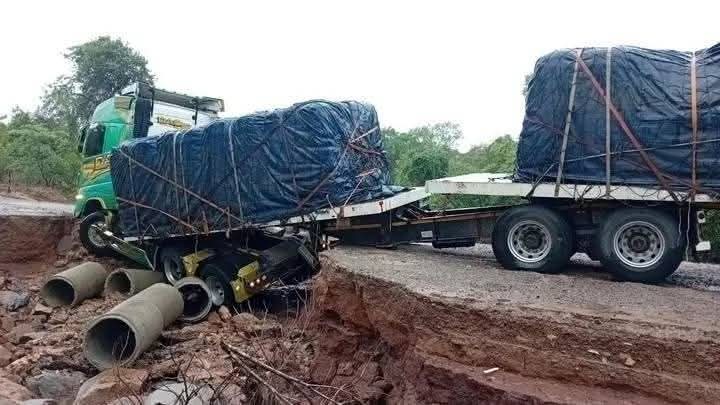
A heated debate has erupted over the quality of Malawi’s infrastructure after Minister of Local Government and Rural Development Ben Phiri accused engineers of being responsible for the country’s deteriorating roads and poorly constructed buildings.
Speaking in Lilongwe, the minister expressed frustration over the short lifespan of infrastructure projects, arguing that many engineers have abandoned professional standards in favour of corrupt practices.
“You are building roads and constructing houses that do not last,” Phiri said. “A road is completed today and by next year it is already full of potholes. Instead of focusing on quality work, some of you are prioritising corruption.”
However, professional engineers have pushed back strongly against the remarks, saying the minister’s criticism overlooks deeper structural problems within government project financing and planning.
One engineer who spoke on condition of anonymity described the minister’s comments as misleading, insisting that poor infrastructure quality is often the direct result of underfunded projects.
According to the engineer, many government infrastructure projects are approved with budgets far below the minimum cost required to meet professional engineering standards.
“There is a minimum standard cost for constructing a building or a road,” the engineer explained. “But government will take a budget meant for a two-kilometre road and instruct contractors to stretch it over fifteen kilometres. Then when the road deteriorates, they blame engineers. What exactly does government expect the outcome to be?”
The engineer argued that such unrealistic budgeting inevitably compromises the quality and durability of projects.
“Government should be the first to ensure projects are properly funded so that engineers can meet the required standards,” he said. “Instead, they release half the money needed for a project and later accuse engineers of corruption. If government truly wants answers when infrastructure fails, the first question should be: what was the project budget?”
He added that public misunderstanding about the real cost of construction is also contributing to the blame directed at engineers.
According to the professional, many Malawians compare professional project estimates with informal building practices that ignore engineering standards.
“People who build houses privately often cut corners,” he said. “Where cement and sand should be mixed in a proper ratio of 1:2, some stretch it to 1:10 just to save money. Then they proudly say they built a three-bedroom house with K20 million or K30 million.”
Such practices, he argued, create unrealistic expectations when engineers present cost estimates that reflect proper structural safety requirements.
“When an engineer says a properly built house should cost around K150 million, people immediately suspect corruption,” he said. “But that estimate includes quality materials, proper reinforcement, structural design, and safety considerations to withstand heavy rains, earthquakes, and other environmental stresses.”
The engineer stressed that while corruption should be addressed wherever it exists, singling out engineers ignores systemic issues within infrastructure development.
“Quality infrastructure requires realistic budgets, proper materials and strict adherence to standards,” he said. “If projects are funded cheaply, the outcome will inevitably be cheap.”
The exchange has highlighted growing tensions between policymakers and technical professionals over the persistent problem of failing infrastructure in Malawi, with experts warning that without proper funding and respect for engineering standards, the country risks continuing cycles of costly repairs and reconstruction.