By Suleman Chitera
Tensions in the Middle East have intensified after Iran’s parliamentary leadership urged U.S. allies to independently confirm reports about the movement of a major American aircraft carrier before relying on statements from Washington.
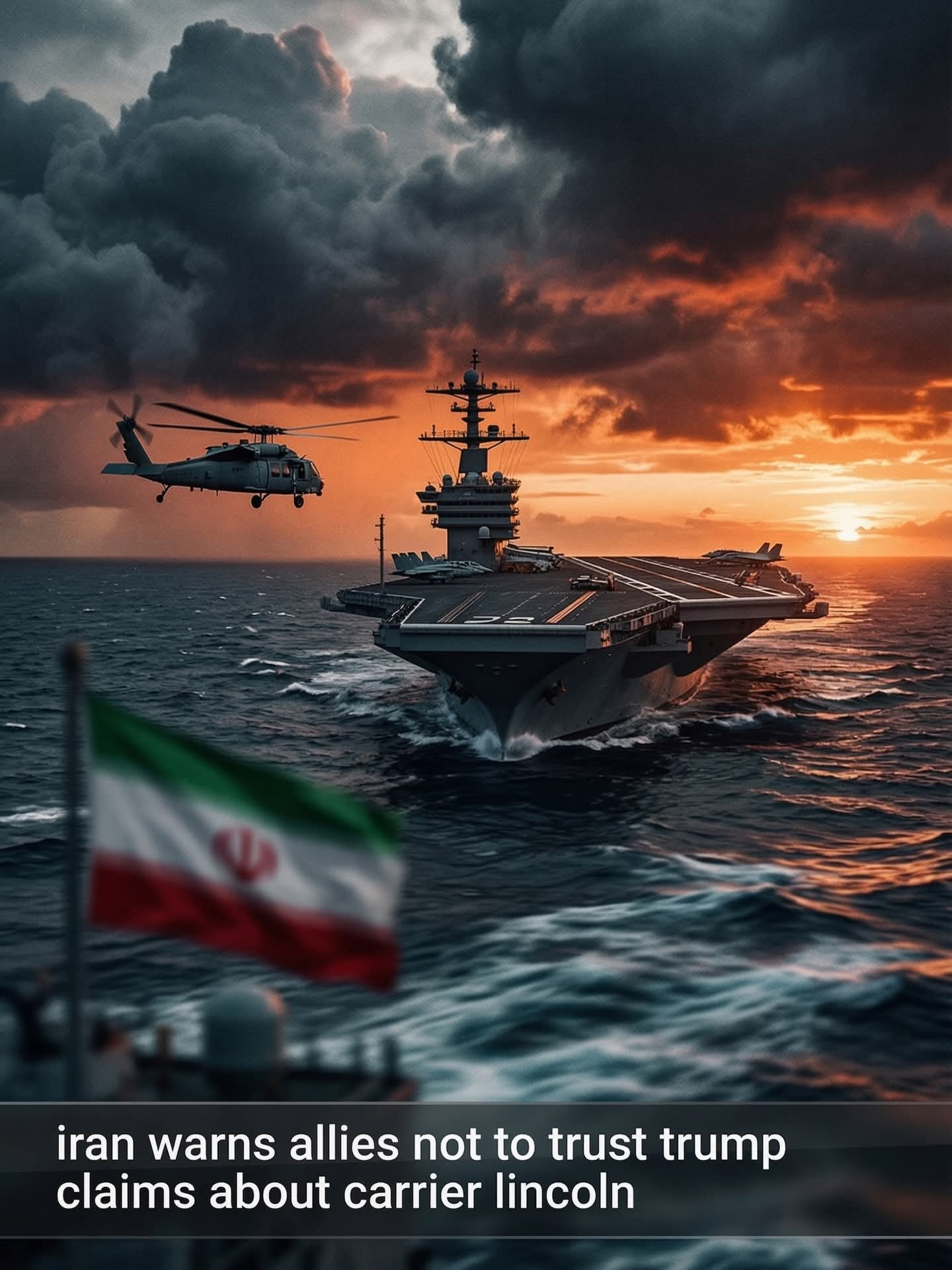
Speaking amid rising regional uncertainty, Mohammad Bagher Ghalibaf, the Speaker of the Iranian Parliament, warned that allied nations should verify the reported withdrawal of the U.S. aircraft carrier USS Abraham Lincoln (CVN‑72) rather than rely on what he described as “misleading claims” by former U.S. President Donald Trump.
Iran Questions U.S. Military Claims
Ghalibaf’s remarks signal a new phase in the war of words between Tehran and Washington. According to the Iranian official, regional governments should not tie their security strategies to political messaging from the United States without confirming developments on the ground.
He argued that the balance of power in the Middle East is determined by tangible military realities rather than public statements.
“The security of the region must be based on facts, not political rhetoric,” Ghalibaf reportedly said, suggesting that U.S. allies risk miscalculating their security posture if they rely solely on American political narratives.
The comments were widely interpreted as a challenge to Washington’s credibility and a warning to countries hosting U.S. forces or cooperating militarily with the United States in the region.
Strategic Importance of the Abraham Lincoln Carrier
The USS Abraham Lincoln (CVN‑72) is one of the U.S. Navy’s nuclear-powered aircraft carriers and serves as a major symbol of American power projection. When deployed to the Middle East, such carriers typically operate with a full strike group, including guided-missile destroyers, cruisers, and advanced combat aircraft.
Carrier deployments are often used by Washington to deter adversaries and reassure allies during periods of heightened tension.
Any suggestion that the carrier has withdrawn or repositioned could therefore influence perceptions of U.S. military commitment in the region.
Rising Military and Media Tensions
Ghalibaf’s warning comes as military and media rhetoric between Iran and the United States has intensified in recent days. Iranian officials have repeatedly accused Washington of spreading misinformation about military movements and strategic intentions.
At the same time, Western analysts say Tehran’s statements may be aimed at shaping regional perceptions and undermining confidence in U.S. security guarantees.
The exchange highlights the growing role of information warfare in modern geopolitical rivalries, where narratives about troop movements, naval deployments, and military readiness can influence diplomatic and strategic calculations.
Regional Implications
Security analysts say Iran’s call for verification could resonate with some regional actors that are already cautious about becoming entangled in a direct confrontation between Tehran and Washington.
Countries across the Persian Gulf host American bases and rely heavily on U.S. military partnerships, but they also face pressure to maintain stability and avoid escalation.
If mistrust deepens over military claims or deployments, it could complicate coordination among U.S. allies and partners operating in the region.
A Battle for Credibility
Ultimately, the dispute reflects a broader struggle for credibility between Iran and the United States. While Washington emphasizes its military presence as a deterrent against Iranian aggression, Tehran frequently portrays American statements as exaggerated or politically motivated.
By urging allies to independently confirm the status of the aircraft carrier, Ghalibaf appears to be attempting to shift the narrative and cast doubt on U.S. strategic messaging.
With tensions already running high across the Middle East, such rhetoric underscores how rapidly political statements can feed into broader regional instability.