By Staff Reporter
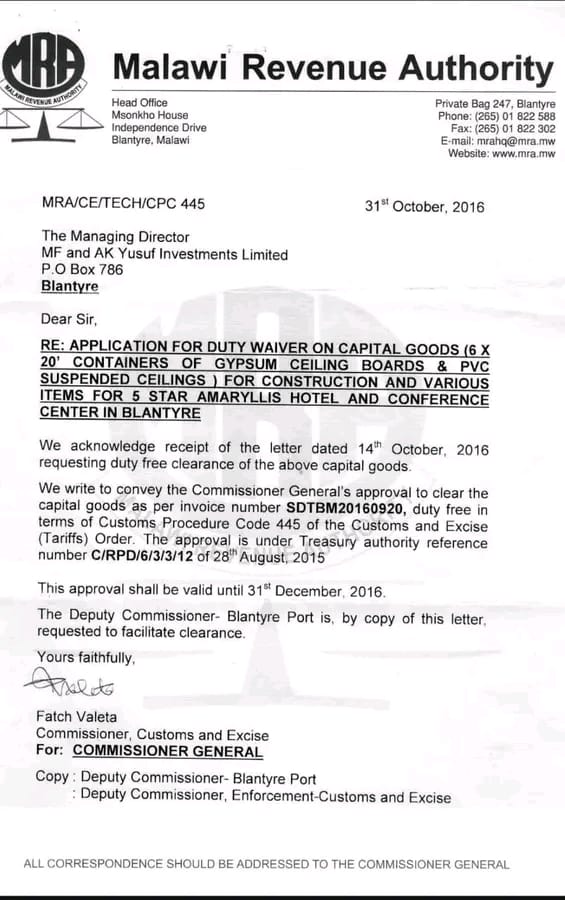
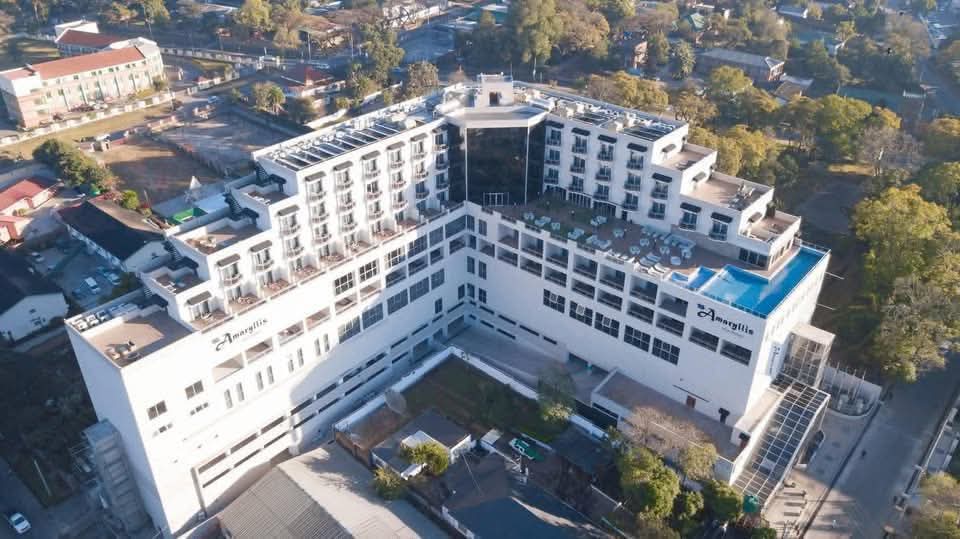
Revelations surrounding the controversial acquisition of the Amaryllis Hotel continue to mount, with new information suggesting that the property—purchased using approximately K128 billion in public funds—may have been constructed using duty-free materials under a government-approved waiver.
Sources familiar with the matter indicate that the hotel’s developers were granted exemptions on import duties for a range of construction materials, including key components such as ceiling boards. The waiver, typically issued to incentivize investment in large-scale infrastructure or tourism projects, is now at the center of growing scrutiny as stakeholders question whether the incentives were appropriately applied and whether the public ultimately received value for money.
The latest disclosures add another layer of complexity to an already contentious transaction that has sparked widespread debate across political, economic, and legal circles. Critics argue that if the developers benefited from significant tax concessions during construction, the final purchase price paid by the government should reflect those cost savings.
“This raises fundamental questions about the valuation model that informed the K128 billion price tag,” said one economic analyst. “If the input costs were reduced through duty waivers, then due diligence should have accounted for that. Otherwise, taxpayers may have paid a premium on an already subsidized asset.”
The issue of duty-free materials also introduces potential governance concerns. Observers are now calling for full disclosure of the waiver agreements, including the justification for granting them and whether all conditions attached to such incentives were fulfilled by the developers.
In Malawi, duty waivers are often used as a policy tool to stimulate sectors such as tourism and hospitality. However, their application requires transparency and strict oversight to prevent abuse or unintended financial loss to the state.
Meanwhile, calls are intensifying for an independent audit of the entire Amaryllis Hotel transaction. Civil society organizations and opposition figures have urged authorities to release all contractual documents, valuation reports, and procurement records associated with the deal.
Government officials have yet to provide a detailed response to the latest claims, but earlier statements have maintained that the acquisition followed due process and was in the national interest.
As the controversy deepens, the Amaryllis Hotel saga is fast becoming a litmus test for accountability in public expenditure. With billions of kwacha at stake, the pressure is mounting on authorities to provide clear answers and restore public confidence in the management of state resources
- Mwanamvekha: The Driving Force Behind Malawi’s Economic Stabilisation
 By Suleman Chitera Member of Parliament for Rumphi West, Dadawiza Jona Mkandawire, has delivered a strong vote of confidence in…
 - IAEA Flags New Underground Uranium Facility in Iran, Raises Global Concern
 By Suleman Chitera The United Nations nuclear watchdog has identified a new underground uranium enrichment facility in Isfahan, Iran, sparking…
 - PSPTF Board Slapped with K40 Million Fine Each Over Amaryllis Hotel Defiance
 By Suleman Chitera Members of the Board of the Public Service Pension Trust Fund (PSPTF) have been hit with a…
 - FAM Launches Dispute Chamber to Fast-Track Football Justice
 By Suleman Chitera The Football Association of Malawi (FAM) has taken a significant step towards improving governance in the game…
 - AG Mbeta Snubs PAC Again Over Amaryllis Hotel Deal
 By Staff Reporter Attorney General Frank Mbeta has once again failed to appear before the Public Accounts Committee (PAC), raising…
 - “Fuel Scandal Explosion: CDEDI Demands Probe Into ‘Missing’ 28.8 Million Litres, Drags Chakwera Into Spotlight”
 By Suleman Chitera Pressure is mounting on Malawi’s justice system after the Centre for Democracy and Economic Development Initiative (CDEDI)…
 - NBM plc repositions ‘NBM Smart Cover’ to ease upfront insurance costs
 By Suleman Chitera National Bank of Malawi plc (NBM plc) has repositioned and rebranded its insurance premium financing solution, NBM…
 - Breaking Down Barriers: The Unyielding Legacy of Chief Kachindamoto
 By Burnett Munthali Delegates from Malawi attending the Commission on the Status of Women (CSW70) in New York City, United…
 - No arrests? Chitera demands answers as Amaryllis hotel scandal rocks government
 By Staff Reporter Pressure is mounting on authorities as questions intensify over the lack of arrests in the controversial Amaryllis…
 - K72 Billion Amaryllis scandal: funds frozen, trustees fined as shock deal exposedBy Staff Reporter The deepening scandal surrounding the controversial sale of Amaryllis Hotel has taken a dramatic turn, with authorities…
- Turkish investors eye Lilongwe trash gold mine in power deal
 By Suleman Chitera Lilongwe could soon turn its mounting waste crisis into a powerhouse of opportunity as foreign investors from…
 - “Amaryllis Hotel Deal Explodes: FIA Freezes Funds as RBM Boss Slams Pension Fund for ‘Arrogance and Disobedience’”
 By Suleman Chitera The controversial sale of Amaryllis hotel has taken a dramatic turn after the Financial Intelligence Authority (FIA)…