
By Suleman Chitera
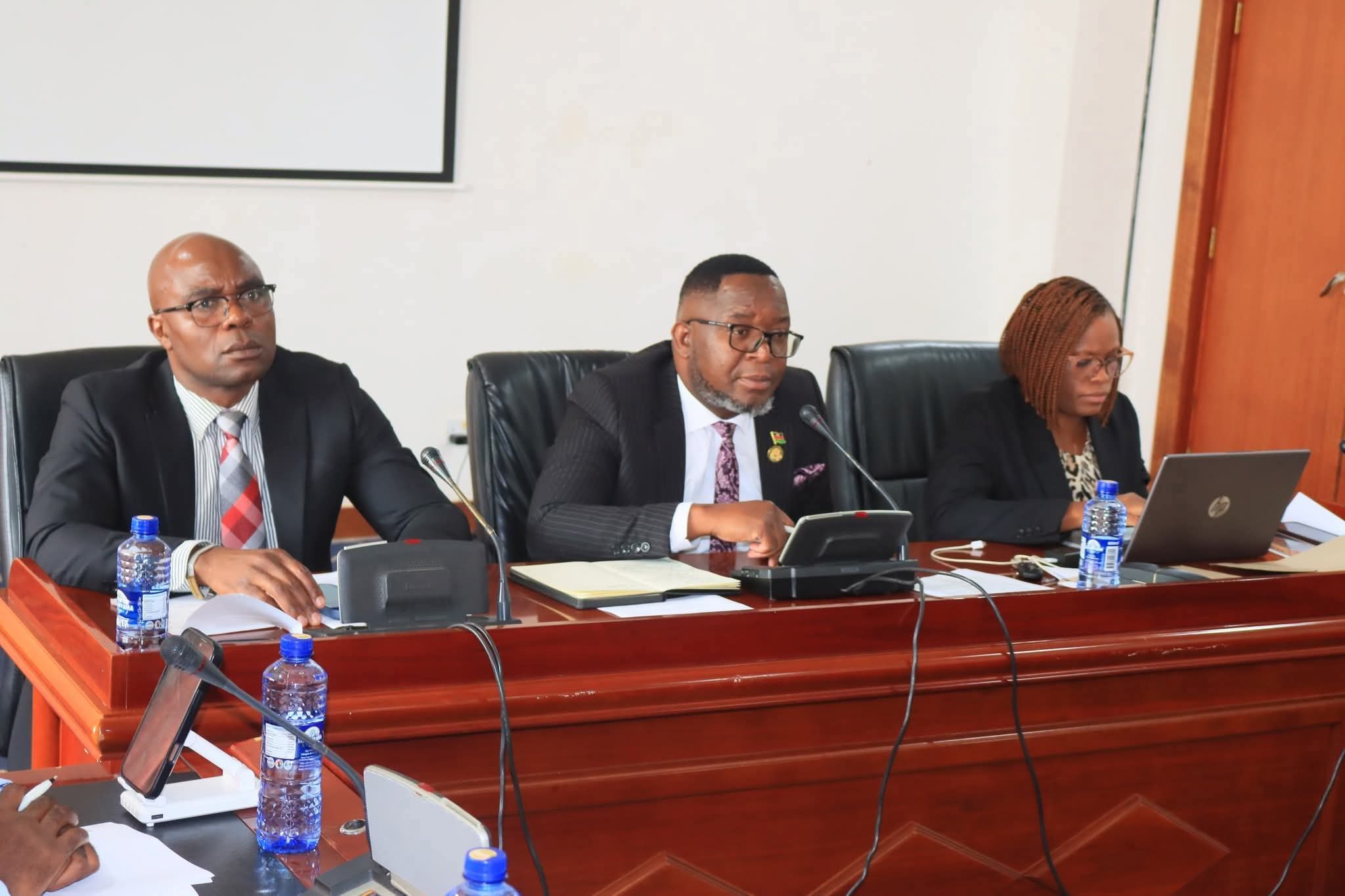
Malawi’s financial governance is under intense scrutiny after George Partridge, Governor of the Reserve Bank of Malawi (RBM), delivered a scathing account before Parliament’s Public Accounts Committee (PAC), accusing the board of the Public Service Pension Trust Fund (PSPTF) of deliberately ignoring regulatory directives in the controversial purchase of Amaryllis Hotel.
In unusually blunt testimony, Partridge described the conduct of the pension fund’s leadership as not only reckless but potentially unlawful, raising serious concerns about the safeguarding of public workers’ retirement savings.
“They Ignored Us”
According to Partridge, RBM—mandated to regulate and oversee financial institutions—flagged multiple red flags in the transaction. These included procedural irregularities and elements deemed suspicious under standard financial compliance frameworks.
The central bank issued clear instructions: halt the deal pending further scrutiny.
Those instructions were ignored.
“We gave explicit guidance to stop the process. What followed was a rush to conclude the transaction. That level of defiance is shocking,” Partridge told PAC.
The revelation cuts to the core of corporate governance failure, where a regulated entity appears to have sidelined its own regulator in a high-value transaction involving public funds.
A Deal Pushed at Speed
Evidence presented suggests the acquisition of Amaryllis Hotel was accelerated despite outstanding concerns—raising questions about motive, internal decision-making, and whether due diligence protocols were deliberately bypassed.
Analysts warn that such conduct undermines not only institutional credibility but also investor confidence in Malawi’s financial system.
Banks Ordered to Reverse Funds
In a decisive countermeasure, RBM has moved to contain the fallout. Partridge confirmed that instructions have already been issued to:
- National Bank of Malawi
- CDH Investment Bank
to reverse payments linked to the transaction.
Simultaneously, the Financial Intelligence Authority (FIA) has been activated to investigate the deal, trace financial flows, and initiate prosecutions where necessary.
Accounts Frozen, Investigations Deepen
As part of the probe, the FIA has already frozen several bank accounts connected to the transaction—an indication that authorities suspect possible financial misconduct, including abuse of office or misappropriation of funds.
Freezing accounts is a significant escalation, typically reserved for cases where there is risk of fund dissipation or evidence tampering.
Board Faces Removal, Prosecution
Partridge issued a stern warning: continued defiance by the PSPTF board will trigger harsher regulatory action.
These include:
- Removal of board members from their positions
- Referral to law enforcement agencies
- Potential prosecution for financial crimes
This signals that the matter has moved beyond administrative disagreement into the realm of legal accountability.
Public Funds, Public Trust at Risk
At stake are billions in pension savings belonging to Malawi’s civil servants—funds expected to be managed with the highest fiduciary standards.
The unfolding scandal now raises uncomfortable but necessary questions:
- Why were regulatory warnings ignored?
- Who benefited from the rushed transaction?
- Were internal controls deliberately weakened?
As PAC continues its inquiry, the Amaryllis deal is fast becoming a defining test of accountability in Malawi’s public finance management.
If Partridge’s assertions hold, this may not just be a case of poor judgment—but a systemic breakdown with potential criminal implications.
The message from RBM is unequivocal: no institution is above financial regulation—and defiance will carry consequences.
- RBM blasts PSPTF over Amaryllis deal: “blatant defiance, possible financial crimes”
 By Suleman Chitera Malawi’s financial governance is under intense scrutiny after George Partridge, Governor of the Reserve Bank of Malawi…
 - Concerned citizen calls Chakwera to explain on Amaryllis Hotel sale
 By Vincent Gunde A concerned citizen of Malawi Mrs. Elizabeth Kaliza Banda, has called on President Dr. Lazarus Chakwera to…
 - Malawi govt, UN women pledge to boost women’s empowerment
 By Jones Gadama The Minister of Gender, Children, Disability and Social Welfare, Mary Navicha, has reaffirmed the Government of Malawi’s…
 - Government Defends Strategic Appointments of City Council CEOs Amid Calls for Transparency
 By Suleman Chitera The Ministry of Local Government has confirmed key leadership appointments at Malawi’s major city councils, a move…
 - Semifinals draw sets mood for NBM Under-23 Championship
 By Suleman Chitera The NBM Under-23 Championship has reached its final stages following the draw for the semi-final fixtures involving…
 - Kalindo says Malawians should expect no arrest from Amaryllis Hotel sale
 By Vincent Gunde Political activist Bon Kalindo, says Malawians should expect no arrest from Amaryllis Hotel sale saying if the…
 - Cash, Smear Campaigns, and Political Panic: The Plot to Undermine Mwanamvekha
 By Staff Reporter A political storm is brewing—and at its center is a disturbing allegation: that shadowy figures within Malawi’s…
 - Mwanamvekha: The Steady Hand Behind Malawi’s Economic Direction
 By Suleman Chitera At a time when economic uncertainty continues to test leadership across the region, Joseph Mwanamvekha is increasingly…
 - Justice Delayed, Justice Denied: Malawi’s Courts Under Fire as Corruption Cases Stall
 By Suleman Chitera Lilongwe — Public frustration is reaching a boiling point as Malawi’s justice system faces growing criticism over…
 - The state not yet made a notice of adjournment to Gadama’s case
 By Vincent Gunde The State has up to this day not yet made a notice of adjournment to Maravi Post…
 - FDH Bank plc, Ekhaya renew pact with Sunday Soirée
 By Suleman Chitera FDH Bank plc and Ekhaya Group have renewed their partnership with lifestyle and networking platform Sunday Soirée,…
 - Amaryllis Hotel Saga Deepens: Duty-Free Construction Materials Raise Fresh Questions Over K128 Billion Deal
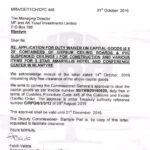 By Staff Reporter Revelations surrounding the controversial acquisition of the Amaryllis Hotel continue to mount, with new information suggesting that…
 - Iran Signals Escalation with Strait of Hormuz Warning, Raising Global Alarm
 By Suleman Chitera Tensions in the Middle East have sharply intensified following a controversial statement by Abbas Araghchi, who declared…
 - Israel’s Iran War Stalls After Strong Opening, Military Signals Strategy Crisis
 By Suleman Chitera The military campaign by Israel against Iran is losing momentum despite an initially successful opening phase, according…
 - Iran Defies Pressure: Pezeshkian Vows No Surrender as War Rages
 By Suleman Chitera Iran’s President Masoud Pezeshkian has issued a defiant warning, declaring that the country will not bow to…