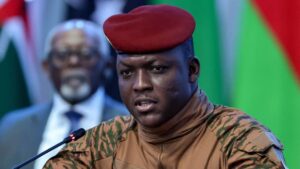
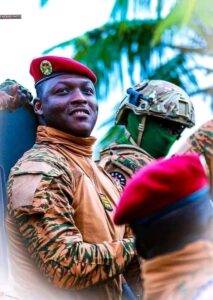
Burkina Faso’s transitional president, Ibrahim Traoré, has once again delivered a blunt and uncompromising message to Western powers: the era of foreign military dominance on African soil is over.
In a statement that is rapidly gaining traction across Pan-African platforms, Traoré made it unequivocally clear that Burkina Faso will no longer tolerate what he described as “unequal security arrangements” imposed by foreign nations.
“If the United States and France believe it is impossible for Burkina Faso to establish military bases on their soil, then it is equally impossible for them to have military bases on ours,” he declared.
The message is not just rhetoric—it is a direct challenge to long-standing geopolitical norms that have seen Western military installations embedded across parts of Africa under the banner of counterterrorism and security cooperation.
A Break From the Past
Traoré’s stance marks a decisive break from decades of defense agreements between African governments and foreign powers, particularly France and the United States, both of which have maintained military footprints in the Sahel region.
Critics of these arrangements argue that such partnerships often come with strings attached—limiting sovereignty while failing to deliver lasting security. Traoré’s position taps into a growing sentiment across the continent that Africa must redefine its own security architecture without external control.
Rising Pan-African Sentiment
Across social media and political discourse, Traoré’s remarks are being celebrated as a symbol of resistance and self-determination. Supporters say his message reflects a broader awakening—a shift toward reclaiming Africa’s political and military independence.
“This is the Africa we want,” has become a rallying cry among his backers, who see in his leadership a rejection of what they call “colonial leftovers” and double standards in international relations.
However, the hardline stance is not without risks. Burkina Faso remains deeply entangled in a complex security crisis, battling insurgent groups linked to extremist networks in the Sahel. Western military support has historically played a role—however contested—in intelligence sharing and counterterrorism operations.
Analysts warn that a complete disengagement from Western partnerships could leave a vacuum that may be difficult to fill in the short term. Others argue it could open the door to new alliances, as African states explore alternative security partnerships or regional solutions.
A Defining Moment for African Sovereignty
Whether viewed as bold leadership or high-stakes defiance, Traoré’s declaration signals a turning point. It underscores a growing insistence among some African leaders that sovereignty must be absolute—not conditional.
The message from Ouagadougou is loud and clear: no more double standards, no more foreign domination, and no more decisions about Africa made outside Africa.
As the geopolitical landscape continues to shift, one thing is certain—Burkina Faso, under Ibrahim Traoré, is positioning itself at the center of a new and increasingly assertive African narrative.