
 Suleman Chitera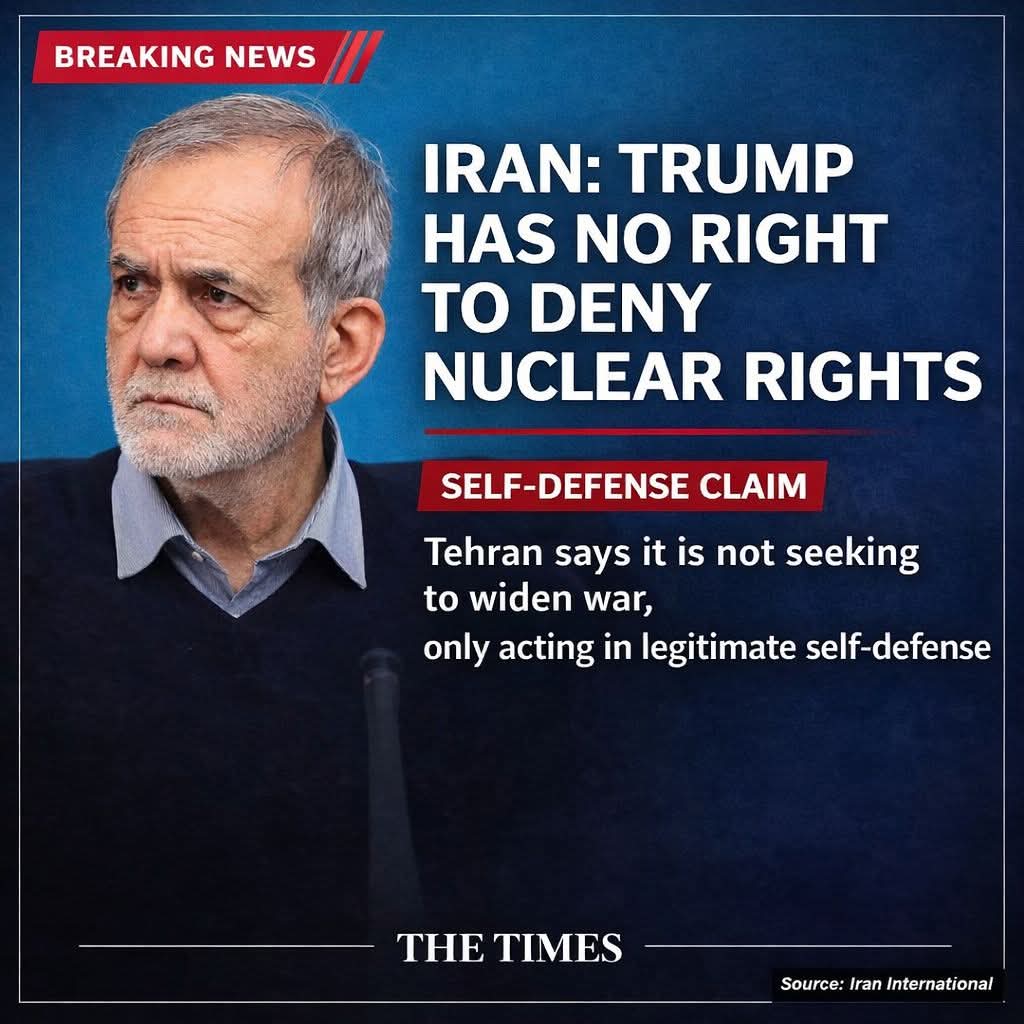
By Suleman Chitera
Tensions between and have reignited a fierce global debate over nuclear rights, sovereignty, and the growing risk of conflict in the Middle East.
Israel-Iran war: Big trouble for Israel days after airstrikes as Iran reaches closer
In a bold and defiant statement, President Pezeshkian declared that the United States has “no right” to deny Iran access to what he described as its lawful nuclear program. His remarks come as a direct response to Trump’s recent comments advocating stricter limits on Iran’s nuclear activities.
Analysis: Global Outcry: CSOs Demand End to US-Israel War on Iran
“On what grounds are we being denied our rights? For what crime?” Pezeshkian questioned, pushing back against long-standing Western pressure. He emphasized that Iran’s nuclear program remains within the framework of international law and is not intended for the development of nuclear weapons.
Iran Warns Ukraine Could Become “Legitimate Target” Over Drone Support to Israel
Tehran has consistently argued that its nuclear ambitions are peaceful—focused on energy, medicine, and scientific advancement. However, skepticism remains high among Western governments, who continue to view Iran’s actions as a potential threat to regional and global security.
Iran Says Strait of Hormuz Remains Open and Under Its Control
Despite the heated rhetoric, Pezeshkian struck a cautious tone on broader conflict, insisting that Iran is “not seeking to widen the war.” He framed the country’s military posture as purely defensive, rooted in what he called “legitimate self-defense” amid mounting external pressure.
Still, the situation on the ground tells a more complex story. Reports of Iranian-linked operations across multiple Middle Eastern countries have fueled concerns about escalation. Western officials argue that such activities contribute to instability, while Tehran maintains they are necessary responses to aggression and geopolitical pressure.
At the heart of the dispute lies a deeper divide: who gets to define the limits of nuclear capability, and under what authority? For Iran, the issue is one of sovereignty and dignity. For the United States and its allies, it is a matter of preventing nuclear proliferation and maintaining regional balance.
Ceasefire or Surrender? US Scrambles as Iran War Slips Out of Control
As both sides dig in, the risk of miscalculation grows. The standoff is no longer just about nuclear policy—it is a high-stakes confrontation that could reshape the geopolitical landscape of the Middle East.
One thing is clear: neither side is backing down.