

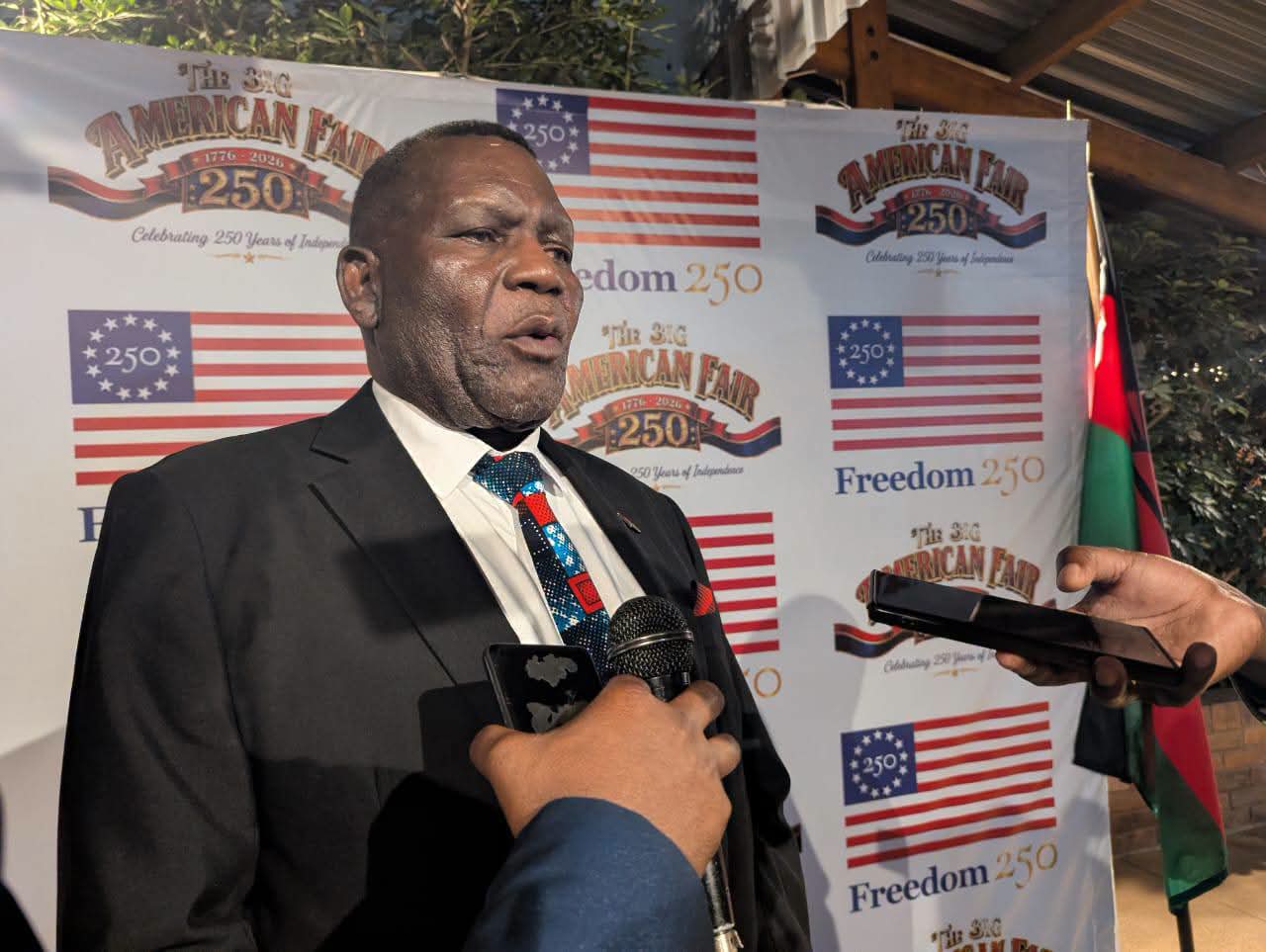
By Suleman Chitera
Minister of Foreign Affairs George Chaponda has openly expressed concern over growing challenges in Malawi’s relationship with the United States, warning that visa restrictions, plans to close consular services, and the termination of the Millennium Challenge Corporation (MCC) Compact Two could have far-reaching consequences for Malawians.Chaponda Hails India’s Progress, Reaffirms Malawi–India Ties
Speaking during celebrations marking America’s 250th Independence anniversary, Chaponda said recent developments have raised questions about the future of opportunities that thousands of Malawians have relied upon for decades.
The minister noted that visa restrictions are increasingly affecting Malawians seeking medical treatment, education, and business opportunities in the United States. He questioned whether future generations will continue to enjoy the same access that previous generations benefited from.Chaponda claims MCP politicians’ hijacks food distribution exercise
“We are concerned about the direction these changes may take and what they mean for ordinary Malawians who depend on these opportunities,” Chaponda said.
He also described plans to close U.S. consular visa services in Malawi as a significant setback, saying citizens would be forced to travel to neighboring countries to obtain visas, creating additional financial and logistical burdens.
According to Chaponda, the move risks weakening the strong people-to-people connections that have been a cornerstone of Malawi-U.S. relations for more than six decades.
The Foreign Affairs Minister further lamented the termination of the MCC Compact Two programme, saying Malawi has missed a transformative opportunity that could have accelerated economic growth and development across several sectors.Chaponda unleashes scathing attack on Chakwera: “All lies, no truth”
In a personal reflection, Chaponda recalled how he once secured a J-1 visa that enabled him to study in the United States, expressing hope that similar opportunities will remain available to young Malawians aspiring to further their education abroad.
Despite the concerns, the United States reaffirmed its commitment to Malawi.
U.S. Chargé d’Affaires Jonathan Fischer highlighted the enduring partnership between the two nations, pointing to a $792 million investment in Malawi’s health sector, the expansion of the Peace Corps programme, and the construction of a new U.S. Embassy as evidence of continued cooperation.Leader of Opposition George Chaponda Ready to Present Evidence on NRB Activities in Kanengo
Fischer said the relationship between Malawi and the United States remains strong and focused on advancing development, education, health, and people-to-people ties.
The remarks come at a time when many Malawians are closely monitoring developments in U.S. immigration and foreign aid policies, with concerns growing over how such changes could affect educational, economic, and diplomatic opportunities in the future.Leader of Opposition George Chaponda urges President Chakwera to reject recently passed bills

Leave a Reply