

 Malawi Freedom Network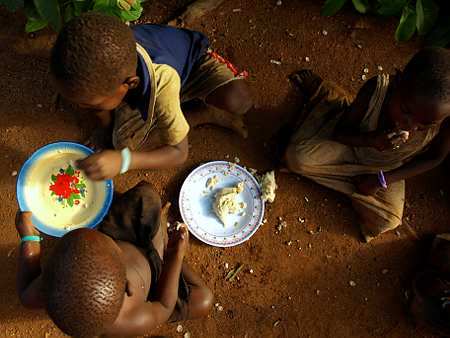
By Mabvuto Kalawa-Correspondent, Malawi Freedom Network
For a long time, Malawi has been grappling with persistent food shortages that continue to affect millions of its citizens, despite the country being endowed with abundant natural resources.
To be frank, the hunger situation has become more pronounced since Malawi transitioned to a multiparty system of government nearly thirty years ago.
During the one-party era, Malawi was largely food secure, from household level up to the national reserve.
It was common to see surplus maize being destroyed by smallholder farmers or exchanged for meat and fresh fish in some areas.
At that time, Malawians living in cities and towns often travelled to villages to collect food.
Today, the situation has reversed, as it is now people from urban areas who bring food to rural households when they go on holiday.
This raises a critical question: was Malawi’s food security a result of policies, hard work by citizens, or favorable environmental conditions?
To understand why Malawi continues to experience acute hunger despite having rivers, lakes, fertile soils, and rich vegetation, this reporter interviewed members of different communities across the country.
Mr. Yasin Chitera of Chibwana Village in Traditional Authority Nsamala, Balaka District, attributed the crisis to poor governance.
He explained that during Dr. Hastings Kamuzu Banda’s rule, Malawi was food sufficient because of policies that emphasized hard work in agriculture.
He cited the famous slogan “Chuma chili m’thaka” and the identification of hunger as one of the three enemies of the nation, which compelled citizens to take farming seriously.
Mr. Chitera further noted that there were many agricultural extension workers at the time who were deployed to villages to assist farmers—something that is rarely seen today.
A woman from the same community agreed with Mr. Chitera, stating that Malawi was once a food basket and there was no time when people begged for food.
She said people were hardworking and blamed the current situation on overreliance on relief items.
According to her, many people are no longer serious about farming because they expect the government to provide food assistance.
She also criticized what she termed the “handout syndrome,” which she said has become widespread.
Mr. George Gama placed the blame squarely on today’s politicians, whom he accused of lacking passion for the welfare of ordinary Malawians.
He said that during the late President Bingu wa Mutharika’s administration, Malawi had enough food because of strong messages encouraging citizens to work hard in their fields.
Mr. Anthony Kadongola of Katemera Village in Traditional Authority Chadza, Lilongwe District, echoed similar sentiments.
He said current leaders lack interest in farming and in promoting long-term food security.
Mr. Kadongola questioned the effectiveness of numerous agricultural projects implemented by both government and development partners, asking whether Malawi is truly progressing when hunger persists.
He emphasized that food security cannot be treated as a slogan but must be backed by genuine commitment and action.
Mai Chimwemwe Banda also blamed poor governance, pointing to corruption as a major contributor to food shortages.
She cited the 2022 Affordable Inputs Programme (AIP), which she said was poorly implemented.
She questioned the logic behind government procuring fertilizer from a butchery company, describing the situation as a clear sign of mismanagement.
Mai Banda stressed that Malawi must be serious in implementing projects and focus more on irrigation farming instead of relying solely on rain-fed agriculture, which is increasingly unreliable.
She argued that large-scale irrigation using modern mechanization could permanently end hunger in Malawi.
She also noted that Malawians culturally depend too much on maize and urged diversification into crops such as cassava and sweet potatoes.
An agricultural extension worker, who spoke on condition of anonymity, said responsibility lies with Malawians, government, and other stakeholders alike.
He cited the Starter Pack Programme introduced during President Bakili Muluzi’s tenure, which he said was successful because it was based on adaptive research conducted by the Ministry of Agriculture in collaboration with the Food and Agriculture Organization (FAO).
He added that when President Bingu wa Mutharika reintroduced subsidized fertilizer under a different model, Malawi again achieved food security.
According to the extension worker, inconsistent and poorly designed policies have significantly contributed to Malawi’s recurring hunger crises.
This brings us to a difficult but necessary question: should Malawi continue facing hunger year after year while neighboring countries remain food secure?
This question should concern everyone—farmers, government officials, politicians, scientists, and development partners alike.
There is a Malawian saying: “Fodya wako ndi uyo ali pamphuno; wakuchala ndi wamphepo”—meaning donors may not always be there.
Malawians must therefore unite and take collective responsibility to end hunger once and for all.
Food security should never be politicized.