 Suleman Chitera
By Suleman Chitera
By November 28, 2022, Malawians were told history had been made. Today, many are asking: was it all a lie?
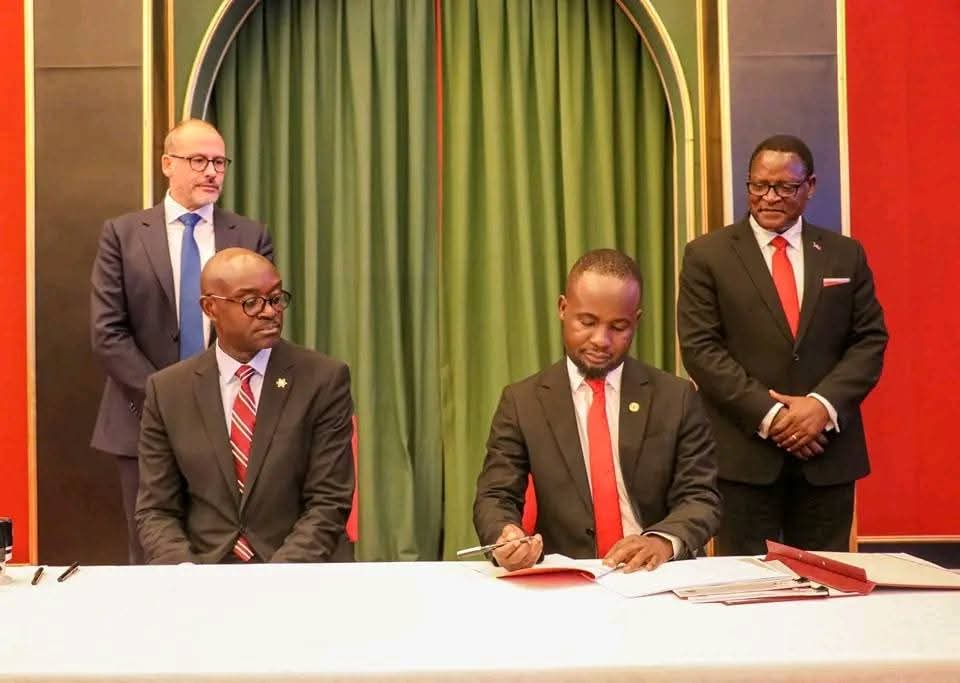
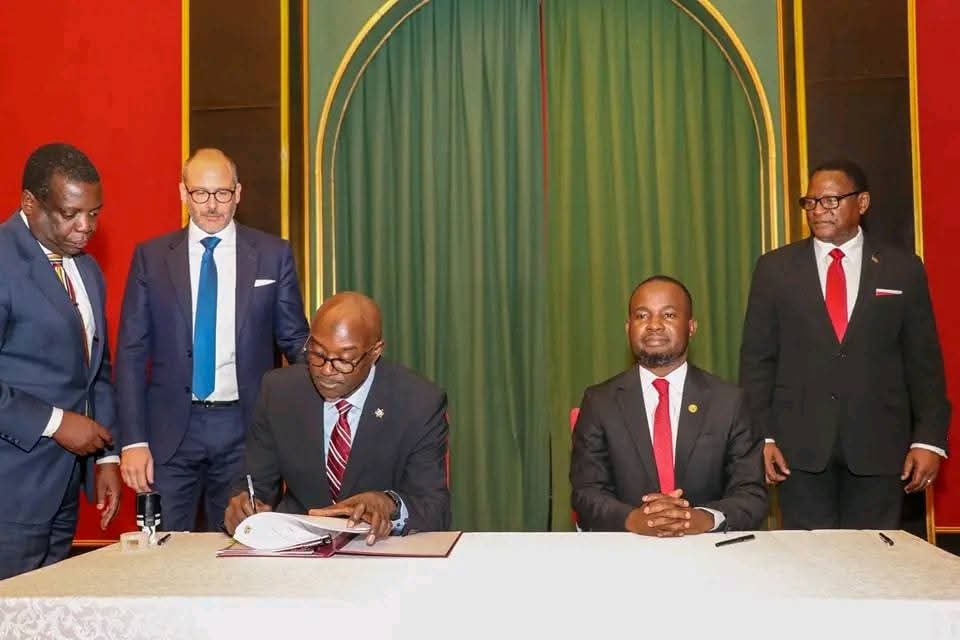
On November 28, 2022, the nation watched in awe as President Dr. Lazarus Chakwera presided over what was billed as a transformational moment at Kamuzu Palace in Lilongwe — the signing of a USD 6.8 billion grant with the so-called Bridgin Foundation. Valued at roughly MK7 trillion, the deal was sold as a once-in-a-generation opportunity to fix Malawi’s chronic infrastructure and development deficits.
Two years on, the grand promises ring hollow.
Malawians were assured that the money would finance landmark projects across the country: a USD 1 billion state-of-the-art teaching hospital in Chileka under KUHeS with satellite facilities in Mangochi, Lilongwe and Mzuzu; a USD 750 million high-tech fertilizer manufacturing plant at LUANAR; a USD 480 million Inkosi Yamakhosi M’mbelwa University in Mzimba; a USD 591 million Geology Centre at Mzuzu University; a USD 158 million high-tech laboratory at MUST; a USD 230 million twin-tower complex at Capital Hill to house ministries and departments; and a USD 3.315 billion, 1,000-megawatt power generation plant to end Malawi’s crippling electricity shortages.
These were not modest pledges. They were nation-shaping commitments.
At the signing ceremony, President Chakwera declared the occasion worthy of celebration, saying the projects would benefit all Malawians. He praised Bridgin Foundation for “seeing the vision” of his administration and choosing to invest in Malawi’s future.
Bridgin Foundation president, Professor Tanko Mauhamadou, returned the praise, commending Chakwera’s leadership and claiming the investment was a vote of confidence in his hard work. He promised technology and knowledge transfer, painting a picture of a Malawi leaping into a modern, industrialised future. Finance Minister Sosten Gwengwe reinforced the optimism, assuring the nation that livelihoods would be uplifted.
But optimism does not pour concrete, erect hospitals, or generate megawatts.
Today, there is no USD 1 billion hospital in Chileka, no fertilizer plant at LUANAR, no new universities rising in Mzimba or Mzuzu, no twin towers at Capital Hill, and no 1,000-megawatt power plant lighting Malawian homes. What remains is silence, confusion, and growing public anger.
The Bridgin Foundation deal has become a symbol of failed due diligence, weak accountability, and political grandstanding. Malawians were sold hope — loudly and publicly — yet have been left with nothing to show for it. No clear timelines. No transparent explanations. No consequences.
This was not a private memorandum quietly shelved. It was a state-sanctioned announcement, endorsed at the highest level, broadcast to the nation, and used to project an image of progress and competence. When such promises collapse, public trust collapses with them.
The hard questions can no longer be avoided:
Was Bridgin Foundation properly vetted?
Where are the agreements, guarantees, and safeguards?
Who bears responsibility for raising expectations so high without delivery?
Malawians deserve answers — not slogans, not recycled speeches, and not excuses.
Until those answers come, the USD 6.8 billion Bridgin Foundation “grant” will stand as one of the most painful reminders of how easily hope can be manufactured — and how brutally it can be betrayed.
Read also: 8 Lessons from Rev. John Chilembwe: A legacy of conscious leadership
Read also: Activists Discuss Digital Rights
Read also: Kamlepo Kalua tells Mec conduct credible elections