
 Suleman Chitera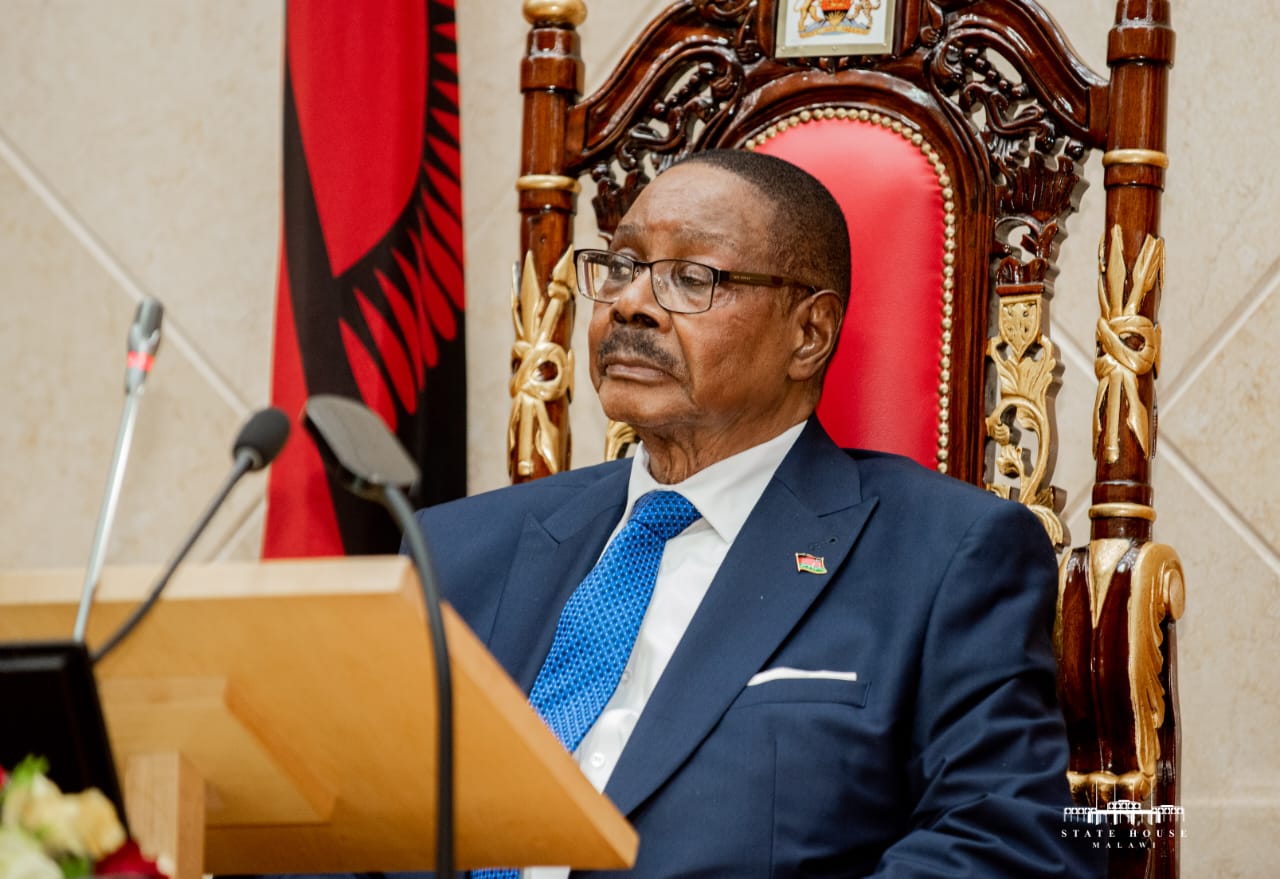
By Suleman Chitera
Theme: “The Path to Economic Recovery: Delivering a People-Centered Development”
President Arthur Peter Mutharika has delivered the 2026 State of the Nation Address, outlining his administration’s strategy for steering out of what he described as a man-made economic crisis inherited upon returning to office.
The President said his government assumed power amid severe food shortages, acute foreign exchange constraints, rising prices, fuel scarcity, shortages of essential medicines, and deep-rooted mismanagement within the public sector. He told Parliament that the focus of his administration is now firmly on economic stabilisation, service delivery, and restoring confidence in government institutions through a people-centered development approach.
Macroeconomic Recovery: Gradual Stabilisation
President Mutharika reported that inflation has declined from 28.7 percent in September 2025 to a projected level below 21 percent in 2026. He said Gross Domestic Product (GDP) growth is expected to rise from 2.7 percent to 3.8 percent in 2026 and further to 4.9 percent in 2027.
He noted that prices of key commodities such as maize and cement have fallen, easing pressure on households. However, he acknowledged that foreign exchange reserves remain weak. To address this, government is implementing forex regulation reforms, pursuing gold purchasing and monetisation initiatives, and enforcing strict austerity measures, including cuts in fuel usage and foreign travel by senior officials.
Public Sector Reforms: Restoring Discipline and Accountability
The President said his administration has taken decisive steps to clean up the public sector. Fraudulent contracts have been cancelled, non-essential public spending curtailed, and audits conducted to eliminate ghost workers from government payrolls.
He announced that merit-based appointments have been reinstated to strengthen professionalism in public institutions and reverse years of patronage that undermined efficiency and service delivery.
Decentralisation and Local Development
A major reform highlighted in the address is the increase in Constituency Development Fund (CDF) allocations from MK220 million to MK5 billion per constituency per year. Management of the fund has shifted from Members of Parliament to controlling officers in local authorities to improve accountability.
Government will introduce a national digital CDF dashboard to enhance transparency. In the 2026/27 financial year, new multi-storey markets will be constructed in Blantyre, Lilongwe, and Mzuzu to boost local commerce and urban development.
Agriculture and Food Security
President Mutharika said government intervention in maize markets has resulted in prices dropping from around MK100,000 to between MK38,000 and MK55,000 per 50-kilogram bag. Distribution of affordable fertiliser improved to 65 percent coverage, up from 45 percent the previous year.
He announced plans to commence local fertiliser production to reduce import dependence. The sale of 3.5 million kilograms of backlog tobacco generated US$8.6 million in foreign exchange. The Mega Farms Programme will be reviewed and redesigned to improve impact and sustainability.
Industrialisation, Trade and MSMEs
Government is expanding Special Economic Zones in Magwero, Chigumula, Matindi, and Dunduzu to accelerate industrial growth. Support for cooperatives and micro, small and medium enterprises has been strengthened, alongside a national strategy promoting local production, value addition, and import substitution.
Tourism Development
The President announced that the Tourism Authority is now fully operational. Flagship tourism projects, including the Salima Integrated Tourism Resort and the Likoma Activity Centre, are progressing, positioning tourism as a key contributor to employment and foreign exchange earnings.
Energy Sector Improvements
Electricity generation capacity has increased through the addition of 31 megawatts from Tedzani Hydro, 10 megawatts from Raiply Biomass, and 10 megawatts from Nanjoka Solar. Government aims to raise total national generation capacity from 551 megawatts to 1,000 megawatts by 2030.
President Mutharika declared the fuel crisis resolved and announced plans to expand fuel storage capacity from 60 million to 120 million litres to strengthen national energy security.
Mining Sector Reforms
All mining licence issuance has been suspended pending reforms. Government has banned the export of raw minerals and initiated an audit of the mining licence registry. Capacity to negotiate mining agreements is being strengthened, and a Sovereign Wealth Fund is being established to ensure long-term national benefit from mineral resources. The Malawi Mining Company (MAMICO) will spearhead mineral exploration.
Transport Infrastructure
Road maintenance has resumed nationwide after prolonged neglect. Major rehabilitation works include sections of the M1, M5, Nsipe–Liwonde, Masasa–Golomoti–Monkey Bay, and Mangochi–Monkey Bay roads. Tollgate revenue collected on the M1 has been ring-fenced strictly for its maintenance.
In aviation, Malawi Airlines will expand its fleet from three to ten aircraft through a partnership with Ethiopian Airlines, with destinations increasing from seven to twenty-seven. Rail rehabilitation is underway on the Marka–Bangula line, while the Nacala Corridor agreement will be fast-tracked. Likoma Port will be completed and Chipoka Port upgraded.
Education Sector Developments
Free secondary education, excluding boarding fees, has been successfully implemented, enabling more than 1,800 students who had dropped out to return to school. Government is expanding primary school infrastructure and rolling out digital skills and pre-primary education programmes.
Funding for Mombera University has been restored, while student loan beneficiaries have increased from 32,480 to 38,000.
Health and Sanitation
The President said essential drug shortages have been resolved, with medicines now available in public health facilities. The health budget has been increased by MK17 billion, with an additional MK5 billion allocated for children’s vaccines.
Mzuzu Central Hospital will introduce dialysis services, while construction of Blantyre and Chikwawa District Hospitals is set to begin. Government has secured a US$744 million grant from the United States to strengthen health systems nationwide.
Youth, Women and Social Inclusion
Each constituency will receive MK100 million annually for youth soft loans and MK100 million for women’s soft loans. A national allocation of MK250 million has been set aside for grants targeting persons with disabilities, alongside continued support for the National Children’s Commission.
Climate, Natural Resources and Disaster Management
Government has enacted new Climate Change Management legislation, introduced safeguards for carbon markets, and intensified reforestation programmes.
In October 2025, government declared a hunger disaster, with four million Malawians requiring food assistance valued at MK209 billion, of which MK138 billion was mobilised. During the 2025/26 rainy season, 43 people died—22 due to lightning—and 39,200 households were affected by floods.
Governance, Digitalisation and Anti-Corruption
A nationwide digitalisation drive is underway, including online passport applications, national IDs, driver’s licences, and a digital identity wallet pilot. All expired national IDs will be renewed en masse in 2026.
Reaffirming his anti-corruption stance, President Mutharika said there will be “no sacred cows” and called for patriotism and integrity across the Executive, Legislature, and Judiciary.
Conclusion
The 2026 State of the Nation Address presents a broad reform agenda focused on economic recovery, fiscal discipline, decentralisation, and social protection. While acknowledging persistent challenges—particularly foreign exchange shortages and climate shocks—President Mutharika maintained that the country is now on a firm path toward stability and inclusive growth.