By Suleman Chitera
British Prime Minister Keir Starmer has warned that Iran’s military posture in the region is becoming increasingly dangerous following the killing of its Supreme Leader, Ali Khamenei.
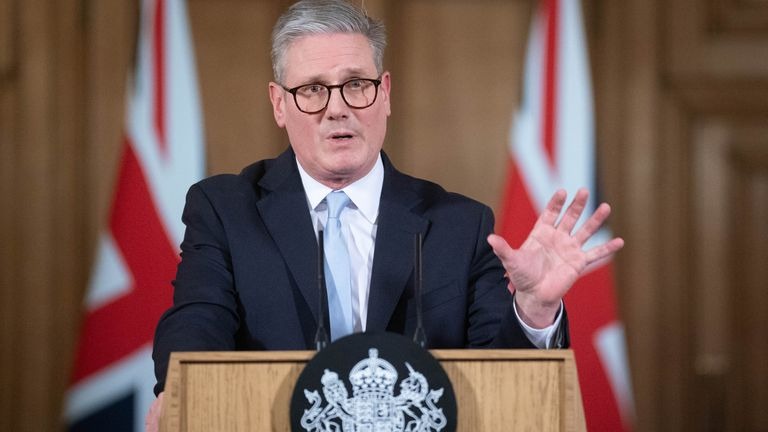
Addressing Parliament, Starmer said the death of Khamenei has not deterred Tehran from launching attacks. Instead, he argued, Iran’s operations have grown more aggressive and less restrained, with mounting risks to civilian populations.
“The death of Khamenei will not stop Iran from launching these strikes,” Starmer told lawmakers. “In fact, their approach is becoming even more reckless and more dangerous to civilians.”
Escalation Rather Than Restraint
According to the British leader, Iran has stepped up strikes targeting both military and economic infrastructure across the region. While Tehran has historically framed its actions as defensive or retaliatory, Starmer suggested that the current pattern reflects a more volatile phase in Iran’s regional strategy.
Security analysts say leadership transitions in authoritarian systems can trigger power consolidation efforts, often accompanied by displays of force intended to project strength internally and externally. In Iran’s case, such actions risk widening instability across already fragile theatres in the Middle East.
Civilian Risk at the Forefront
Starmer’s remarks emphasized the humanitarian dimension of the escalation. He warned that indiscriminate or poorly calibrated strikes threaten civilian lives and critical infrastructure, including energy and trade corridors vital to global markets.
The Prime Minister stopped short of detailing potential British responses but reiterated the United Kingdom’s commitment to regional stability and international law. He also called for coordinated diplomatic engagement to prevent further deterioration.
International Concern Mounts
The killing of Khamenei marks a watershed moment in Iran’s political trajectory. As Supreme Leader, he wielded ultimate authority over the country’s military, judiciary and strategic direction. His death has created both internal uncertainty and external tension.
Western governments are closely monitoring developments, wary that intensified hostilities could draw in additional state and non-state actors. Energy markets and maritime security routes remain particularly vulnerable should the confrontation expand.
A Precarious Moment
Starmer’s intervention signals heightened alarm in London over the direction of Iran’s actions. With rhetoric hardening and military activity increasing, the region stands at a sensitive crossroads.
Whether Tehran recalibrates or doubles down may determine the trajectory of security dynamics in the weeks ahead — but, as Starmer cautioned, the immediate trend points toward greater unpredictability and risk.