By Suleman Chitera
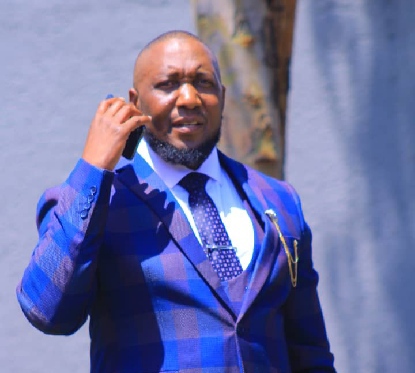
In an era where political noise often overshadows substance, Simplex Chithyola Banda is steadily carving out a different path—one defined not by loud ambition, but by measured clarity and disciplined restraint.
Appearing on Cruise 5 on Zodiak Broadcasting Station, in a continuation of his conversation with Joab Chakhaza, the Leader of Opposition delivered what can only be described as a masterclass in composed leadership.
From the quiet humility of his farming life to the demanding realities of national politics, Chithyola Banda demonstrated a rare consistency—calm under pressure, deliberate in thought, and unwavering in principle.
At a time when speculation dominates Malawi’s political discourse, he refused to be dragged into narratives crafted outside his control. When confronted with suggestions of aligning himself with Lazarus Chakwera for future political gain, he did not resort to denial or defensiveness.
Instead, he elevated the conversation.
Grounding his response in constitutional order, he reaffirmed that leadership timelines are not dictated by rumours, but by the law. President Chakwera’s mandate, he noted, stands firmly until 2029—an answer that reflected both respect for institutions and a refusal to entertain political gossip.
It was not avoidance. It was discipline.
On internal party dynamics, particularly following his convention loss to Richard Chimwendo Banda, Chithyola Banda again chose unity over division. Where many expected subtle rivalry, he offered none. He dismissed claims of factionalism, instead anchoring his position in faith and collective responsibility.
Leadership, he emphasized, is not something to be fought over recklessly—it is granted.
This was more than humility. It was strategic maturity.
By refusing to validate narratives of division, he positioned himself not as a contender in internal battles, but as a stabilizing force focused on the bigger picture—the rebuilding and strengthening of the party.
Yet it was on matters of governance where his voice carried the strongest conviction.
He openly commended government efforts in the mining sector, particularly the shift toward value addition by restricting the export of raw minerals. To him, this is not merely policy—it is economic common sense. Malawi must benefit from its own resources before exporting them.
However, he did not shy away from critique.
On taxation, Chithyola Banda spoke with the urgency of a leader deeply aware of citizens’ struggles. He challenged the burden placed on ordinary Malawians, arguing that excessive taxation suffocates productivity and undermines economic growth.
On education, he confronted the gap between promise and reality. While “free education” remains a noble policy, he pointed out the lingering financial pressures—especially boarding costs—that continue to weigh heavily on families.
Then came his vision.
A return to a production-driven economy—one that prioritizes output before taxation. Anchored in his “4 Fs” framework—Forex, Fuel, Fertiliser, and Food—his approach offers a structured pathway toward economic recovery and sustainability.
It is a framework not just spoken about, but one he notes is already influencing current policy direction.
By the close of the interview, one truth was unmistakable:
Simplex Chithyola Banda is not chasing the spotlight—he is shaping substance within it.
In a political climate often driven by ambition and self-promotion, his approach stands out as both rare and refreshing. He is not in a hurry to define his future through declarations, but rather through ideas, systems, and steady leadership.
Whether this calm is patience or long-term strategy remains to be seen.
But for now, Malawi is witnessing a leader who understands that true influence is not always loud—it is consistent, deliberate, and grounded in purpose.