 Malawi Freedom Network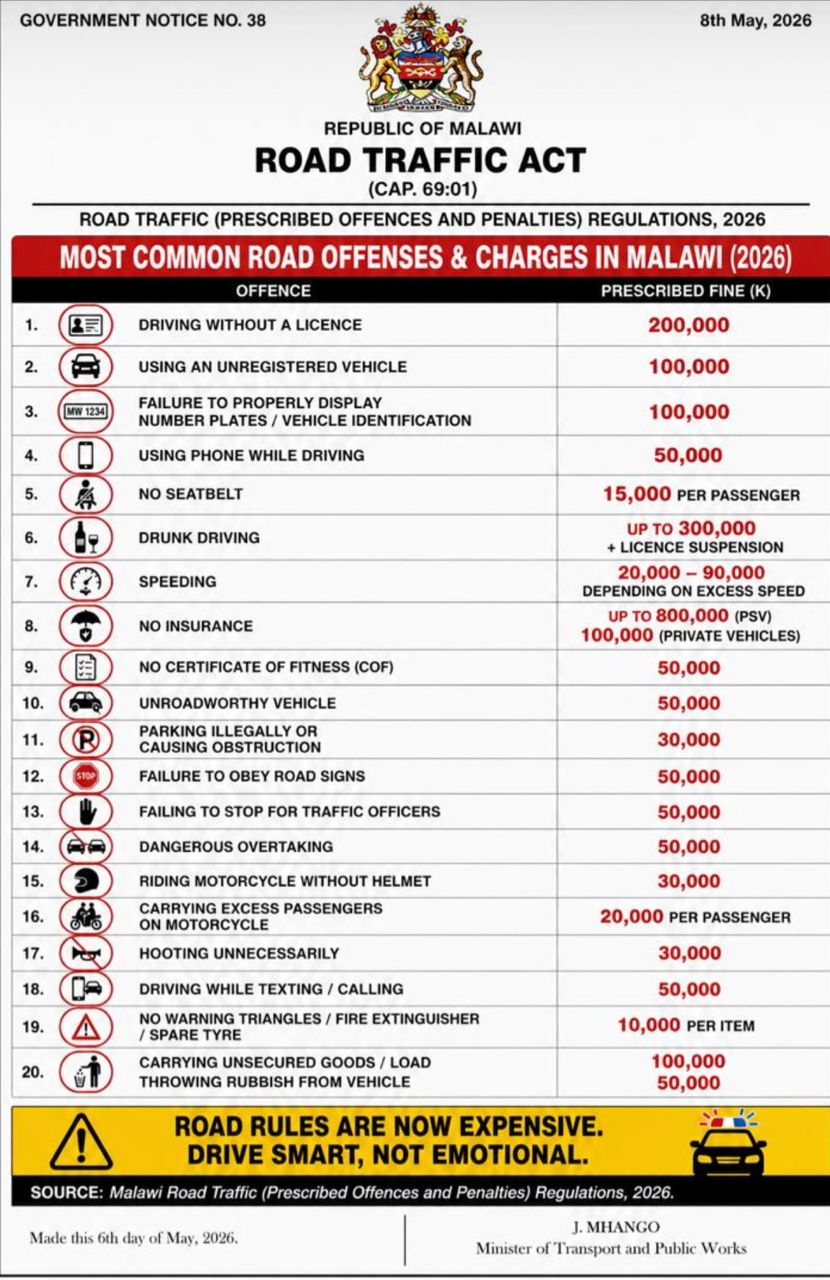
By Mawa Kumaliopa
The exorbitant road traffic fines imposed during the reign of the Democratic Progressive Party (DPP) government remain one of the most controversial issues many Malawians associate with the political downfall of the administration.
See also Investigative Report: How Nir Ges Obtained a Diplomatic Passport in Malawi
For many citizens, the combination of high fuel prices, increasing transport costs, and harsh traffic penalties created unbearable economic pressure that fueled public anger against the government. Political analysts and ordinary Malawians alike continue to argue that the economic hardships experienced during that period played a major role in weakening public trust in the DPP administration.
See also President Mutharika Urged to Revoke Nir Ges’ Diplomatic Passport Amid Outgoing MCP Scandal
During the final years of DPP rule, motorists across Malawi frequently complained about what they described as excessive and punitive road traffic fines. Minibus drivers, taxi operators, truck drivers, and private motorists accused authorities of using roadblocks and penalties as tools for revenue collection rather than promoting road safety.
The situation became even more difficult as fuel prices continued to rise. Transport operators were forced to increase fares in order to survive, while the prices of goods and services also escalated nationwide. Since Malawi heavily depends on road transport for the movement of goods and people, every increase in fuel costs directly affected the cost of living for ordinary citizens.
See also Diplomatic Passports for Sale? Malawi’s Honorary Consul Nir Gess and the Rot in the System
Critics argued that the government appeared disconnected from the daily suffering of Malawians. Small-scale business operators struggled to maintain profits, civil servants complained about stagnant wages, and unemployed youth expressed growing frustration over worsening economic conditions. For many families, survival became increasingly difficult.
See also Why Lazarus Chakwera Failed as President of Malawi
The phrase, “The exorbitant road traffic fines made the DPP government collapse,” has since become a common political observation among some citizens who believe the administration underestimated the public’s anger. While traffic enforcement is necessary to maintain order and reduce accidents on Malawi’s roads, many people felt the penalties were too harsh for an already struggling population.
Political commentators say governments often lose public confidence when economic policies are perceived as oppressive or insensitive. In democratic societies, economic hardship can quickly transform into political resistance, especially when citizens believe leaders are failing to listen to their concerns.
See also Supporter Of Palestine War Chakwera loses Elections
The eventual fall of the DPP government became a strong reminder that public frustration over economic challenges should never be ignored. Analysts believe that fuel prices, transport costs, inflation, and road traffic penalties remain highly sensitive issues capable of influencing public opinion and electoral outcomes in Malawi.
See also Growing Frustration as Malawians Reject Chakwera MCP Comeback”
As the country continues to battle economic difficulties, many citizens are calling on current and future leaders to adopt policies that protect ordinary people from excessive financial burdens. Observers warn that any administration perceived as increasing suffering among citizens risks facing the same political backlash that contributed to the collapse of the DPP government.
Read also: Peter Mukhito Supports Muslim Community with Ramadan food donation
Read also: Govt Dismisses Buluma’s Resignation Letter