 Suleman Chitera
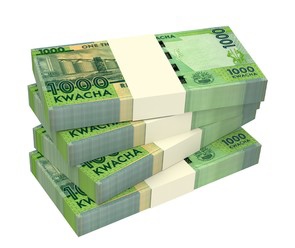
Malawians deserve a full account of how billions and trillions borrowed during the MCP administration were spent, as the country’s public debt crisis raises fresh questions about public financial accountability.
By Suleman Chitera, MFN Reporter
LILONGWE, November 14, 2026 — The question of how Malawi accumulated its enormous public debt has taken centre stage, with growing calls for the former governing Malawi Congress Party (MCP) administration to account for the loans and financial obligations incurred during its five years in power.
The debate has raised a fundamental question that taxpayers deserve to have answered: Where did the money go, and what tangible development did Malawians receive in return?
When the Democratic Progressive Party (DPP) administration left government in June 2020, Malawi’s public debt was reported at approximately K4.1 trillion. The figure represented the country’s outstanding financial obligations at the time.
However, during the subsequent MCP-led administration, which governed from 2020 to 2025, the country’s debt burden increased substantially.
Official figures from the Ministry of Finance show that public debt reached K19.18 trillion by March 2025 under the revised figures presented in the 2026/27 financial statement. By December 2025, it had climbed further to K24.33 trillion.
Meanwhile, a K28 trillion debt figure was subsequently raised in parliamentary debate and reported by Malawi Freedom Network in July 2026, prompting further demands for a detailed explanation of the country’s borrowing history.
The figures have intensified public scrutiny over the financial decisions made during the previous administration and the development outcomes achieved through public borrowing.
The K24 trillion accountability question
The central concern is not simply how much Malawi borrowed, but whether the resources obtained through domestic and international borrowing were properly utilised and translated into meaningful improvements in people’s lives.
Every loan contracted in the name of national development creates an obligation that must eventually be settled using public resources.
Malawians therefore have a legitimate right to know which projects received financing, how much was allocated to each project, which projects were completed and whether the intended objectives were achieved.
If the country accumulated trillions of Kwacha in additional debt, the former administration should be able to provide a comprehensive financial account explaining the borrowing decisions and expenditure.
The current government should consider asking the relevant former ministers, controlling officers and other responsible public officials to provide explanations through established parliamentary and accountability institutions.
What happened to the borrowed money?
A comprehensive examination should go beyond political statements and focus on documentary evidence.
The following questions require clear answers:
- How much money did the MCP-led government borrow between 2020 and 2025, separating new borrowing from refinancing and debt rollover?
- Which major infrastructure and development projects were financed through the loans?
- How much was spent on roads, hospitals, schools, agriculture, water and electricity projects?
- Which projects were completed, and which remain unfinished despite receiving public financing?
- How much public money went towards recurrent expenditure, interest payments and refinancing existing obligations?
- Were all borrowed resources accounted for through proper procurement and financial management procedures?
- Were there any loans whose proceeds cannot be adequately traced to their intended purposes?
These are questions that deserve answers supported by loan agreements, disbursement records, expenditure reports, procurement documents and project completion reports.
Parliament should demand a detailed debt audit
The current administration has an opportunity to establish a credible accountability process by requesting a comprehensive review of public borrowing and expenditure during the 2020–2025 period.
Parliament’s Public Accounts Committee and other relevant oversight committees could play an important role in examining the financial records and demanding explanations from responsible institutions and former public officials.
The Auditor General’s Office should also be involved within its legal mandate to examine government accounts and identify any irregularities requiring further investigation.
Such an exercise should establish the amount borrowed, the amount actually disbursed, how the funds were spent, the outstanding obligations and the development projects delivered.
Where evidence of financial misconduct emerges, the relevant investigative institutions should be allowed to investigate and take appropriate action.
Importantly, an increase in public debt alone does not establish that money was stolen or misappropriated. Any allegations of corruption must be supported by evidence.
Malawi’s debt crisis is bigger than political parties
The International Monetary Fund has previously warned about Malawi’s debt distress and the weaknesses affecting public debt management.
Its 2025 assessment also identified economic pressures contributing to rising debt, including COVID-19-related expenditure, the effects of cyclones, inflation and exchange-rate movements.
These factors demonstrate why the debt debate must be approached through proper financial analysis rather than attributing every Kwacha of the increase to new borrowing or alleged misuse.
The Ministry of Finance’s December 2025 figures show that domestic debt alone stood at approximately K16 trillion, while external debt was equivalent to approximately K7.86 trillion.
This composition is particularly important because domestic borrowing creates significant interest obligations that compete with resources needed for essential public services.
In its 2026/27 budget policy statement, government acknowledged that public debt stood at approximately K23.9 trillion, equivalent to 90.9 percent of GDP, as of December 2025.
The debt burden continues to restrict the government’s ability to finance development programmes without increasing taxes or seeking additional financing.
Taxpayers deserve more than political explanations
For ordinary Malawians, the consequences of public debt are felt through the cost of living, pressure on public services, limited government spending and the taxes required to finance national obligations.
When government borrows, it does so in the name of citizens. Those citizens should therefore have access to information showing how the money was utilised.
The former MCP administration should be given an opportunity to explain its borrowing record and demonstrate the development outcomes achieved during its time in government.
Equally, the current DPP administration must ensure that its own borrowing decisions are transparent and that public resources are properly accounted for.
Malawi cannot afford a situation where successive administrations accumulate debt without sufficiently demonstrating the value delivered to taxpayers.
The demand is straightforward: publish the figures, open the books, account for every major loan and show Malawians the projects and services financed with their money.
The K28 trillion debate should therefore become an opportunity to strengthen public financial accountability rather than another political confrontation.
Ultimately, Malawians are not merely interested in knowing how much their country owes. They want to know what the country received in exchange for the money borrowed in their name.
That is an explanation the former government, the current government and every institution responsible for managing public finances must be prepared to provide.