 Malawi Freedom Network
By MFN Reporter
Frank Mbeta may have been Attorney General when the Supreme Court delivered its verdict. But court records suggest the seeds of Government’s costly defeat were sown years earlier, after successive administrations failed to file the submissions needed to defend a High Court victory.
When the Supreme Court of Appeal handed victory to the liquidator of Finance Bank and exposed the Government and the Reserve Bank of Malawi (RBM) to a liability estimated at nearly MK300 billion, attention quickly turned to Attorney General Frank Mbeta.Malawi travel guide
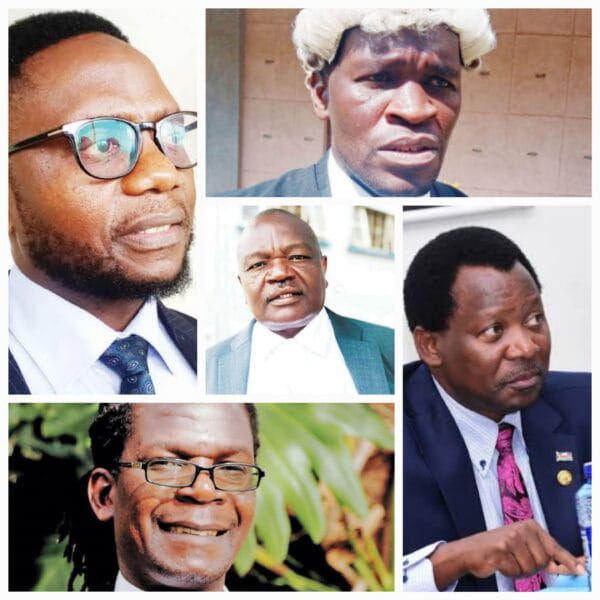
Before Mbeta: How Four Attorneys General Left Government Exposed to a MK300bn Judgment
But the record of the case points to a different conclusion.
Mbeta inherited a case in which a critical procedural step had already been neglected for years.
By the time he attempted to regularise the Government’s position, the Supreme Court had witnessed nearly a decade of missed deadlines, ignored opportunities and unexplained failures by successive holders of the country’s highest legal office.
The real story of the Finance Bank appeal is therefore not what happened in 2025 or 2026.
It is what failed to happen between 2016 and 2025.
For almost ten years, Government did not file the skeleton arguments needed to defend a High Court judgment it had already won.
That omission spanned the tenures of four Attorneys General before Mbeta took office.
The appeal itself arose from a 2008 High Court victory by the RBM and the Ministry of Finance over costs relating to Finance Bank’s receivership.
When Finance Bank appealed in 2015, the legal process required both sides to place their arguments before the Supreme Court of Appeal.
The liquidator’s lawyers did exactly that.
Government did not.
What followed was a chain of inaction stretching across successive administrations. Dr Kalekeni Kaphale, Charles Mhango, Dr Kaphale again, and later Dr Chikosa Silungwe all held office while the appeal remained active.
Yet no skeleton arguments were filed on behalf of the Ministry of Finance.
When Thabo Chakaka Nyirenda later became Attorney General, the Supreme Court of Appeal reportedly granted repeated extensions to enable Government to submit its arguments. Those opportunities likewise passed without compliance.
By the time Mbeta assumed office in October 2025, the appeal had been before the courts for roughly a decade without Government having filed the submissions required to defend its position.
Recognising the problem, he applied for another extension and filed the skeleton arguments, hoping the court would exercise its discretion to admit them out of time.
The justices declined.
After years of delay and repeated failures by Government to comply with procedural requirements, the court refused to accept the late submissions and proceeded to determine the appeal.
The consequence was one of the most expensive legal defeats in Malawi’s history.Malawi travel guide
Viewed through that chronology, the central question is not whether Mbeta lost the case. It is whether the case had effectively been lost long before he arrived.
The Supreme Court’s judgment may have been delivered during his tenure, but the procedural failures that undermined the Government’s defence had accumulated over four Attorneys General and nearly ten years.
That is the timeline that explains how a High Court victory eventually became a MK300 billion liability.
Timeline: The 10-Year Road to Defeat
2008 – Government and RBM win their case against Finance Bank in the High Court.
2015 – Finance Bank appeals.
2016 – Appeal record lodged; Finance Bank’s lawyers file skeleton arguments.
2016-2025 – Four successive Attorneys General fail to file Government’s skeleton arguments.
2022-2025 – The Supreme Court grants repeated extensions for Government to comply. No submissions are filed.
October 2025 – Frank Mbeta becomes Attorney General and discovers the submissions have never been lodged.
Late 2025 – Mbeta files skeleton arguments and seeks leave to file out of time.
3 February 2026 – The Supreme Court rejects the late filing, overturns the High Court judgment and rules in favour of the Finance Bank liquidator.
At a Glance
Appeal lodged: 2015
Government submissions filed on time: No
Attorneys General before Mbeta: Four
Extensions granted by the court: Several
Years without submissions: Nearly 10
Estimated liability: MK300 billion
The chronology tells a stark story. The Supreme Court did not confront a single missed deadline or an isolated procedural oversight.
It confronted nearly a decade of inaction. By the time Mbeta sought to put the Government’s house in order, the court had already witnessed years of unanswered opportunities and unfulfilled extensions.
For that reason, the Finance Bank judgment raises a question far larger than the fate of one Attorney General.
If the State’s defence went unfiled for almost ten years, responsibility may lie less with the man who inherited the problem than with those who allowed it to persist for so long.