
By Suleman Chitera
A troubling case of abuse of authority by traffic police has emerged in Lilongwe, exposing how some officers continue to harass motorists through the misapplication of traffic laws.
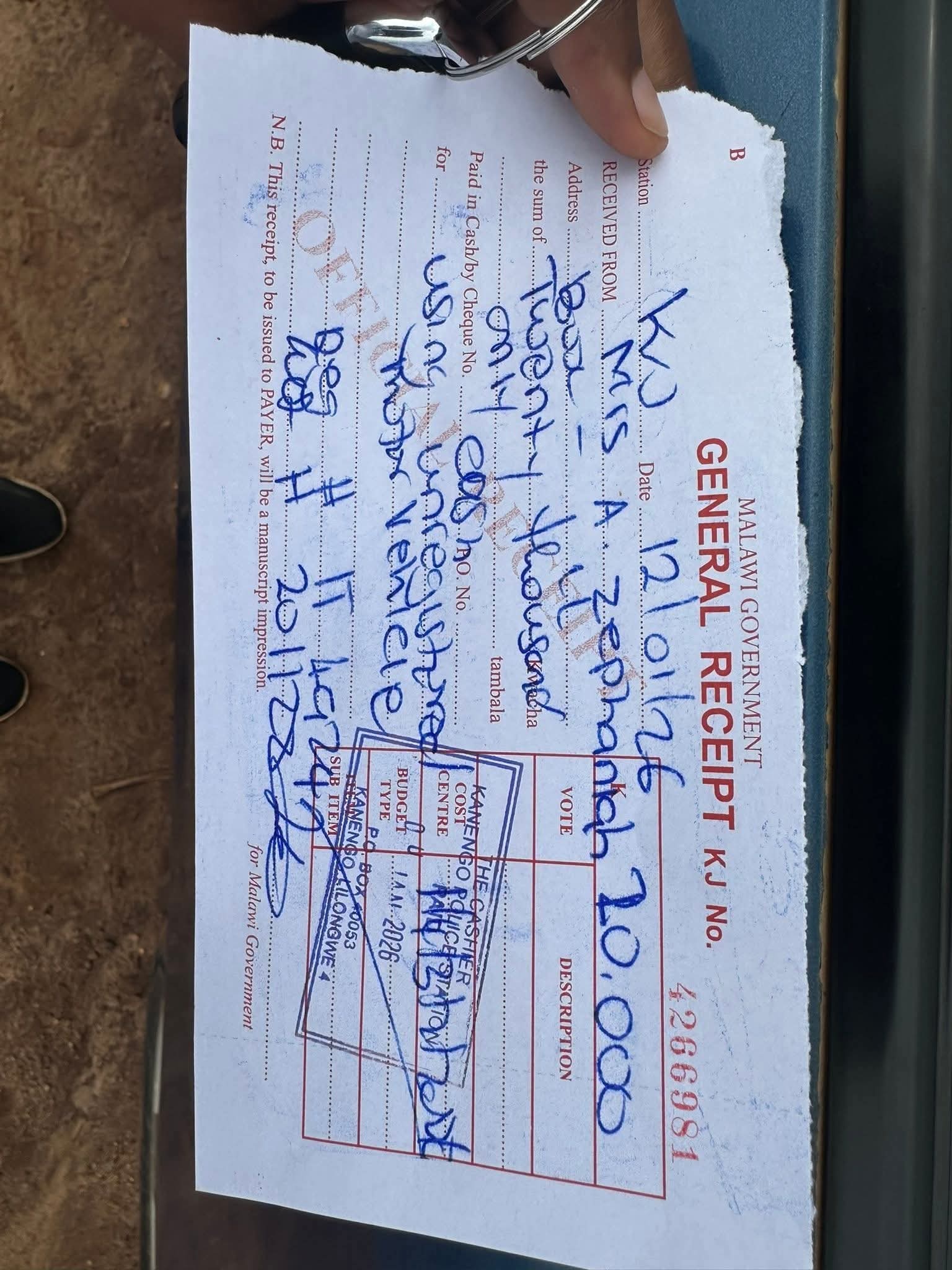
Ms. Agatha Zephaniah, a businesswoman based in Lilongwe, was wrongly fined K20,000 by traffic police despite fully complying with the law.
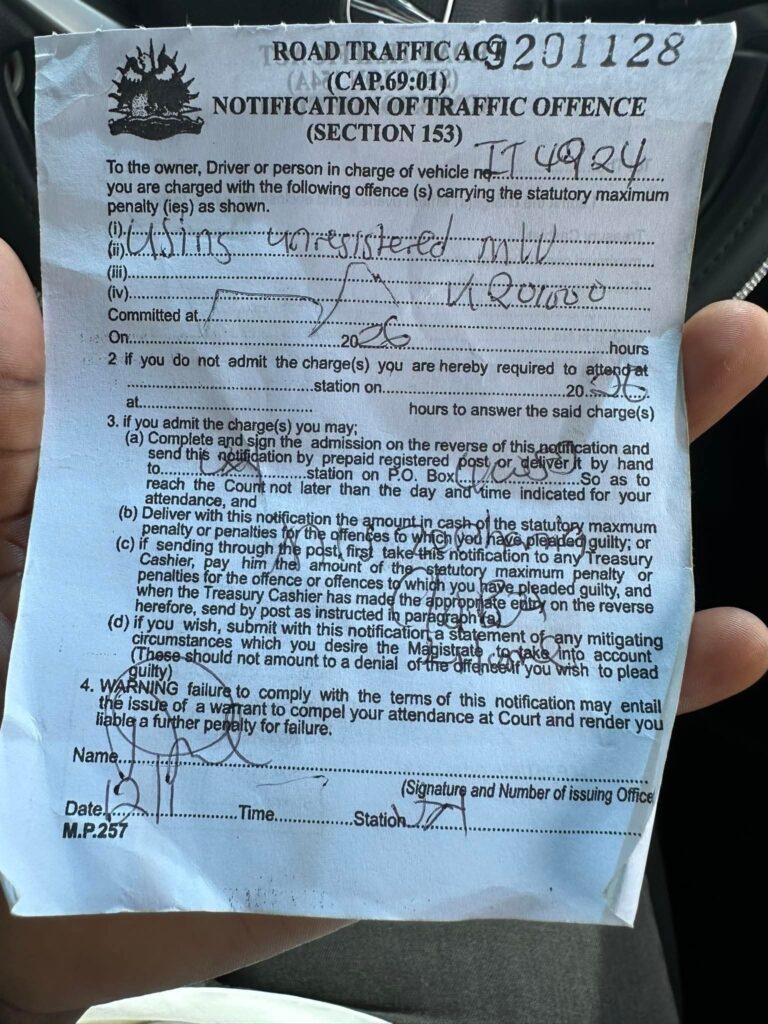
Ms. Zephaniah recently bought a vehicle from Japan through Be Forward. Records show that the vehicle officially entered Malawi on 2 January 2026. On 12 January—well within the legally permitted grace period—she was driving to the Road Traffic Directorate to register the vehicle when she was stopped by traffic officers near Kapani Stage.
The officers accused her of driving an unregistered vehicle and informed her she had committed an offence. Ms. Zephaniah correctly explained that traffic regulations allow a motorist to drive an imported but unregistered vehicle for up to 14 days after it enters the country. Her explanation was dismissed outright.
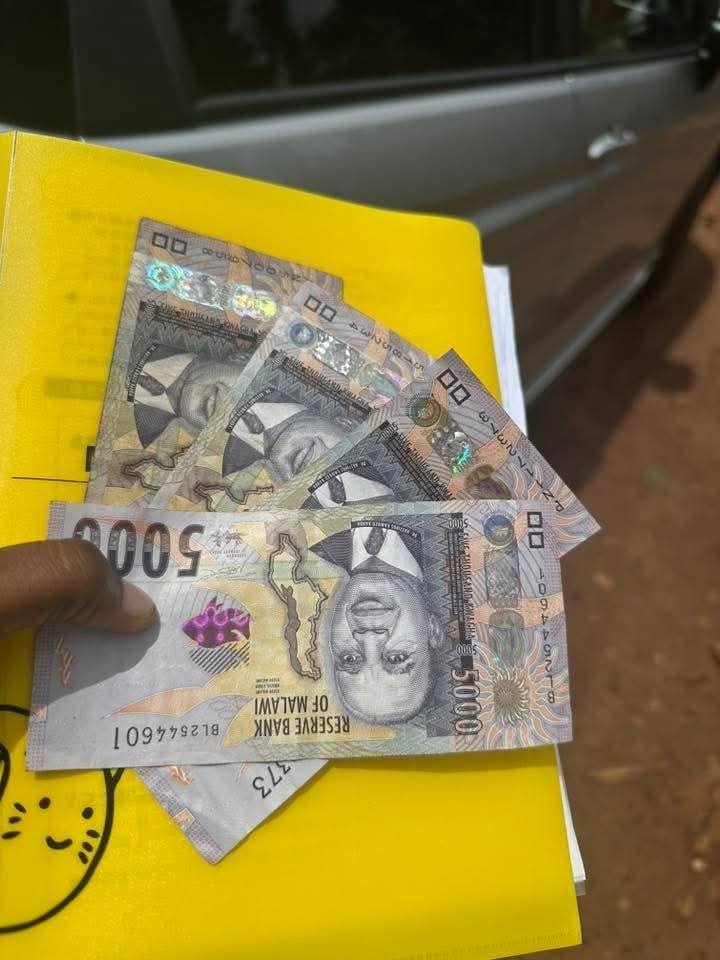
A female traffic officer insisted, incorrectly, that once an unregistered vehicle enters Malawi it must be registered the very next day. On that false basis, Ms. Zephaniah was fined K20,000.
Although she paid the fine to avoid further confrontation, Ms. Zephaniah refused to let the matter rest. She reported the incident to Area 30 Police Headquarters, where senior officers reviewed the case and immediately acknowledged that she had been wrongly charged. They advised her to proceed to Kanengo Police Station and report the matter to the Station Traffic Officer (STO).
Upon examining the facts, the STO confirmed that Ms. Zephaniah had committed no offence whatsoever. The traffic officer who issued the fine was summoned and ordered to refund the full amount.
This incident is not an isolated mistake—it reflects a wider and deeply rooted problem within traffic policing. Some officers continue to rely on intimidation, misinformation, and the assumption that motorists will not question or challenge unlawful fines. Many citizens, fearing delays, harassment, or further penalties, simply pay and walk away, allowing such misconduct to thrive.
Ms. Zephaniah’s case serves as a clear reminder that knowledge of the law is a powerful tool against abuse. It also demonstrates that internal accountability mechanisms can work—if citizens are bold enough to pursue them.
The public is strongly encouraged to report any suspected misuse of traffic laws to the Station Traffic Officer or senior police offices. Silence only protects wrongdoing.
Traffic laws exist to regulate road safety—not to extort, intimidate, or embarrass law-abiding citizens.
No one is above the law, including those entrusted to enforce it.