The Malawi Law Society (MLS) has completed drafting regulations and key instruments intended to fully operationalise Malawi’s long-awaited Judicial Reform Acts, but the reform agenda is facing renewed uncertainty following selective presidential assent that has left a critical law in legal limbo.
The MLS has finalised draft regulations alongside supporting instruments that include procedures for the Independent Complaints Commission of the Judiciary (ICCJ), draft impeachment procedures, and a Code of Conduct for judicial officers—all central to strengthening accountability, discipline, and public confidence in the judiciary.
The reforms are anchored in three laws passed by Parliament on December 20, 2024: the Constitutional (Amendment) Act, 2025, the Judicial Service Administration Act, 2025, and the Courts (Amendment) Act, 2025. However, on January 24, 2025, former President Lazarus Chakwera assented to only two of the three Acts, conspicuously excluding the Courts (Amendment) Act, 2025.
The omission has triggered concern among legal practitioners and governance watchdogs, who argue that leaving out the Courts (Amendment) Act undermines the coherence and effectiveness of the reform package. The Act is widely viewed as a cornerstone for aligning court operations with the new constitutional and administrative framework.
MLS Chief Executive Officer Chrispin Ngunde said the Society is moving ahead despite the uncertainty.
“We aim to present these draft instruments to the Ministry of Justice to initiate formal consultations and provide a foundational framework for developing the official rules and regulations to accompany the Acts,” Ngunde said.
Behind the diplomatic language, however, lies growing frustration within the legal fraternity. Critics argue that partial assent sends mixed signals about political commitment to judicial independence and reform, especially after Parliament had already completed its legislative role.
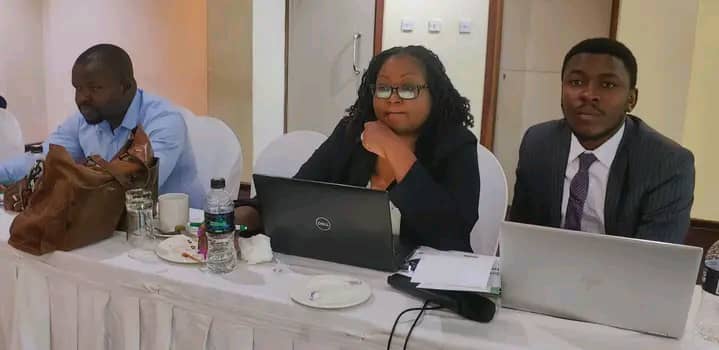
Meanwhile, key stakeholders have convened in Lilongwe for an engagement workshop to scrutinise, review, and refine the drafted documents. The meeting brings together a broad coalition of actors, including the Law Commission, the Malawi Human Rights Commission (MHRC), Youth and Society (YAS), the Centre for Democracy and Economic Development Initiatives (Cdedi), and the Centre for Human Rights Education Advice and Assistance (Chreaa).
Civil society representatives warn that without the Courts (Amendment) Act in force, the risk remains that judicial reforms will be implemented selectively, weakening enforcement mechanisms and blunting accountability—particularly in handling complaints, discipline, and ethical breaches within the judiciary.
As consultations continue, pressure is mounting on authorities to clarify the fate of the unassented law. For many observers, the credibility of Malawi’s judicial reform agenda now hinges not on drafting workshops or stakeholder meetings, but on whether the political will exists to complete the reform process in full—without omissions, delays, or selective commitment.

 Listen to this article By Our Reporter Read moreBiography Of Zuneth SattarThe Reserve Bank of Malawi (RBM) has […]
 Listen to this article By Our Reporter Read moreAllegations of a coup plot sour diplomatic tiesTNM Launches Music […]
 Listen to this article FDH Bank has reaffirmed its commitment to supporting Malawi’s national development after committing K100 […]
 Listen to this article By Suleman Chitera Read moreBiography Of Zuneth SattarMzuzu City Hammers Coach Chisomo Kamulanje Blames […]
 Listen to this article By Staff Reporter Read moreLets Not Forget Why US/British Killed Muammar Gaddafi?Senegal Crash Out […]
 Listen to this article By Our Reporter Read moreMalawi business tycoon Simbi Phiri disassociates himself from forming up […]
 Listen to this article By Suleman Chitera Read moreBiography Of Zuneth SattarMore than 30 foreign nationals, including Malawians […]
 Listen to this article By Suleman Chitera Read moreAllegations of a coup plot sour diplomatic tiesGiant alcoholic beverages […]
 Listen to this article By Vincent Gunde Read moreAllegations of a coup plot sour diplomatic tiesBakili Muluzi TV […]
 Listen to this article By Suleman Chitera Read moreAllegations of a coup plot sour diplomatic tiesThe National Bank […]
 Listen to this article By Suleman Chitera Read moreBiography Of Zuneth SattarFAM to Roll Out CAF A Licence […]