By Suleman Chitera
Malawians must begin to separate political theatre from economic reality.
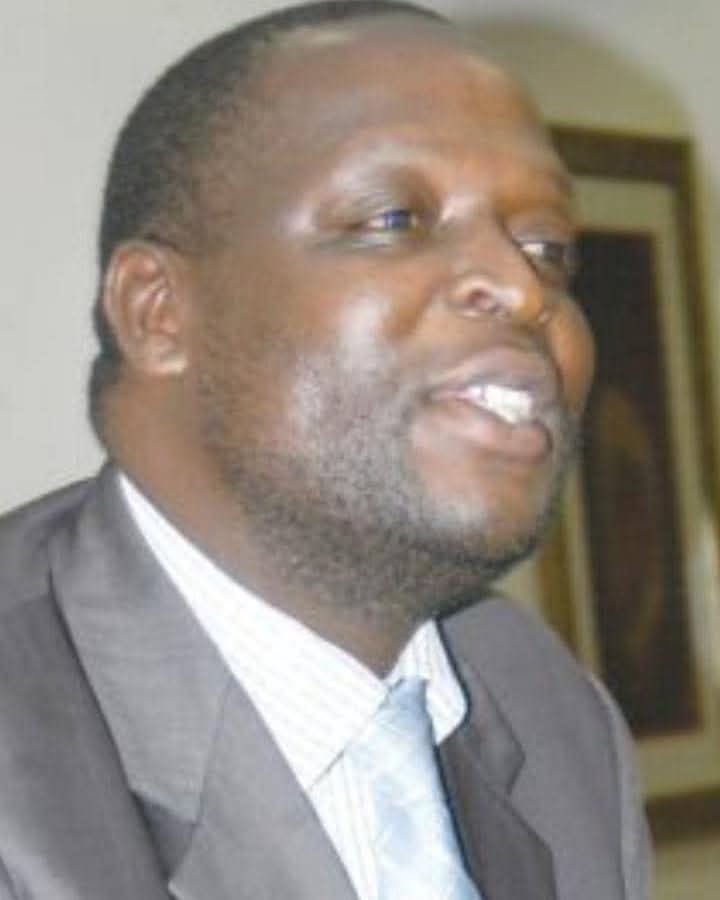
What is unfolding now—persistent attacks, rumors, and coordinated criticism directed at Joseph Mwanamveka—is not accident. It is calculated. It is strategic. And it is driven by one undeniable fear: control of the economy determines control of political power.
At the center of this storm are familiar players—Malawi Congress Party (MCP) and the Human Rights Defenders Coalition (HRDC). Their renewed aggression is not about accountability—it is about regaining relevance in a landscape where economic stability is slowly returning, and their political leverage is weakening.
The Reality on the Ground
Strip away the rhetoric, and the facts begin to speak.
Inflation pressures are easing. Market conditions are stabilizing. Food availability—especially maize—is improving. Across trading centers and local markets, there is a noticeable shift: supply chains are recovering, and the panic that once defined daily survival is subsiding.
This is not abstract economics. It is lived experience.
Contrast this with the period under Lazarus Chakwera, where economic volatility became the norm. Prices surged unpredictably. Households lost purchasing power at an alarming rate. Policy direction appeared reactive rather than strategic, leaving Malawians exposed to relentless financial pressure.
A Technocrat, Not a Talker
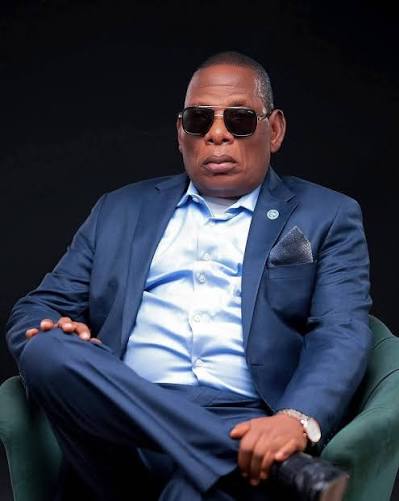
Joseph Mwanamveka is not a political showman. His approach is technocratic—quiet, methodical, and results-driven. In an environment often dominated by rhetoric, that alone sets him apart.
His stewardship of the Treasury reflects a focus on fiscal discipline, market stabilization, and restoring confidence. These are not quick wins; they are structural corrections—often invisible in the short term but critical for long-term recovery.
It is precisely this effectiveness that makes him a target.
Why APM Trusted Him
When Arthur Peter Mutharika entrusted Mwanamveka with the country’s finances, it was not a political gamble—it was a calculated decision grounded in competence.
Mutharika’s leadership style has long leaned toward technocratic governance, prioritizing expertise over populism. In Mwanamveka, he identified a figure capable of navigating complex fiscal terrain with precision.
The result? A reintroduction of economic order where there was once uncertainty.
Food Security: From Crisis to Control
Few issues define governance more than food security. Under previous instability, maize—Malawi’s staple—drifted toward becoming a luxury rather than a necessity.
Today, that trajectory is being reversed.
Ensuring consistent maize availability is not merely an agricultural issue; it is an economic one, tied to subsidy management, import controls, and fiscal prioritization. Mwanamveka’s role in aligning these levers has been central to restoring balance.
The Politics Behind the Attacks
The renewed focus on controversies—such as the Amaryllis Hotel issue—must be understood within a broader political context. These narratives are not emerging in isolation; they are being amplified as part of a wider attempt to erode public confidence.
But Malawians must ask a critical question: why now?
The answer is simple. Economic stabilization reduces political vulnerability. And for opposition forces, that is a threat.
A Warning from Recent History
Malawi has already experienced the cost of economic mismanagement. It has seen what happens when leadership lacks coordination, when decision-making becomes fragmented, and when public resources are misdirected.
The consequences were not theoretical—they were felt in empty wallets, unstable markets, and growing uncertainty.
The Choice Ahead
Today, the country stands at a different point.
There is emerging stability. There is clearer fiscal direction. There is measurable, if gradual, recovery.
This does not mean perfection. No economy recovers overnight. But it does mean progress—and progress is precisely what political adversaries seek to disrupt.
Malawians must therefore decide:
Will they be guided by evidence—or by noise?
Because in the end, the economy does not respond to slogans. It responds to discipline, strategy, and execution.
And that is where the real story lies.