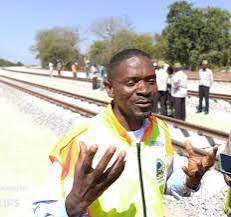
NSANJE RAILWAY MYSTERY
By Suleman Chitera
The takeover of the Nsanje railway construction contract by CR20, originally linked to international giant Mota-Engil, has exposed a troubling silence at the heart of Malawi’s public infrastructure procurement system.
Despite the project’s national importance and the scale of public funds involved, no clear official explanation has been provided on how, why, or under what legal framework the contract changed hands.
That silence has become the story.
A Strategic Project, a Silent Transition
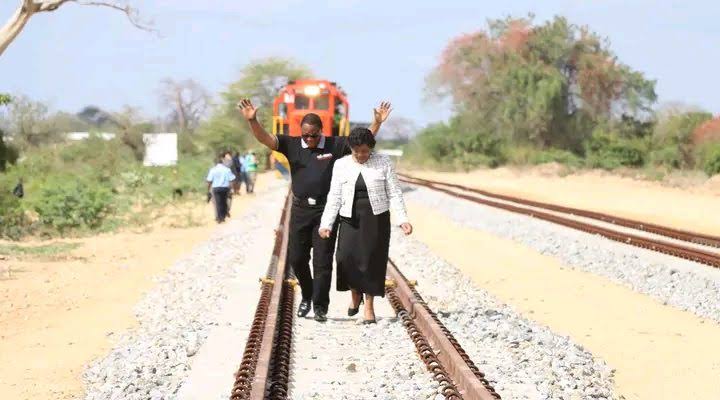
The Nsanje railway line was conceived as a game-changing transport corridor—promising cheaper logistics, regional trade access, and economic revival for southern Malawi. From the outset, the project demanded technical capacity, financial muscle, and strict adherence to procurement law.
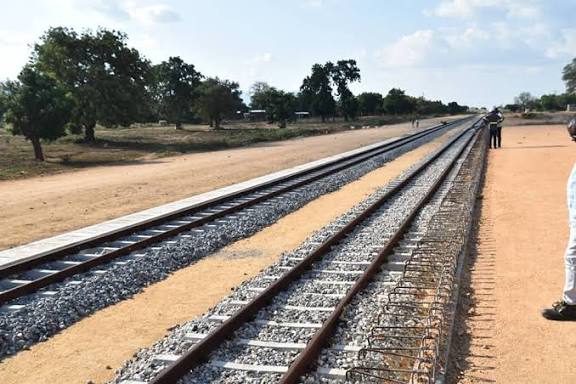
Mota-Engil’s association with the project initially aligned with those expectations. The company is known for handling complex infrastructure across Africa. But at some point, without public notice or parliamentary briefing, CR20 emerged as the contractor.
No formal termination announcement.
No published re-tender.
No disclosed Cabinet or ministerial approval.
Dont miss Judiciary on Trial: Chiradzulu Activist Accuses Courts of Fueling Corruption and Endangering Malawi
What the Law Requires — and What the Public Has Not Seen
Under Malawi’s public procurement framework, changing a contractor on a major public project is not a routine administrative act. It requires:
- Clear contractual justification
- Documented approvals
- Transparency on cost implications
- Proof of value for money
Yet, none of the following have been made public:
- Whether Mota-Engil withdrew voluntarily or was terminated
- Whether CR20 was competitively selected or directly assigned
- Whether the project cost, scope, or timelines were altered
- Whether penalties, compensation, or advance payments were triggered
Procurement specialists warn that undocumented contract substitutions are among the highest corruption-risk practices in public works.
Questions Authorities Must Answer
This investigation raises unavoidable questions:
- Who authorized the transfer of the contract?
- Was the original contract breached, cancelled, or varied—and on what grounds?
- Did CR20 meet all technical and financial qualification thresholds independently?
- Was Parliament informed of the change?
- Did taxpayers incur additional costs as a result of the switch?
So far, none of these questions have received official, on-the-record answers.
Why This Matters Beyond Nsanje
This is not just about one railway line.
It is about:
- Whether public procurement laws are enforced or selectively applied
- Whether strategic projects can quietly change hands without scrutiny
- Whether local or foreign firms are treated according to transparent rules or political convenience
In a country battling corruption, debt, and donor mistrust, opacity in flagship infrastructure projects undermines confidence in governance itself.
Similar Story Corruption Cannot End If The Judiciary Remains Rotten
No Proof of Crime — But a Case for Scrutiny
It is important to state clearly: there is no publicly available evidence proving criminal conduct by any company or official involved.
However, lack of evidence is not the same as proof of propriety.
When government decisions involving billions of kwacha are shielded from public view, suspicion becomes inevitable—and justified.
The Public Interest Test
The Nsanje railway project was funded, directly or indirectly, by public resources. That alone triggers a public interest obligation to explain:
- who benefited,
- who decided,
- and who will be held accountable if the project fails or costs escalate.
The Bottom Line
Until government releases the full paper trail behind the contract transfer from Mota-Engil to CR20, the Nsanje railway will stand not only as an unfinished infrastructure project—but as a symbol of unanswered questions in Malawi’s public procurement system.
Transparency is not a favor.
It is a duty.