
 Suleman Chitera
By Suleman Chitera
Lilongwe — Public frustration is reaching a boiling point as Malawi’s justice system faces growing criticism over delays in handling corruption and high-profile criminal cases, raising serious questions about accountability, equality before the law, and the country’s commitment to fighting graft.
Across the country, citizens are increasingly voicing concern that while the government continues to parade arrests and announce new cases “every week,” the courts are failing to deliver timely judgments. The result is a widening gap between political rhetoric and judicial outcomes—one that is steadily eroding public trust.
At the center of the anger is a glaring pattern: ordinary Malawians are swiftly prosecuted and imprisoned for minor offences, while politically connected individuals and powerful figures remain entangled in court processes that stretch for years, often without resolution.
“People are being jailed for selling chamba or charcoal within weeks,” said one concerned citizen in Lilongwe. “But those accused of stealing millions walk free for years as their cases drag on endlessly.”
This perceived double standard has fueled accusations that justice in Malawi is not blind, but selective.
A System Choking on Delays
Legal analysts point to a combination of systemic inefficiencies behind the backlog—overburdened courts, limited judicial personnel, procedural delays, and in some cases, deliberate stalling tactics by defense teams in high-stakes corruption cases.
The consequence is predictable: cases involving vast sums of public money remain unresolved for five, even ten years. In some instances, suspects complete full political cycles—serving in office or returning to power—before their cases are concluded, if at all.
For many citizens, this undermines the very essence of accountability.
“By the time a case ends, the damage is already done, and sometimes the accused have already benefited politically or financially,” observed a governance expert. “That’s not justice—that’s institutional failure.”
Anti-Corruption Fight Losing Credibility
Malawi has long positioned itself as committed to combating corruption, with law enforcement agencies regularly launching investigations and making arrests. However, critics argue that without an efficient and decisive judiciary, these efforts amount to little more than public relations exercises.
The Anti-Corruption Bureau (ACB) and other state institutions may be active in pursuing suspects, but if cases stall in court, the deterrent effect is lost. Instead of sending a strong message, prolonged trials create an environment where corruption appears survivable—even manageable.
Calls for Reform, Not Interference
Amid the frustration, some voices are calling for direct intervention by the presidency to “fix” the courts. However, legal experts warn that such a move would threaten judicial independence—a cornerstone of democratic governance.
“The solution is not political control over the courts,” one legal practitioner noted. “It is structural reform—more judges, better funding, stricter case management systems, and zero tolerance for unnecessary adjournments.”
Indeed, strengthening the judiciary rather than undermining it is seen as the only sustainable path forward.
Equality Before the Law—or Illusion?
Perhaps the most damaging impact of the current situation is the growing perception that justice in Malawi depends on who you are, not what you did.
When petty offenders are punished swiftly while grand corruption cases linger unresolved, the principle of equality before the law is called into question. This not only weakens public confidence but also risks normalizing corruption at the highest levels of society.
A Defining Moment
Malawi now faces a critical test. The fight against corruption cannot succeed on arrests alone—it requires a justice system that is fast, fair, and fearless.
Without urgent reforms to address delays and restore confidence in the courts, the country risks entrenching a culture of impunity where the powerful evade consequences and ordinary citizens bear the full weight of the law.
In the end, the question remains stark: if justice continues to be delayed, will it ultimately be denied—for everyone?
- Man Fights for Life After Train Runs Over Him in Lilongwe
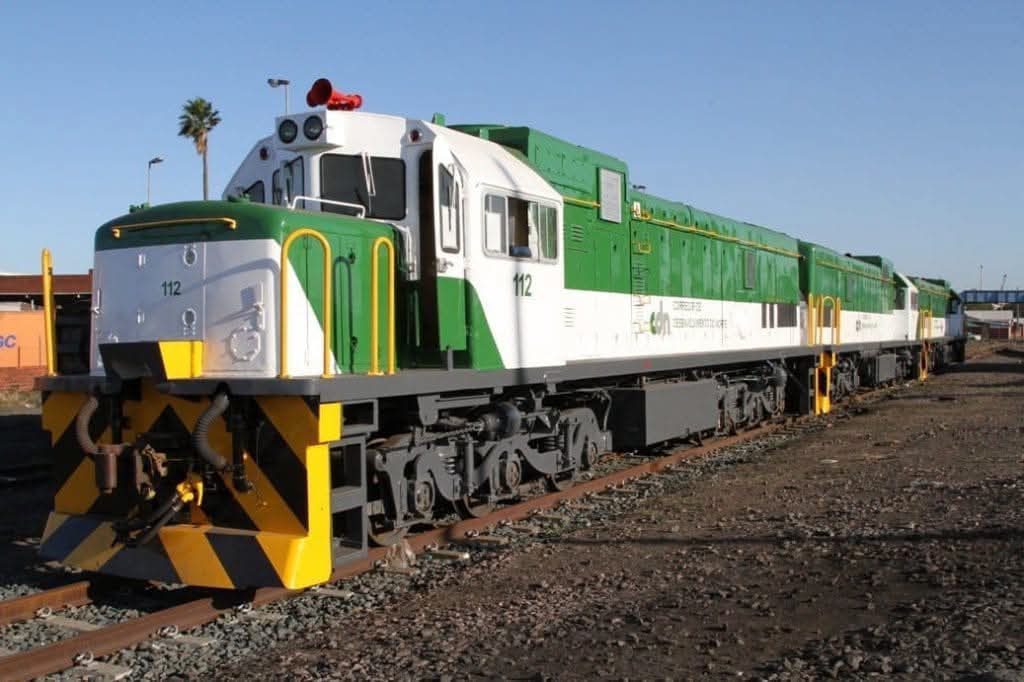 Share Listen to this article By Suleman Chitera, MFN ReporterOctober 23, 2026 A 35-year-old man is fighting for his life at Kamuzu Central Hospital (KCH) in Lilongwe after a train ran over him while he was sleeping on a railway line in the Kanengo Industrial Area. The man, identified as Dyson Kumalinga, sustained severe head…
 - Omar Ayatu Athandiza Azimayi Achisilamu Kupita ku Ijitima
 Share Listen to this article Olemba: Prince Hassan Wochita malonda, Omar Ayatu, wa ku Chimwala m’boma la Mangochi, wathandiza gulu la azimayi achisilamu la Chimwala Dawa Group ndi ndalama zothandizira ulendo wawo wopita ku Ijitima ku Salima. Thandizoli labwera potsatira pempho lomwe azimayiwa anapereka kwa Ayatu kuti awathandize kukwaniritsa cholinga chawo chopita ku Ijitima.Also interestingLocal»Five…
 - “Is APM Still the Ansah?” — MCP Questions Leadership as Namalomba Defends President’s Absence
 Share Listen to this article By Suleman Chitera, MFN Reporter23 October 2026 The Malawi Congress Party (MCP) has questioned the country’s leadership arrangements following President Peter Mutharika’s absence from Malawi, prompting Information Minister Shadreck Namalomba to defend the President amid growing economic challenges. MCP officials Moses Kunkuyu and Jessie Kabwila have questioned Mutharika’s private trip…
 - The Walkers in kidney health awareness walk Saturday
 Share Listen to this article By Suleman Chitera The Walkers Social Club, a group of diverse professionals who walk every Saturday morning, will this Saturday engage in a kidney health awareness walk in collaboration with Mphukira Foundation. The walk will start at 5am at HS Winehouse in Namiwawa through Chilomoni and climb the Michiru Mountain…
 - Blantyre Mayor Jomo Osman Urges Prayers as Malawi Fuel Crisis Deepens
 Share Listen to this article By Suleman Chitera, MFN Reporter Blantyre Mayor Isaac Jomo Osman has called on Malawians to pray for the country amid a fuel shortage that he says is causing significant hardship for people on the ground. Osman described the situation as distressing, questioning how leaders in positions of power could sleep…
 - Five Malawi Police Officers Suspended Over Alleged Theft and Firearms Sale
 Share Listen to this article By MFN News Desk Team Five police officers have been suspended from duty over various alleged offences, including theft and the sale of firearms and ammunition. The suspension has been confirmed in a letter signed by Lael Chimtembo, the Deputy Director responsible for Human Resource Management.Also interestingLocal»Omar Ayatu Athandiza Azimayi…
 - Imran Jumbe Warns DPP Against Internal Sabotage, Demands Probe into Umodzi Park Leadership
 Share Listen to this article By Suleman Chitera, MFN ReporterOctober 22, 2026 Political commentator Imran Jumbe has urged the ruling Democratic Progressive Party (DPP) leadership to investigate concerns surrounding the management of Umodzi Park Holdings, warning that alleged misconduct and poor leadership within government institutions could undermine public confidence in the administration. In a strongly…
 - World Vision Transfers K250 Million in Assets to Chiradzulu Council to Protect Child Welfare Gains
 Share Listen to this article By Suleman Chitera, MFN ReporterDate: October 21, 2026 World Vision Malawi has handed over assets worth more than K250 million to Chiradzulu District Council to help sustain child protection, healthcare and education services following the closure of its 15-year programme in Traditional Authority Onga. The handover, conducted on Tuesday, is…
 - BASMAL challenges Mo626 Varsity teams to up their game
 Share Listen to this article By Suleman Chitera Basketball Association of Malawi (BASMAL) has challenged teams competing in the Mo626 Varsity Games during the regional zones competition to build their momentum and prepare for tougher competition at the national championship. Speaking after the games at University of Malawi (UNIMA) in Zomba on Saturday, BASMAL Technical…
 - Speaker’s office snubbed as Mbeta takes over parliamentary committee case
 Share Listen to this article By Suleman Chitera, MFN ReporterOctober 21, 2026 The Office of the Speaker of Parliament has revealed that it was not consulted before Attorney General Frank Mbeta took over a judicial review case challenging the establishment of parliamentary joint committees, exposing a serious disagreement over the legal position surrounding the dispute.…
 - Bonface Joseph Urges DPP Leaders to End Greed, Corruption and Infighting
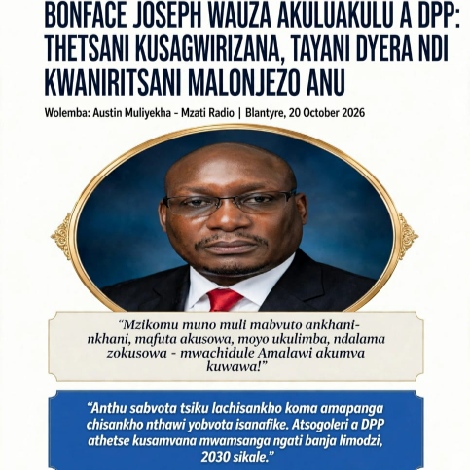 Share Listen to this article By MFN News Desk Team | October 21, 2026 Governance expert Bonface Joseph has challenged senior officials of the ruling Democratic Progressive Party (DPP) to stop internal wrangling, greed and corruption allegations and focus on delivering the promises they made to Malawians. Speaking in Blantyre on Tuesday, Joseph said the…
 - Kabwila Tells DPP to Put Its House in Order
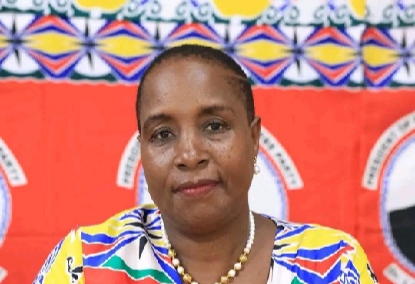 Share Listen to this article By Suleman Chitera, MFN Reporter Malawi Congress Party (MCP) spokesperson Jessie Kabwila has challenged the ruling Democratic Progressive Party (DPP) to put its house in order, accusing its leaders of wasting time on political fights while Malawians suffer. Kabwila criticised the public dispute between Speaker of Parliament Sameer Suleman and…
 - DPP MP Kalitendere Backs Sameer Suleman, Warns MPs Against Greed
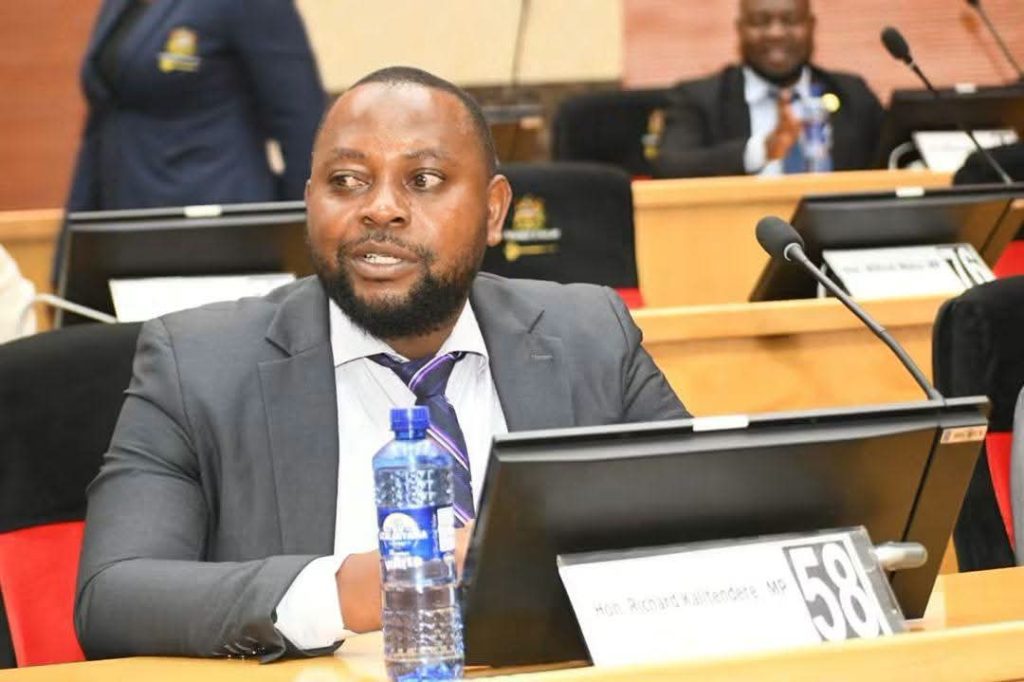 Share Listen to this article By Suleman Chitera, MFN Reporter DPP lawmaker Richard Shukran Kalitendere has thrown his support behind Speaker of Parliament Sameer Suleman, saying his message on leadership and accountability should not be ignored. In a Facebook post, Kalitendere urged MPs to stop prioritising personal wealth and instead focus on serving Malawians with…
 - Suleman Hits Back at Namalomba: “Are You Police or ACB?”
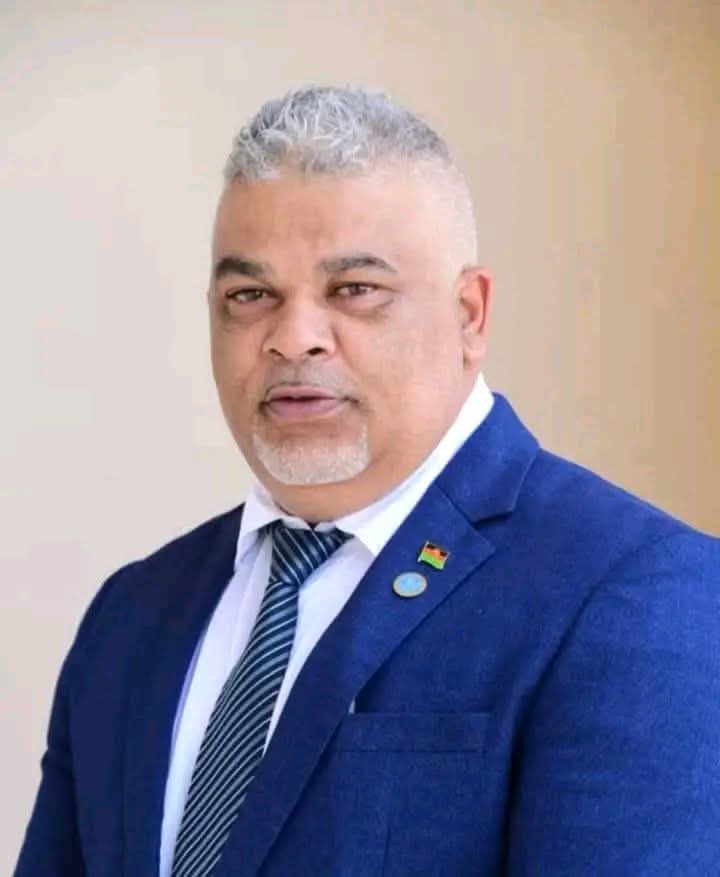 Share Listen to this article By MFN ReporterMalawi Freedom Network | October 20, 2026 Speaker of Parliament Sameer Suleman has hit back at government spokesperson Shadric Namalomba, questioning his authority to demand evidence over allegations of widespread corruption in government. Suleman’s strong response follows Namalomba’s decision to give the Speaker seven days to produce evidence…
 - Kamuzu Stadium to Be Demolished as FAM Confirms New Stadium Plan
 Share Listen to this article By Suleman Chitera, MFN Reporter Football Association of Malawi (FAM) President Fleetwood Haiya says Kamuzu Stadium in Blantyre will be demolished to pave the way for the construction of a new stadium. Haiya confirmed that President Peter Mutharika has approved the decision, despite the facility previously being designated as a…
 - TFM supports IPMM lake conference with K10 million
 Share Listen to this article By Suleman Chitera The Thom Frank Mpinganjira (TFM) Centre of Excellence has donated K10 million to the Institute of People Management Malawi (IPMM) towards its 2026 Annual Lakeshore Conference, scheduled for October 21 to 23, 2026 in Mangochi. The conference, to run under the theme ‘Future-Ready: Building Talent for the…
 - MAM Letter on Sameer Suleman Declared Fake
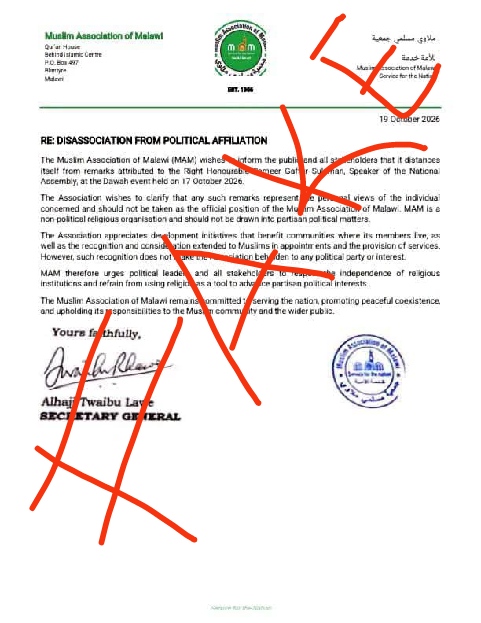 Share Listen to this article By Suleman Chitera, MFN ReporterMalawi Freedom Network | October 19, 2026 The Muslim Association of Malawi (MAM) has reportedly distanced itself from a letter circulating on social media that claims to disassociate the organisation from remarks attributed to Speaker of the National Assembly Sameer Gaffar Suleman. However, the authenticity of…