
 Vincent Gunde
By Vincent Gunde
An organization that works to support community SACCOs in partnership with MUSCO to provide financial services to women and girls and Small and Medium Enterprises – Cooperative Development Foundation of Canada, will implement a two year -Menstrual Health, Education and Economic Empowerment of women and girls project in Dowa district.
CDF Canada, established in 1947, works with various local partners in Africa, Asia, and Latin America, allying with local communities to achieve sustainable economic and social development.
In Dowa, the project will be implemented in the areas of Traditional Authorities Chakhaza and Chiwere targeting women led cooperatives and their nearby schools such as Nanthomba CDSS, Kamwana, Natola CDSS, Ng’ozi and Kongwe II.
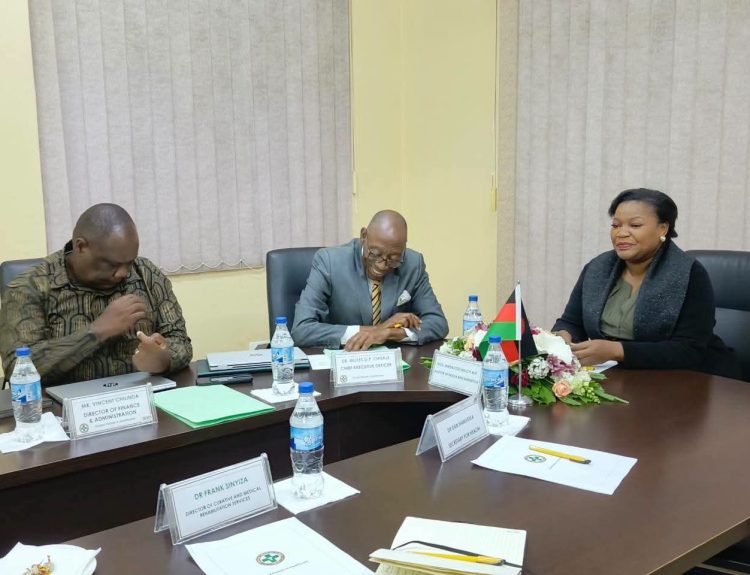
Presenting the project to the District executive committee in Dowa, CDF Canada’s Regional Coordinator (Africa) Rose Msosa, said the goal of the project is to improve girls’ access to education, strengthen menstrual health management, and expand economic opportunities for women.SHA conducts motivation and barriers to hygiene study in Dowa
Msosa said the project will contribute towards reduction of period poverty affecting girl school attendance, break taboos, and emphasize the importance of good menstrual hygiene as a basic need for a girls education.
She said the project which is funded by Peter Gilgan Foundation (PGF) is targeting 1,500 women and adolescent girls as direct beneficiaries and 20,000 community members as indirect beneficiaries scaling up from positive results through reusable sanitary pads under the VOICE Project.
The Regional Coordinator said the project will be implemented in partnership with Malawi Federation of Cooperatives (MAFECO) – an apex body of cooperatives in Malawi and the sectors of Education, Trade, and Gender targeting 5 schools ( primary and secondary) and 5 women led cooperatives.Beyond Water Presents Post PRM implementation strategy to Dowa DCT
She said among the interventions to be implemented will include skills development on the use of sewing machines, production of reusable sanitary pads, distribution of sewing machines and sewing kit start – ups, renovation and upgrading of toilets and changing rooms, capacity building on sustainable income – generating opportunities and stakeholder engagement at community and school level.
Msosa said the project is aligning with the District Development priorities such as reducing dropout rate, improved access to supplementary sanitation materials for girls, reducing repetition rate, targeting special needs learners, improving WASH facilities at school, skills development for women and girls, and economic empowerment for women, among others.SHA conducts motivation and barriers to hygiene study in Dowa
She said among the successes the project will register include access to appropriate menstrual hygiene products when needed, ability to manage menstruation privately at school and at home, reduced menstrual related absenteeism and barriers to attendance, and ability to participate in school and community activities.
“The project will register successes in reduced fear, embarrassment, or stigma associated with menstruation and confidence in attending school during menstruation,” said Msosa.
On project sustainability, Msosa said the project will work with existing community structures (mother groups and women led cooperatives), collaborating with different sectors ( Education, Gender and Trade), learning hub at community level cooperatives and schools, skills development and income generation, among others.Dowa Council says strong leadership crucial for project implementation
Speaking after the Dec approved the project, Dowa District Council’s Principal Environmental Officer Yusuf Laki thanked partners for giving progress of their projects saying it is the wish of the council to see to it that all projects are progressing in the way they are planned.
Laki appealed to spartners to share challenges projects are encountering saying this enhances cooperation, transparency and accountability.