 Suleman Chitera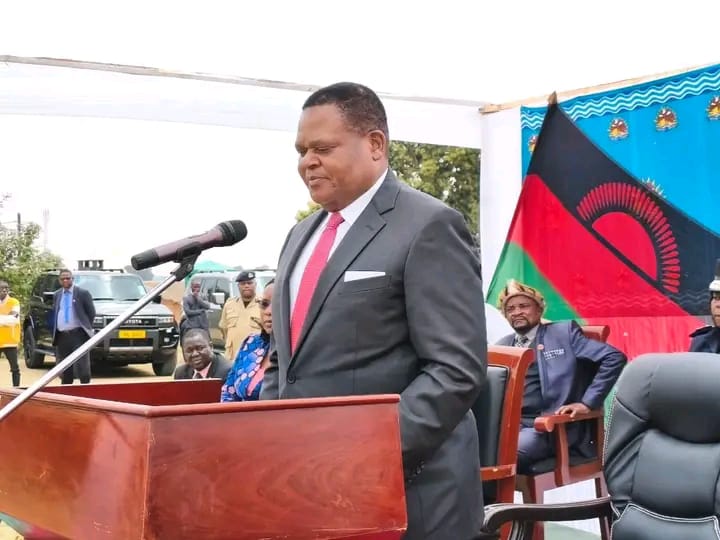
By Suleman Chitera
MZUZU — Minister of Homeland Security Peter Mukhito has challenged officers in Malawi’s key security institutions to uphold professionalism, discipline and integrity, as the government of President Arthur Peter Mutharika steps up efforts to strengthen security-sector performance and improve public service delivery.
Mukhito made the call on Wednesday in Mzuzu during a lecture at the Northern Region Police Headquarters, where officers from the Malawi Police Service, Department of Immigration and Citizenship Services, and Malawi Prison Service gathered as part of his four-day familiarisation and working tour of the Northern Region.
The engagement provided the minister with an opportunity to interact directly with frontline officers while assessing the operational environment in which the three institutions are providing services to Malawians.
Mukhito’s message centred on the need for security officers to demonstrate discipline, ethical conduct and professionalism in the execution of their duties.
The minister’s intervention comes against the broader government objective of strengthening public institutions and ensuring that security agencies operate efficiently, professionally and in a coordinated manner.
MINISTER INSPECTS IMMIGRATION OPERATIONS
Before proceeding to the Police Headquarters, Mukhito visited the Regional Immigration Office in Mzuzu, where he was briefed on the department’s operations and the challenges affecting service delivery.
One of the key facilities inspected by the minister was a newly installed heavy-duty passport printing machine.
The equipment represents an important investment in the country’s immigration infrastructure, particularly at a time when demand for travel documents and other immigration services requires institutions to improve efficiency and operational capacity.
By inspecting the machine personally, the minister was able to assess the infrastructure available to immigration officials and gain a better understanding of the department’s capacity to deliver services to the public.
The visit also allowed Mukhito to interact with officials and receive first-hand information on their operational requirements.
VISIT TO MZUZU PRISON
Mukhito also toured Mzuzu Prison, where he inspected infrastructure and rehabilitation programmes aimed at supporting the correction and reintegration of inmates.
Among the facilities he viewed was a newly constructed pavilion designed to support restorative justice and peace-building activities.
The facility reflects a broader approach to correctional services that goes beyond incarceration by placing emphasis on rehabilitation, reconciliation and preparing inmates for eventual reintegration into society.
The minister also inspected rehabilitation activities at the prison, including the welding workshop.
Such vocational programmes can provide inmates with practical skills that may help them secure livelihoods after completing their sentences.
The inspection therefore provided an opportunity for the minister to assess how correctional institutions are translating rehabilitation policies into practical programmes.
POLICE HEADQUARTERS ENGAGEMENT
At the Northern Region Police Headquarters, Mukhito was received by a Quarter Guard before receiving a briefing from the Northern Region Commissioner of Police.
He subsequently delivered a lecture to officers drawn from the three security agencies.
The joint engagement brought together personnel from the Police Service, Immigration and Citizenship Services, and Prison Service under the Ministry of Homeland Security.
The arrangement is significant because the three institutions play different but interconnected roles in maintaining public safety, enforcing the law, managing borders and immigration, and administering correctional services.
Effective cooperation among them is therefore critical to the broader security architecture of the country.
Mukhito’s decision to address officers from the three agencies together also underscored the government’s emphasis on coordination rather than treating the institutions as isolated entities.
FOCUS ON PROFESSIONALISM AND ACCOUNTABILITY
A central message from the minister was the importance of professionalism, discipline and integrity among security officers.
For institutions entrusted with enforcing laws, protecting citizens and managing sensitive government responsibilities, public confidence depends heavily on the conduct of individual officers.
Professionalism requires officers to perform their duties according to established laws, regulations and institutional standards.
Discipline ensures that officers remain accountable for their actions, while integrity requires them to resist conduct that could undermine public trust in security institutions.
The government’s emphasis on these principles signals an attempt to strengthen institutional standards at the operational level.
Rather than focusing solely on infrastructure and equipment, the tour placed equal attention on the people responsible for using those resources and delivering services to citizens.
A BROADER SECURITY-SECTOR REFORM AGENDA
Mukhito’s Northern Region tour can also be viewed within the wider efforts of the Arthur Peter Mutharika administration to improve the performance of public institutions.
The visits to immigration, prisons and police facilities combined three important components of institutional reform: infrastructure, equipment and human resource performance.
At Immigration, attention was drawn to equipment and operational capacity through the inspection of the passport printing machine.
At Mzuzu Prison, the focus extended to rehabilitation infrastructure and vocational programmes.
At the Police Headquarters, the emphasis shifted towards leadership, professionalism, discipline and accountability.
Together, these engagements demonstrate the importance of combining investment in physical infrastructure with improvements in institutional culture.
New equipment alone cannot guarantee efficient public service if institutions lack disciplined and adequately motivated personnel.
Similarly, strong policies can fail to deliver results if frontline officers do not implement them professionally.
COORDINATION AMONG SECURITY AGENCIES
The joint engagement of the three agencies also highlights the importance of coordination within Malawi’s national security and public safety framework.
Police officers, immigration officials and prison personnel frequently encounter situations that require cooperation across institutional boundaries.
Police deal primarily with law enforcement and public safety; immigration authorities manage the movement of people across Malawi’s borders and administer immigration-related services; while the Prison Service is responsible for the custody, correction and rehabilitation of offenders.
Although their mandates differ, their work intersects in numerous areas.
Improved communication and cooperation can therefore help eliminate operational gaps, strengthen information sharing and improve the overall delivery of security services.
The minister’s tour offers an opportunity for government leadership to identify those gaps and engage officers directly on how they can be addressed.
SERVICE DELIVERY AT THE CENTRE
Another important dimension of the minister’s visit is service delivery.
Security institutions are among the most visible arms of government because ordinary citizens interact with them in a variety of circumstances.
A person seeking a passport, reporting a crime, requiring police assistance, visiting a correctional facility or dealing with immigration authorities experiences government through these institutions.
Consequently, the quality of service provided by individual officers can significantly influence public perceptions of government.
The inspection of facilities and engagement with officers therefore goes beyond internal administration.
It is also about ensuring that citizens receive timely, professional and respectful services from institutions established to protect and serve them.
THE POLITICAL MESSAGE
The tour also carries a broader political and administrative message for the Mutharika government.
By physically visiting government facilities and interacting with officers, the minister is demonstrating an approach that prioritises direct engagement with public institutions rather than relying exclusively on reports from headquarters.
Such visits can help senior government officials identify challenges that may not always be apparent from administrative reports.
They also give frontline workers an opportunity to communicate operational difficulties directly to political and administrative leadership.
For the APM administration, the challenge will be to translate the messages delivered during the tour into measurable improvements in institutional performance.
That means ensuring that concerns raised by officers are followed by appropriate interventions, that equipment is maintained and effectively utilised, and that professional standards are consistently enforced.
FROM WORDS TO IMPLEMENTATION
The emphasis on discipline and integrity will ultimately be judged by what happens after the minister’s visit.
Security-sector reform requires more than speeches and familiarisation tours.
It requires continuous supervision, effective leadership, professional training, adequate resources and clear accountability mechanisms.
It also requires government to support officers with the tools and working conditions necessary to perform their responsibilities effectively.
The Northern Region tour therefore presents an opportunity for the Ministry of Homeland Security to build on the issues identified during the minister’s engagements.
If properly followed through, the exercise could contribute to stronger institutional coordination, improved service delivery and greater public confidence in Malawi’s security agencies.
MUKHITO’S FOUR-DAY NORTHERN TOUR
Mukhito’s four-day working visit to the Northern Region provides a platform for the minister to familiarise himself with operations on the ground while engaging officials across the security sector.
His itinerary, which includes police, immigration and prison facilities, places emphasis on understanding the realities facing officers at regional and institutional level.
The visits also demonstrate the interconnected nature of homeland security, where border management, policing and correctional services form part of a wider national security framework.
For the officers who attended the lecture in Mzuzu, the minister’s message was clear: security institutions are expected not only to maintain order and protect citizens, but also to uphold high standards of professionalism, discipline and integrity.
As the Mutharika administration continues with its efforts to strengthen government institutions, the effectiveness of these initiatives will ultimately depend on how successfully policy commitments are translated into practical improvements for both officers and the citizens they serve.
For Malawi’s security institutions, the challenge now is to turn the minister’s message into everyday practice — with professionalism in the field, discipline in the workplace, integrity in decision-making and better service for the public.
Read also: NBM plc supports Mzuzu City Council’s waste management efforts
Read also: Kalindo praises God for Gangata’s demos cancellation
Read also: Attorney General Hires Kalekeni Kaphale For Chizuma Interdiction Judicial Review