
 Malawi Freedom Network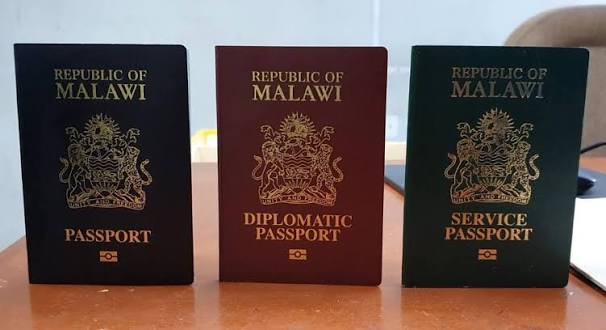
By Malawi Freedom Network
Lilongwe, Malawi — President Arthur Peter Mutharika’s administration is facing growing pressure to launch a comprehensive audit of Malawi’s diplomatic passports and publish a list of all current holders amid allegations that the privileged travel documents have, in some cases, been issued to foreign nationals.
Citizens and governance campaigners are demanding that government go beyond the controversial case already in the public domain and establish exactly who has been issued a Malawian diplomatic passport, why they received it and whether they remain legally entitled to hold it.
The demand follows renewed concerns over reports alleging that some foreign nationals—including individuals described as Israelis, Nigerians and Rwandans—have obtained Malawian diplomatic passports.
These reports should be independently verified by government rather than treated as established fact. But the allegations are serious enough, critics argue, to justify a transparent nationwide audit.
Government must tell Malawians who holds these passports
Malawi’s diplomatic passport is not an ordinary travel document.
The Department of Immigration states that diplomatic passports are issued to specific categories of eligible persons, including senior state officials and other persons provided for under the applicable framework.
That makes questions surrounding alleged issuance to foreign nationals particularly important.
Government should therefore publish, subject to legitimate security and privacy considerations, a comprehensive register showing:
- Names of current diplomatic passport holders;
- Their nationality;
- Their official position or status;
- The reason or legal basis for their eligibility;
- The date the passport was issued;
- Its expiry date; and
- Whether it remains valid.
If foreigners have indeed been issued Malawian diplomatic passports, the public deserves to know who approved them and under what law or authority.
The Dozy Mmobuosi case has already exposed the loopholes
The concerns are not entirely theoretical.
In April 2025, government revoked a Malawian diplomatic passport issued to Nigerian businessman Dozy Mmobuosi. The case triggered intense debate about how a foreign businessman came to possess a Malawian diplomatic travel document in the first place.
The Mmobuosi case should therefore serve as a warning.
If one foreign national was able to obtain such a document, government needs to establish whether the case was an isolated administrative failure—or evidence of a wider problem.
Israelis, Nigerians and Rwandans among names mentioned
There have also been claims circulating that other foreign nationals, including Israelis, Nigerians and Rwandans, may have benefited from Malawian diplomatic passports.
At this stage, those broader claims should not be presented as proven without official documentation.
Related stories: President Mutharika Urged to Revoke Nir Ges’ Diplomatic Passport Amid Outgoing MCP Scandal
But the allegations raise a legitimate public-interest question:
How many Malawian diplomatic passports have been issued to people who are not Malawian citizens, and what was the justification?
Government has the ability to settle the question.
It can audit the records.
It can publish the eligible categories.
It can identify current holders.
And where necessary, it can revoke documents that were improperly issued.
Mutharika has an opportunity to clean up the system
The issue comes after government moved to tighten the administration of diplomatic passports.
In November 2025, the government announced that responsibility for approving diplomatic passports would return to the Ministry of Foreign Affairs and International Cooperation, while passports issued between June 2020 and October 2025 were to undergo verification to establish whether holders were eligible.
That verification should now be followed by concrete action.
If the audit finds irregularities, passports should be withdrawn.
If officials deliberately bypassed procedures, they should be investigated.
And if the system has loopholes, government should close them permanently.
This cannot become another political witch-hunt
The demand for transparency should apply to everyone.
It should not matter whether a passport was issued under an MCP, DPP or any other administration.
Nor should the audit target foreigners simply because of their nationality.
The central question should be whether every diplomatic passport was issued lawfully and for a legitimate diplomatic or state purpose.
If the government is confident that the system has been properly administered, publishing the evidence should strengthen—not weaken—public confidence.
Malawians deserve answers
The diplomatic passport controversy is now bigger than one individual.
It raises questions about the integrity of government institutions, the use of state privileges and the safeguards surrounding Malawi’s official travel documents.
President Mutharika has an opportunity to settle the matter decisively.
Audit every diplomatic passport. Publish the list of legitimate holders. Verify the nationality and eligibility of each holder. Revoke improperly issued passports. And investigate anyone who abused public authority in the process.
Malawians should not have to depend on rumours and leaked information to discover who is carrying a document representing the authority of their country.
If there is nothing to hide, government should have nothing to fear from transparency.